The Toy Rotation System: A Calmer Playroom After the Holidays
Every January looks the same: the playroom is overflowing with new gifts, the kids are playing with the boxes instead of the toys, and you are stepping on something with sharp corners at 2 a.m. The holiday toy influx is not a sign of excess gratitude. It is just too many new things arriving at once, in a room that was already full.
The toy rotation system is the answer, and it is distinct from general toy organizing. Instead of trying to store and display everything at once, you sort the influx, pack most of the toys into labeled rotation bins, and keep only a small curated set out at any time. Every week or two, you swap the sets. The kids get "new" toys regularly, the playroom stays calm, and you stop buying storage solutions for a collection that never needed to be out all at once.
Here's what you'll learn in this guide to the toy rotation system: how to sort the post-holiday influx without losing your mind; how to pack and label rotation bins so the system runs itself; a simple rotation schedule that fits real family life; and what to do with outgrown, broken, and duplicate toys.
Step One: Sort the Influx
Before anything gets boxed up, do a full sort. Pull every toy in the playroom onto the floor, including the new gifts, and sort into five piles: keep and love (the toys that get played with constantly), keep for rotation (toys in good shape that deserve a turn), donate or pass on (outgrown but fine), broken or missing pieces (trash or recycle), and sentimental keepers (a first teddy, a handmade gift, things you are not ready to part with). If you need help deciding what to keep at all, our guide to decluttering sentimental items walks through that process gently.
Be honest in the donate pile. Kids outgrow stages fast, and a toy that was perfect at age three is just clutter at age five. Duplicates from multiple gift-givers go straight in the box; nobody needs three of the same kitchen set. Put the donate pile in bags immediately, in the car if possible, so it cannot drift back onto the shelves.
Also rescue the sentimental keepers into a real memory box, one per child, not a floating shelf of maybes. One small box of genuine keepsakes is meaningful; a whole playroom of "we might want to remember this" is just storage you never look at.
Step Two: Build Your Rotation Bins
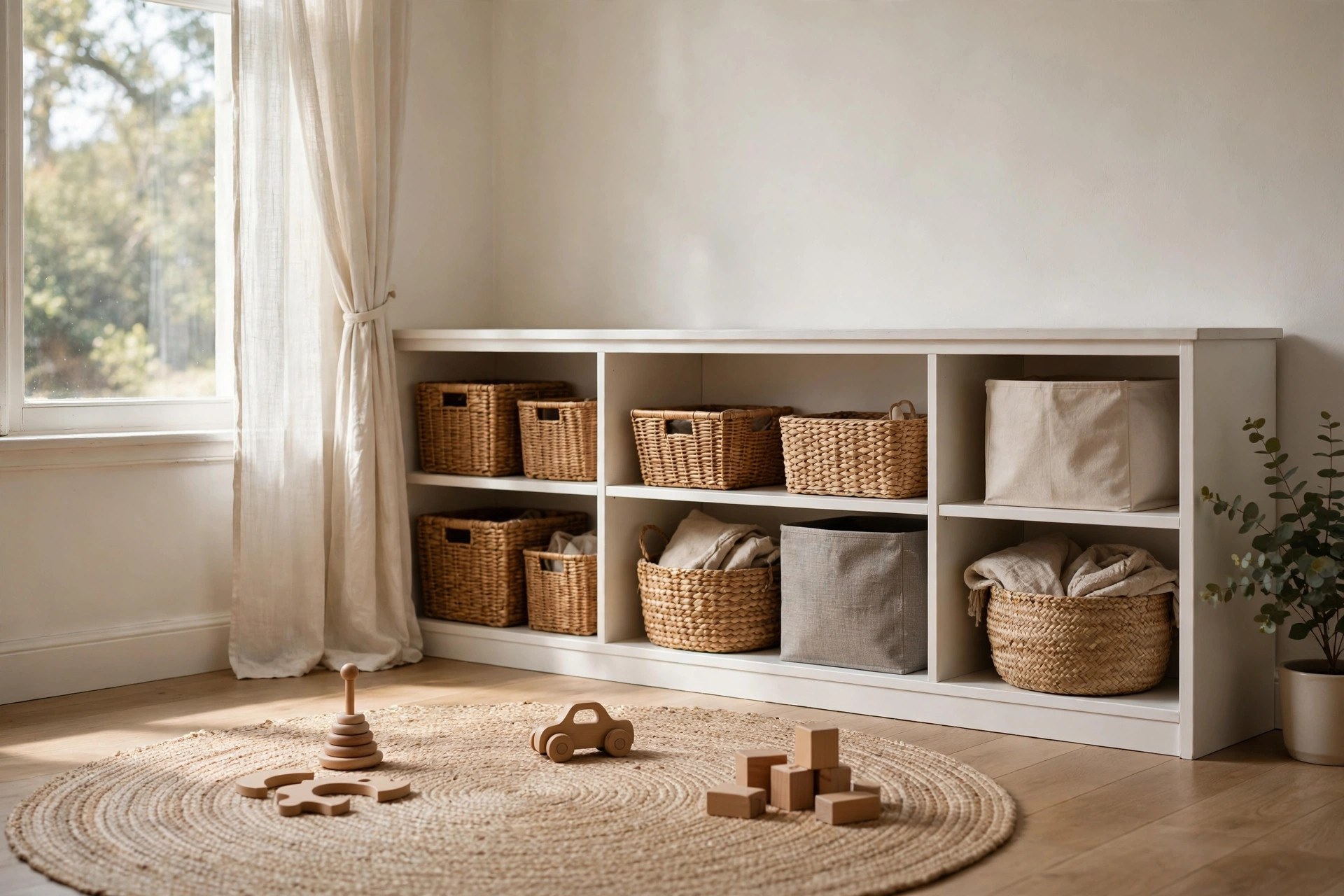
Now take the keep-for-rotation pile and divide it into three to five bins by type: building toys in one, vehicles in another, pretend play in a third, puzzles and games in a fourth. Each bin should hold a complete play experience, so a child can open one bin and actually play, not just stare at four random pieces. Mixing a few favorites from different categories keeps each bin fresh.
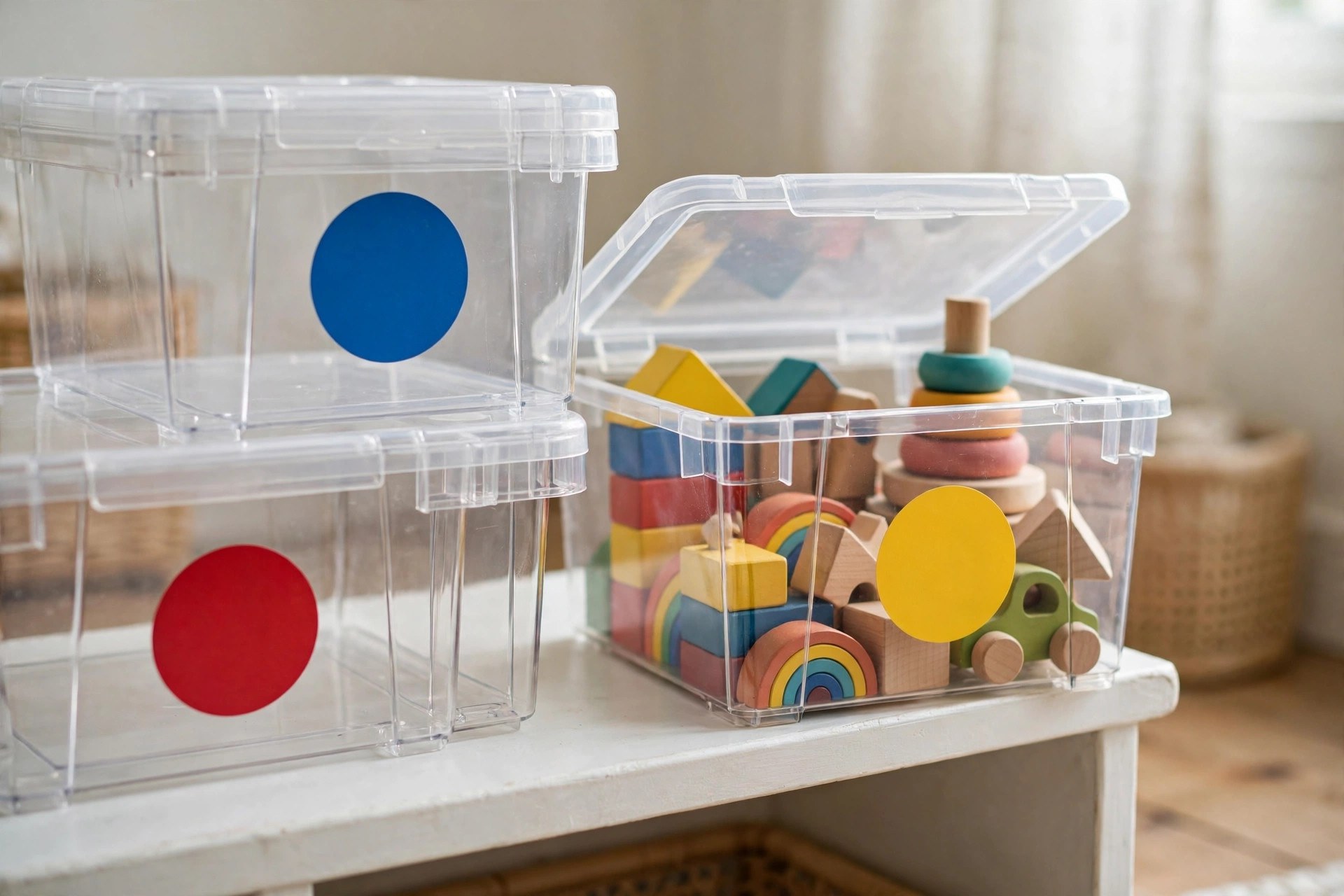
Use bins the kids can manage themselves. Clear plastic bins with lids are ideal because children can see what is inside, and lids stack neatly in a closet or under a bed. Label each bin with a big colored dot or a simple picture label (a block, a car, a doll) so pre-readers can identify them too. No text-heavy labels; the system should work for a three-year-old with zero reading.
Aim for bins of equal size so swapping is painless, and keep one bin per category in a closet while the others are out. If space is tight, the out-of-rotation bins can live in a garage, a basement shelf, or even a car's trunk temporarily. The point is that they are out of sight, which is what makes them feel new later. Our kids toy organization playroom guide has shelving and bin ideas for playrooms of every size if you need the physical setup too.
Step Three: The Rotation Schedule
Here is the simple part: keep two or three bins out, and swap them every one to two weeks. That is the entire schedule. Put a recurring reminder on your phone for Sunday evening, and make the swap a five-minute ritual. Toys going back in the bin get a quick check for broken pieces, and toys coming out get wiped down.
Watch how your kids respond and adjust. If a child keeps pulling a specific toy out of the rotation box mid-cycle, that toy might belong in the permanent keep set. If a bin comes out and gets ignored for a week, its contents may be ready for donation. The rotation is not a prison schedule; it is a way to notice what is actually loved.
For holidays and birthdays, run the system in reverse. Before a big gift event, retire one or two bins to make room, and after the event, fold the new toys into the bins instead of piling them on top. This is how the system pays for itself: every future influx gets absorbed into the rotation instead of landing on the playroom floor. When new toys arrive with lots of packaging and craft extras, our budget craft room organization tips help with the non-toy side of gift chaos.
What To Do With Outgrown and Broken Toys
Outgrown toys in good condition have a second life. Donate them to local shelters, daycare centers, or consignment sales, where they get used immediately. List higher-value sets (complete LEGO sets, popular ride-ons) for resale; the money can fund the next round of experiences or activities. Clean everything before it leaves the house, because a wiped-down toy gets accepted everywhere and a grimy one gets declined.
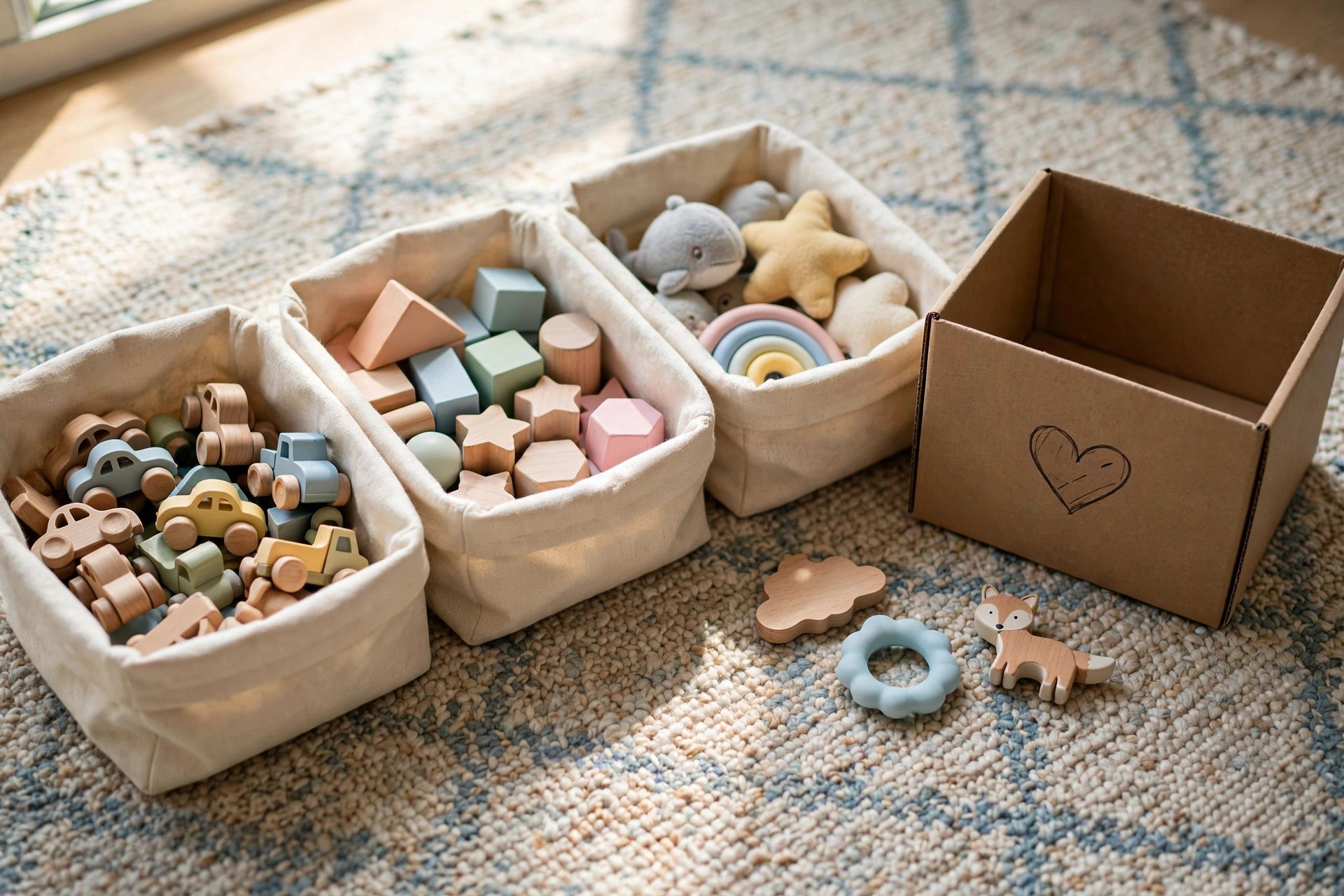
Broken toys and incomplete sets go in the trash or the recycling bin. Check your local recycling rules for batteries and electronics; toy electronics usually need to go to e-waste collection, not the curbside bin. Missing one puzzle piece is fine for keeping; missing half the pieces is not a puzzle anymore, it is clutter.
Finally, protect the system going forward. Before birthdays and holidays, give family members a short list of categories your kids actually want (art supplies, experiences, books), which cuts the random influx at the source. After each gift event, do the five-pile sort again and fold new toys into the rotation. Most families find that once the system is running, the playroom stays calm with about ten minutes of maintenance a week, and the kids genuinely play more, because fewer choices means deeper play. That is the real payoff: not a tidier room, but a room where toys actually get used.
Your First Rotation Weekend: A Quick Plan
If the playroom is overwhelming right now, here is the whole system as a weekend plan:
- Saturday morning: Do the five-pile sort (keep and love, keep for rotation, donate, broken, sentimental). Bag the donate pile and put it in the car.
- Saturday afternoon: Divide the rotation pile into three to five bins by toy type. Label each bin with a color dot or picture. Set the keep-and-love toys out on the shelves.
- Sunday: Store the out-of-rotation bins in a closet or garage. Set a phone reminder to swap bins in two weeks. Wipe down the shelves and put the memory box away.
That is the entire setup. From here on, the system runs on a five-minute swap every week or two and a ten-minute tidy each evening, and every future holiday influx gets absorbed into the bins instead of burying the playroom.