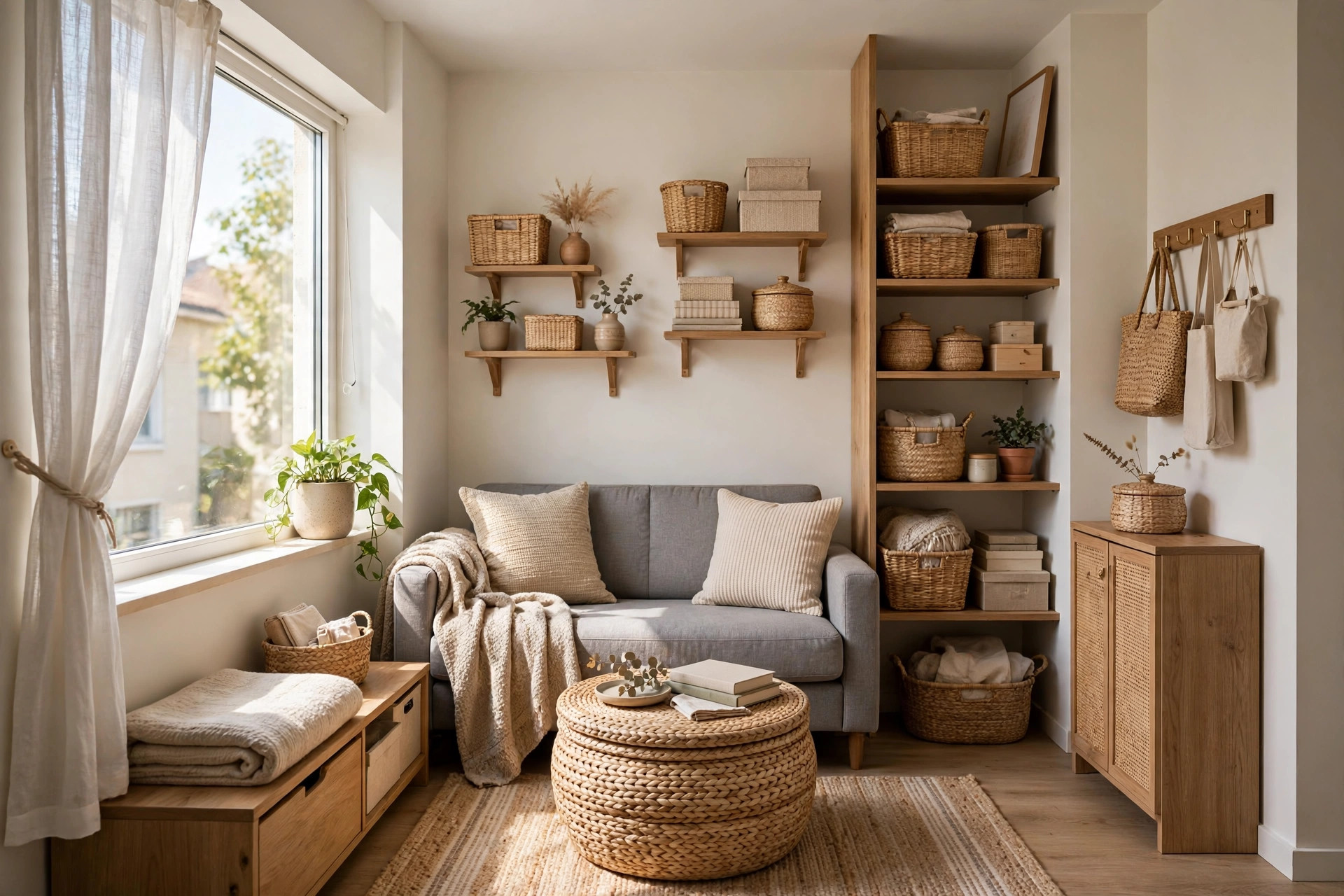
Kids' Toy Organization: How to Tame Playroom Clutter
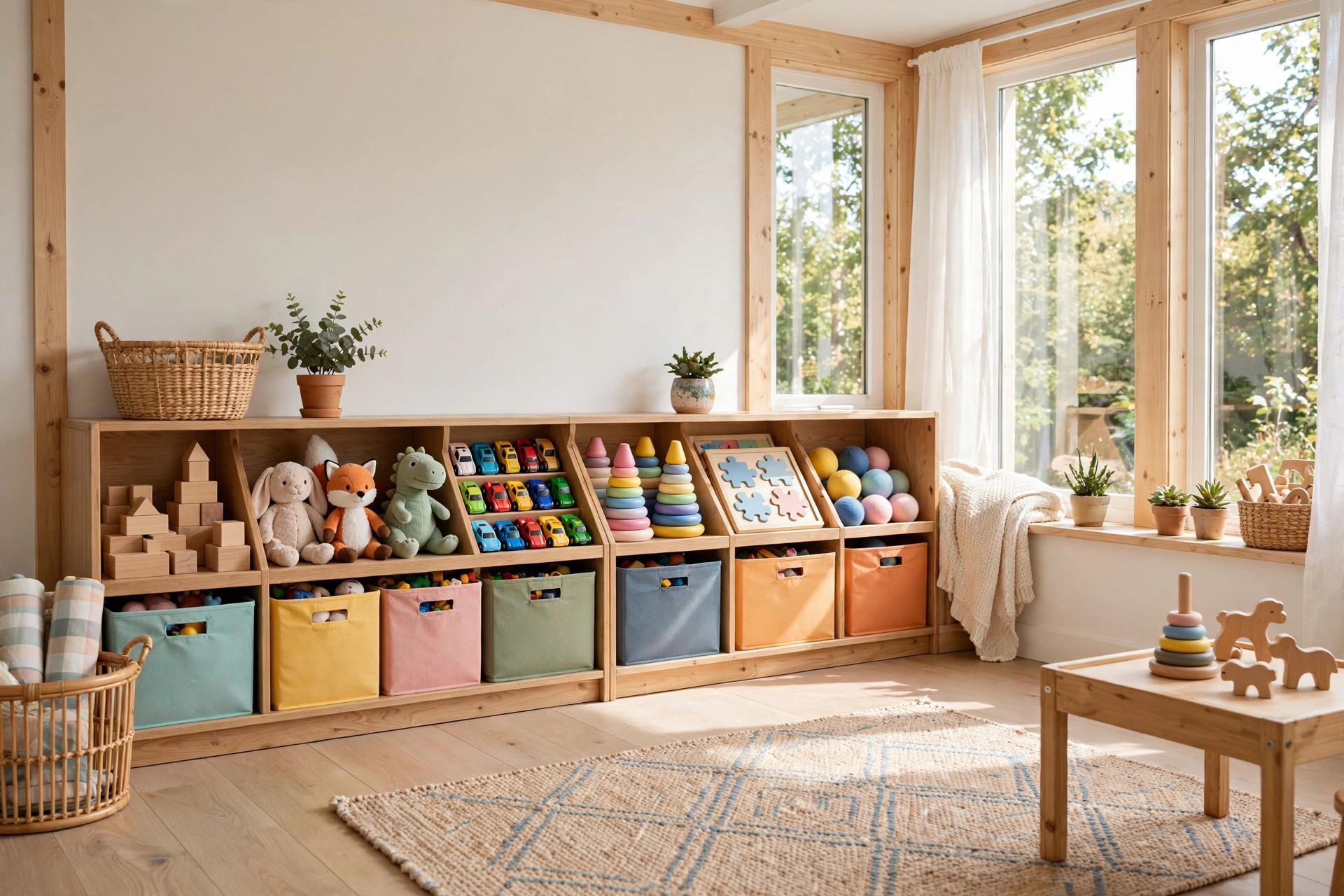
If the toys in your house seem to multiply overnight, you're not imagining it. These kids toy organization ideas cover what actually works in real homes: a simple toy rotation system (the single most effective tactic), bins your kids can genuinely maintain, how to declutter toys with your kids, handling the grandparent gift avalanche, small-piece storage for LEGO and the like, art supply zones, and a cleanup routine that won't spark a daily battle.
Why Toy Clutter Hits Different
Most clutter just bothers us visually. Toy clutter comes with guilt attached — these toys cost money, someone gifted many of them, and your child "plays with it sometimes." Here's the reframe that helps: an overstuffed playroom isn't a gift to your child. Faced with a wall of options, many kids play less deeply and bounce around more. Fewer, well-organized toys usually means longer play sessions and easier cleanup. You're not taking anything away by organizing; you're making the good stuff findable.
Kids Toy Organization Ideas Start With a Declutter
Don't buy a single bin until you've decluttered first — organizing too many toys just creates neatly labeled bins of overwhelm. Set a timer for 30 minutes and work fast: pull out broken toys, toys with missing key pieces, outgrown baby toys, and duplicates. Sort into keep, donate, relocate, and trash piles, then get donations out of the house today. Skip the magic-number mindset; just skim the easy stuff and build momentum.
The Game-Changer: Toy Rotation
Toy rotation means keeping only a portion of your child's toys accessible and storing the rest out of sight, swapping every few weeks. Kids get bored with what they see daily, not with what they love — a toy ignored for weeks feels brand new when it reappears. Less out means deeper play, easier cleanup, and fewer "we need new toys" requests.
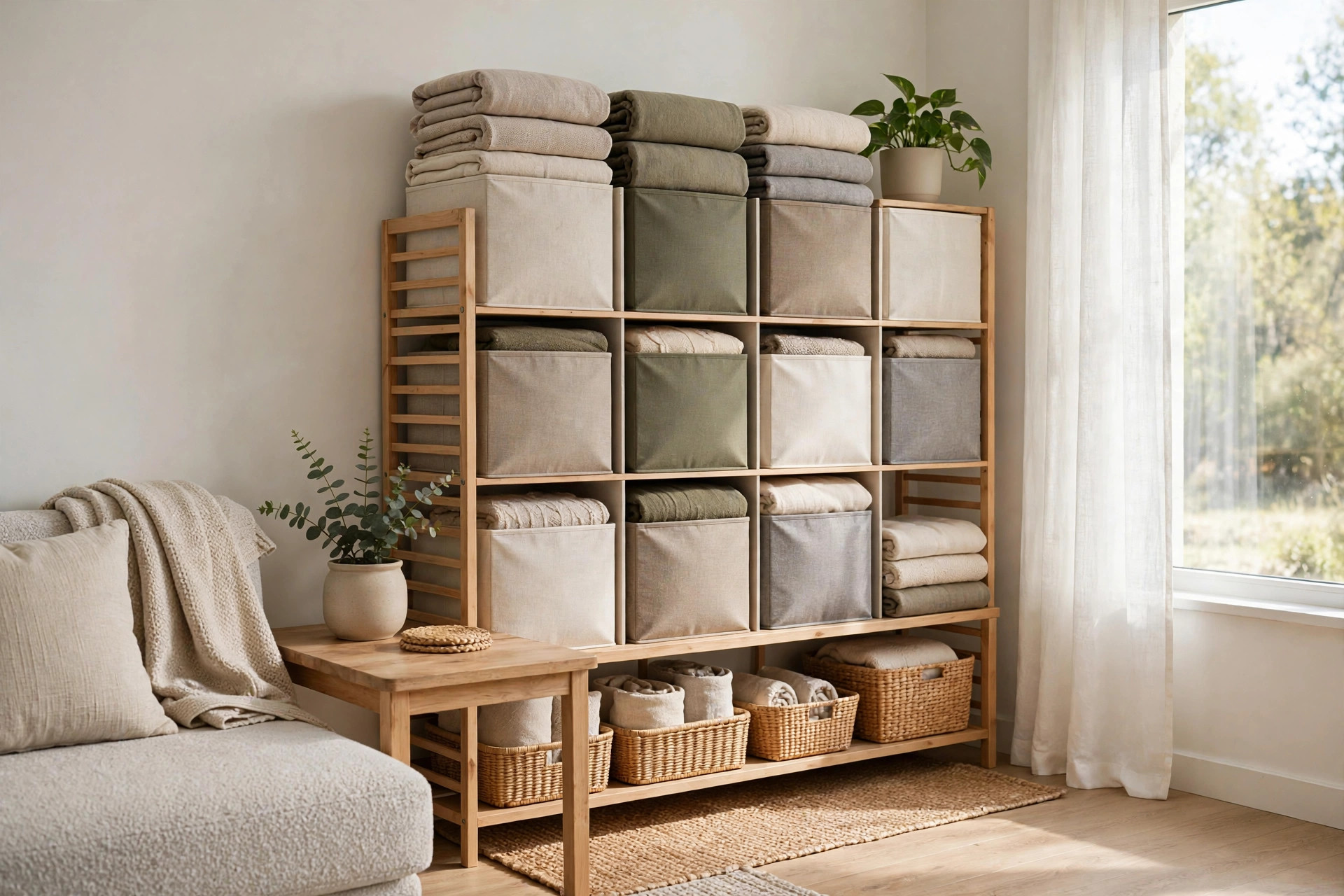
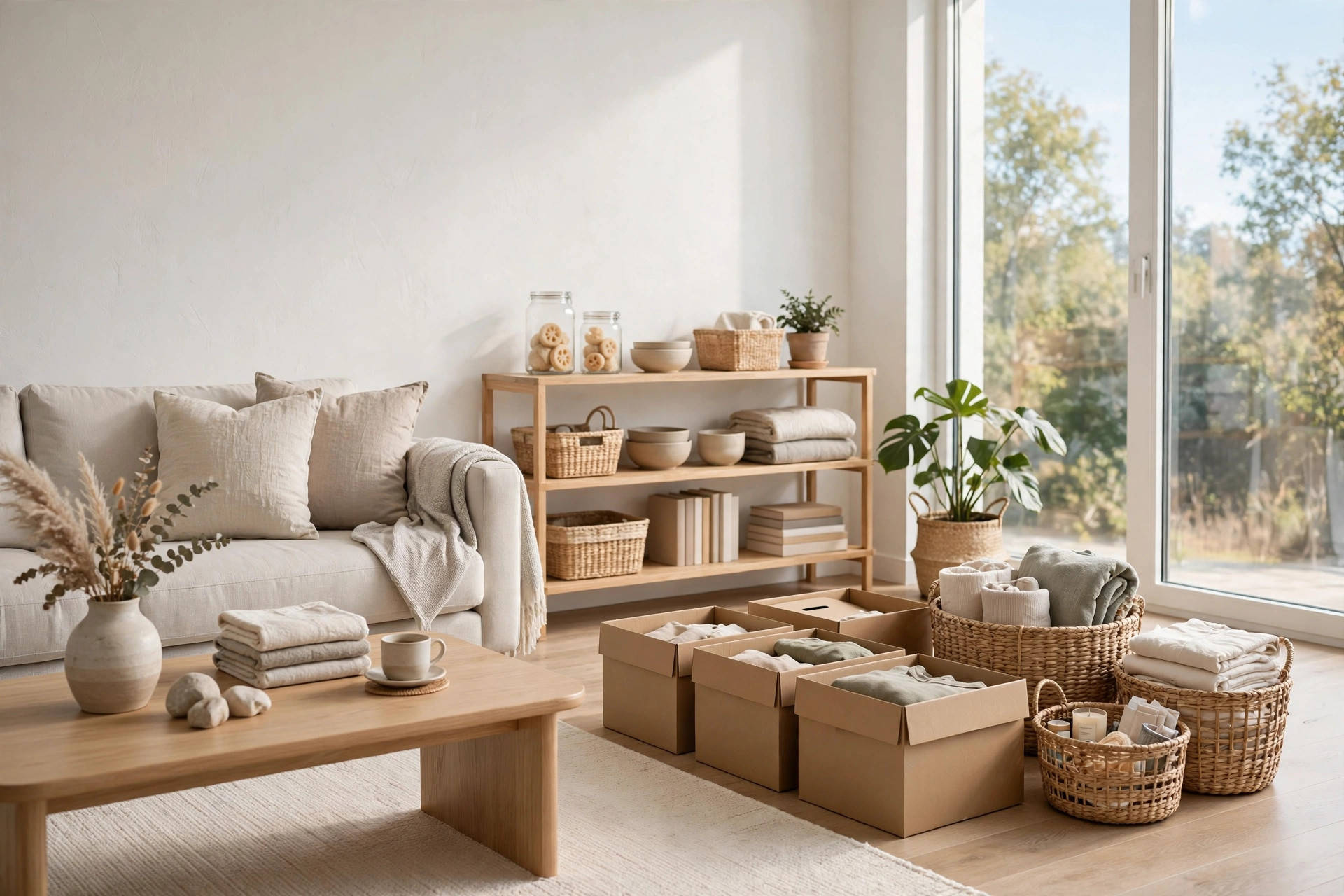
How to set it up: Sort keepers into broad categories (building, pretend play, art, puzzles, vehicles, dolls). Split them into two or three balanced groups, pack the stored groups into labeled boxes in a closet or under a bed — truly out of sight — and rotate monthly. Let the kids "unpack" the new box themselves; the excitement is real. If a toy gets zero interest for two full cycles, it's a donation candidate.
Bins Your Kids Can Actually Maintain
Every storage decision should pass one test: can my kid put this back without me?
- Go broad with categories. Six to ten bins — "cars and trucks," "building toys," "dolls and stuffed animals," "pretend play" — beats a dozen fussy ones. Fewer categories means less thinking at cleanup time.
- Label with photos, not just words. Tape a photo of each bin's actual contents to the front — preschoolers who can't read can still match it.
- Open bins at kid height. Lids are barriers. Use open-top bins or baskets at their level, and save lidded boxes for things you want them to ask about, like craft paint.
- Keep one "dumping bin." A big bin for miscellaneous drift — puzzle strays, party favors, the fast-food toy they adore. Sort it monthly. Without it, the miscellany lands on your living room floor.
Decluttering Toys With Your Kids
For babies and toddlers, quietly removing outgrown toys while they sleep is fine. For preschoolers and up, involving them teaches decision-making — and kids who help choose what leaves are far less upset about it. Keep sessions to 15–20 minutes and frame it as a game: "Find ten toys to donate to kids who don't have as many." A keep-box with a limit per category makes the constraint concrete. Pick a weekend morning after breakfast — never a tired evening.
Respect a few "nos." If your child is genuinely upset about a particular toy, let them keep it this round and revisit in a few months. Pushing too hard teaches kids to cling harder next time.
Handling Gifts and Grandparents' Generosity
The holiday and birthday gift flood stresses out a lot of parents. The easiest fix happens before the occasion: suggest specifics — "She's really into building right now" — or experiences like a museum membership, lessons, or a "grandparent date." Most grandparents genuinely welcome guidance; they want the gift to land.
Use a quiet one-in-one-out rule: one donated toy per new gift keeps volume constant.
Still coming anyway? Have a warm, honest conversation: "The kids are so loved. We're running out of room — here's what would help most." If a relative's love language is truly giving physical gifts, keep a rotation box at their house — the toys live there, and everyone wins.
Small-Piece Storage: LEGO and Other Scatter Hazards
Small pieces are the #1 playroom flooring hazard and the top cause of "I can't find the one piece" meltdowns.
- One container per set or brick type, not one giant mixed tub. Sort open-play bricks by type (wheels, bricks, specialty pieces), not color — kids build from types.
- Zip-top bags inside bins for fiddly bits like minifigure accessories. Cheap, see-through, easy to toss in the bin.
- Define the build zone. A cookie sheet, tray, or play mat gives small pieces a boundary; when playtime ends, the tray goes on a shelf.
- Bag puzzles, toss the boxes. Pieces go in a zip-top bag with a photo of the box front. Ten bagged puzzles fit in the space of two boxed ones.
Art Supply Zones That Contain the Chaos
Art supplies spread like they have legs. The fix is a defined zone with boundaries, not fewer supplies.
- One rolling cart or caddy holds the everyday items: crayons, markers, glue sticks, scissors, paper. Art happens, then the cart rolls away.
- Separate the messy stuff. Paint, glitter, and play-dough live in a lidded container on a high shelf and come down only with permission. This single boundary prevents most art disasters.
- Store paper vertically in a file sorter instead of sliding flat stacks.
- Display art, then let it go. A string with clothespins honors the work. When it's full, photograph favorites and recycle the rest.
- Ten-minute rule: supplies go back in the caddy before dinner.
A Realistic Cleanup Routine
Skip the 45-minute nightly overhaul. Do two quick cleanups instead: a five-minute midday floor reset and a 10–15 minute evening family tidy with a timer and music. If cleanup regularly takes longer than that, you have too many toys out — not a cleanup problem.
Assign by category, not by child: "You do all the cars, I'll do the art stuff." And the only daily standard that matters is floor clear. Bins don't need perfect sorting; toys just need to be off the floor and roughly home. Save deeper sorting for your monthly rotation swap, and do a five-minute weekly bin audit — toss trash, relocate strays, pull out anything broken.
When it all falls apart, don't fix it that night. Pick one calm 20-minute session, play music, and reset. Systems work because you return to them, not because they're never interrupted.
Start Small This Weekend
Skip the full overhaul and the cart of matching bins. Pick one thing: the 30-minute declutter, one rotation box, or four bins labeled with photos. Small wins build momentum, and momentum turns a one-time tidy into a playroom that mostly takes care of itself.
Frequently Asked Questions
How often should I rotate my kids' toys?
Every few weeks works for most families. Monthly — say, the first weekend of the month — is the easiest to remember. Watch your kids: if they're ignoring the current set, swap. If they're deeply into everything out, leave it another week.
What age can kids start helping with toy organization?
Toddlers around 18 months can drop toys into an open bin. By 3–4, most kids can sort into picture-labeled bins on their own. Involve them in decluttering decisions from around age 3–4, keeping sessions to 15–20 minutes.
How do I tell grandparents to stop buying so many toys?
Bring it up before gift-giving occasions, not after, and frame it around what the child would love most — experiences or contributions toward something bigger. Most grandparents welcome specific suggestions. A quiet one-in-one-out rule keeps volume stable in the meantime.
What's the best way to store LEGO?
One container per set or brick type instead of a single mixed tub, sorting open-play bricks by type rather than color. Use zip-top bags inside bins for tiny pieces, and give building a defined tray or mat so pieces stay contained.
How many toys should a child have?
There's no magic number — it depends on age, space, and play style. A good rule of thumb: if cleanup regularly takes more than 10–15 minutes, or your child bounces between toys without settling, reduce what's out. Rotation lets you keep favorites while cutting daily volume.