How to Organize Your Refrigerator (Zones That Actually Work)
If you have ever opened your fridge to find a half-dead head of lettuce, a mystery container with no date, and three identical jars of mustard, you need a system. Learning how to organize your refrigerator is not about fancy bins. It is about giving every item a logical home so food stays fresh, you stop wasting money, and you can find the leftovers you meant to eat.
Here is what you will learn: a zone-based fridge system — what belongs on each shelf, how to handle the door and crisper drawers, how to set up an "eat first" bin for leftovers — plus a full cleanout walkthrough and a five-minute weekly reset that keeps it all working.
Start With the Full Cleanout
No system sticks if you build it on top of expired yogurt and sticky shelves. Start by pulling everything out, grouping items on the counter by category (dairy, condiments, produce, leftovers, drinks), and checking dates as you go.
Be honest during the triage. Anything past its date, moldy, or smelly goes. If a container has no label and you cannot remember when you cooked it, toss it. Rinse jars for recycling, then wipe down shelves and drawers with warm soapy water while they are empty — this is the one time it is easy.
Keep a trash bag, a recycling bin, and a pen with masking tape nearby so you can label anything going back in without a date. This takes twenty to forty minutes the first time. Put on a podcast and treat it as a one-time reset.
The Zone System: What Goes Where
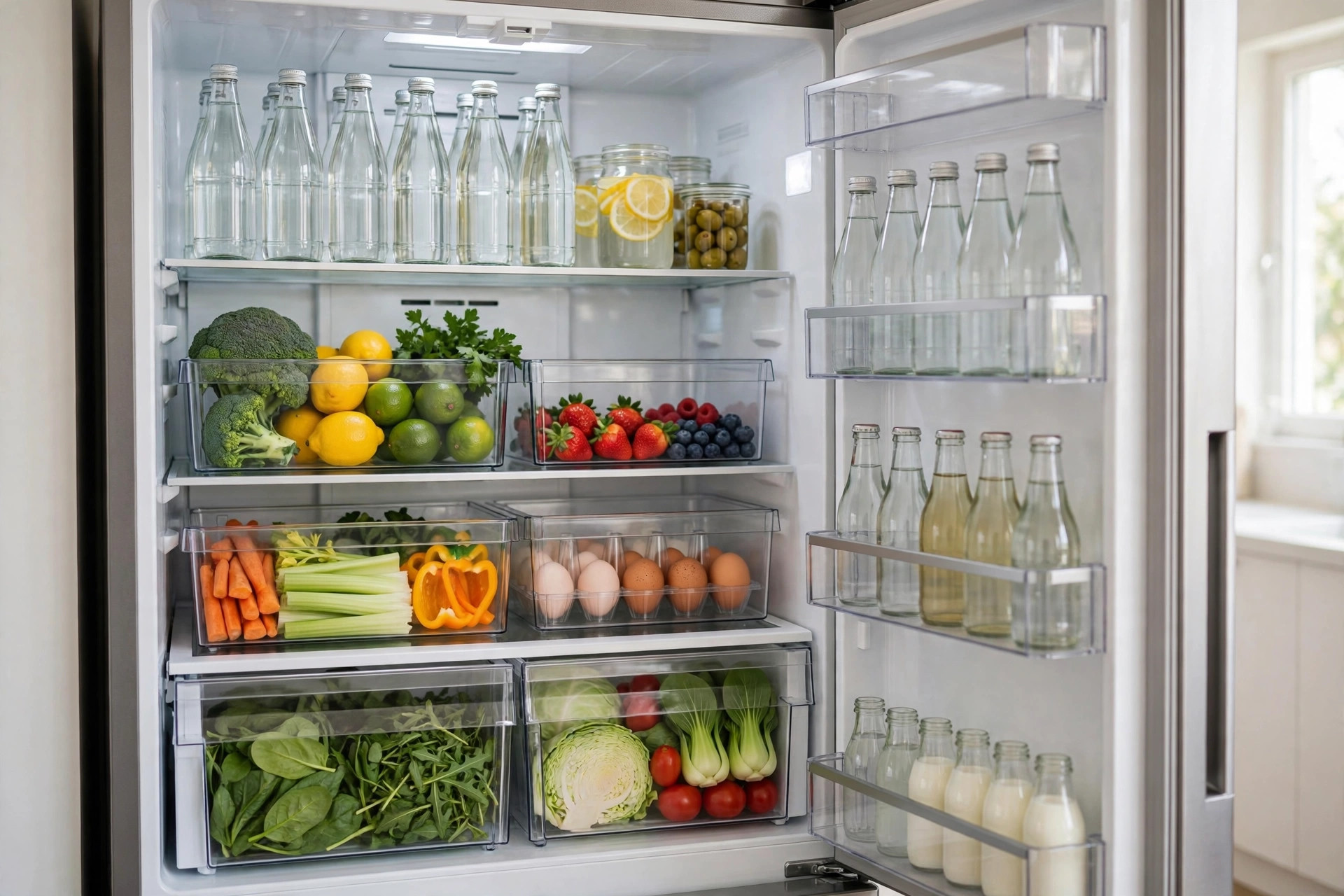
A refrigerator is not evenly cold. Cold air sinks, the back is colder than the front, and the door is the warmest spot. A zone system works with these temperature differences instead of fighting them.
Top Shelf: Ready-to-Eat Foods
The top shelf is the most consistent, moderate-temperature zone. It is the right home for foods you grab and eat without cooking: leftovers, yogurt, deli meat, hummus, and cheese. Store leftovers in clear, stackable containers so you can see what you have.
Middle Shelf: Dairy and Everyday Items
The middle shelf stays reliably cold and is easy to reach, which makes it ideal for milk, eggs (in their carton, not the door), and the ingredients you cook with most often. If you meal prep, this is also a good spot for prepped components like cooked grains or cut vegetables.
Bottom Shelf: Raw Meat, Poultry, and Fish
The bottom shelf is the coldest part of the fridge, and it is where raw meat belongs. Raw meat needs the coldest spot, and keeping it on the bottom means it cannot drip onto food below. Store it on a rimmed plate or tray to catch leaks, toward the back.
The Door: Condiments Only
The door is the warmest part of the fridge because it swings open all day. Condiments, jams, pickles, and sauces are its best residents — they are high in vinegar, salt, or sugar, which makes them forgiving of temperature swings. Milk, eggs, and leftovers do not belong in the door, whatever the built-in egg tray suggests.
Crisper Drawers: High and Low Humidity
Most fridges have two crisper drawers with humidity sliders. Set one to high humidity for vegetables that wilt: leafy greens, herbs, broccoli, carrots, peppers. Set the other to low humidity for fruits and anything that rots easily: apples, grapes, berries, citrus. Keep fruits and vegetables separate, since many fruits give off ethylene gas as they ripen, which makes nearby vegetables spoil faster.
The "Eat First" Bin: Your Leftovers Lifeline
Here is the single most useful piece of this system: one clear bin, labeled "EAT FIRST," that lives at eye level on the top or middle shelf. It holds leftovers, opened items close to expiring, and anything you plan to cook in the next day or two.
The rule is simple: before you cook a new meal or open a new package, check the Eat First bin. Date everything that goes in with masking tape. Leftovers are generally fine for about three to four days; if you have not eaten it by then, freeze it or toss it.
This one bin does more to cut food waste than anything else in this article. It turns "I forgot about the chili" into "oh right, the chili," and that is the whole game.
Corrals, Labels, and Small Helpers
You do not need matching containers to make zones work, but a few inexpensive helpers make the system easier to maintain:
- Condiment corrals: Group sauces you use together — taco night, salad dressings, sandwich fixings — on a small tray so you can grab them all at once.
- Category bins: A bin for snacks, one for lunch-packing items, one for breakfast foods. Everyone in the house can find things without rearranging the whole fridge.
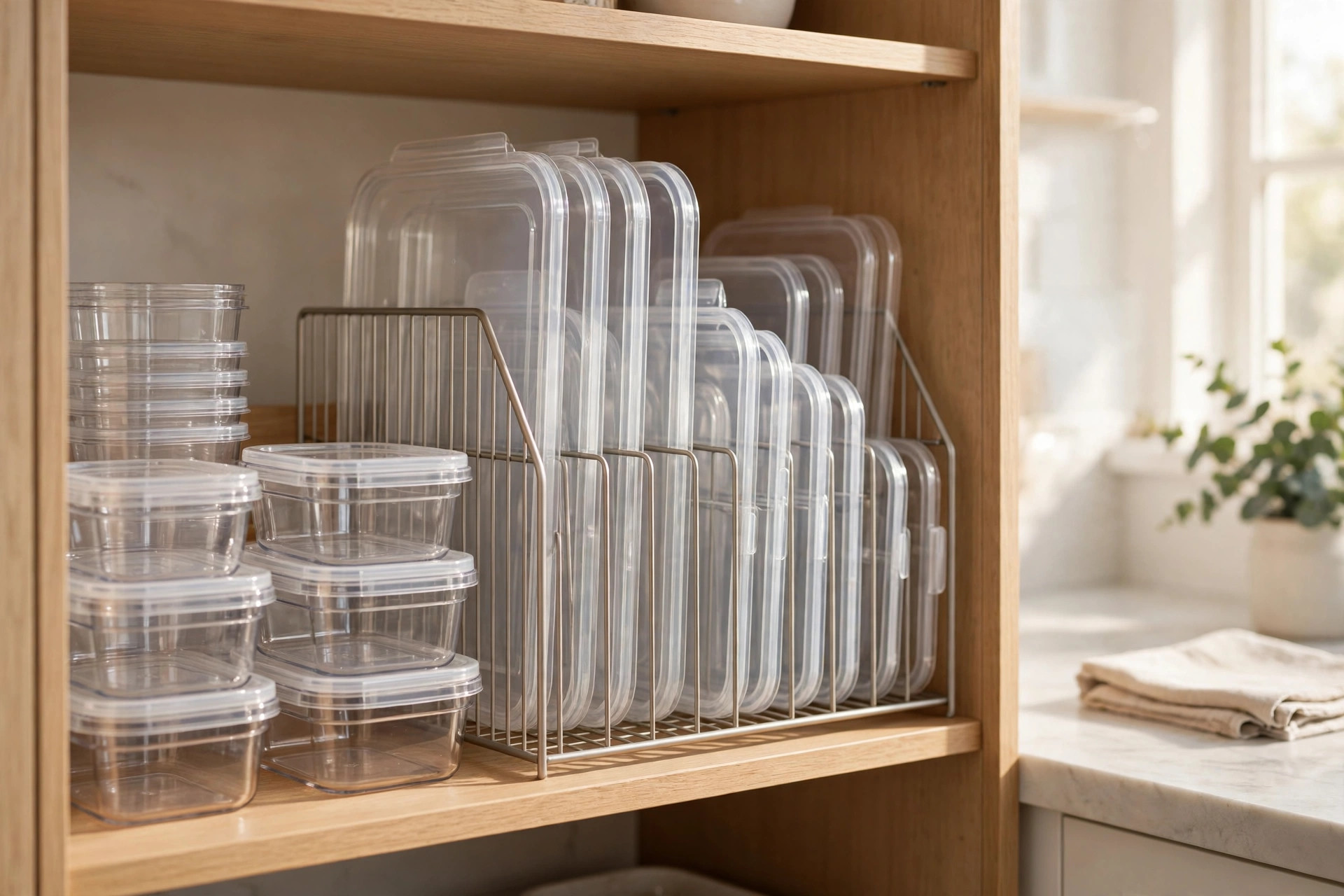
- Clear containers: If you cannot see it, you will not eat it. Choose clear over opaque every time.
- Masking tape and a pen: Date everything you cook, open, or freeze. "Opened 9/22" takes three seconds and prevents a month of guesswork.
Stack square containers rather than round ones — they use shelf space better. And do not overfill the fridge; cold air needs room to circulate, and a packed fridge cools unevenly.
Freezer Basics
The same zone logic applies to the freezer, just simplified. Group like with like: meat, frozen vegetables and fruit, prepared meals, bread and baked goods. Freeze bags of soup, ground meat, or sauces flat, then stand them upright in a bin like files in a filing cabinet — you can flip through them instead of digging through a frozen mountain.
Date and label everything with the contents and the date. A freezer inventory list taped to the door (or a quick note on your phone) keeps the mystery packages to a minimum. When in doubt, toss anything with heavy freezer burn or no label.
The Weekly 5-Minute Fridge Reset
Systems fail when nobody maintains them. Pick a consistent day — the day before your grocery run works best, since the fridge is emptiest.
- Toss (1 minute): Scan the Eat First bin and shelves. Anything expired, slimy, or older than you are comfortable with goes.
- Wipe (2 minutes): Hit one shelf or drawer with a damp cloth. Rotate which one each week so the whole fridge gets attention over time.
- Re-date (1 minute): Check that leftovers and opened items still have readable dates. Re-label anything that faded.
- Plan (1 minute): Glance at what is left and add what you need to your grocery list. Cooking from the fridge before you shop keeps waste down.
Five minutes, once a week, and the big cleanout becomes a rare event instead of a dreaded one.
Common Fridge Mistakes to Avoid
- Storing milk and eggs in the door. It is the warmest spot; they keep longer on a shelf.
- Mixing raw meat with ready-to-eat food. Raw meat goes on the bottom shelf, always.
- Letting herbs go limp. Treat leafy herbs like flowers: trim the stems and stand them in a jar with a little water, loosely covered.
- Putting hot food straight in. Let food cool to room temperature first (within about two hours), then refrigerate.
- Blocking the vents. The vents along the back wall need airflow. Do not push food flush against them.
Frequently Asked Questions
How often should I clean out my refrigerator?
Do a full cleanout every one to three months, depending on how well you keep up with the weekly reset. With the five-minute routine in place, the deep clean may only need to happen a few times a year.
How long do leftovers last in the fridge?
Most cooked leftovers stay good for about three to four days when refrigerated promptly. Label the container with the cooking date, and if you cannot eat it within that window, move it to the freezer or toss it.
Where should I store eggs in the refrigerator?
Keep eggs in their original carton on a middle shelf, not in the door. The door sees the most temperature fluctuation, and the carton protects eggs from absorbing odors. The built-in egg tray looks convenient, but the shelf is the better choice.
Should I wash produce before putting it in the fridge?
Wait to wash most produce until you are ready to eat it. Extra surface moisture encourages mold and speeds up spoilage, especially for berries and leafy greens. Rinse right before use instead.
How full should my refrigerator be?
Aim for reasonably full but not packed. A fridge with some mass holds its temperature better than an empty one, but cramming it full blocks airflow and creates warm spots. Leave a little space between items so cold air can circulate.