How to Organize a Shared Apartment With Roommates (Without the Fights)

Most roommate conflicts are not personality clashes. They are organization failures. The fight about the dishes is really a fight about a system nobody agreed on. The tension over the bathroom is really a scheduling and storage problem. If the apartment has clear zones, clear boundaries, and clear chore systems, there is simply less to argue about.
This guide is not about getting along emotionally. It is about building a shared apartment that runs itself: spaces where everyone knows what goes where, chores that rotate without reminders, and private storage that is genuinely private. Do this right once, and the apartment stays civil even when someone is having a terrible week.
Here's what you'll learn in this guide to organizing a shared apartment with roommates: how to set up clear zones in the kitchen, bathroom, and living room; how to build chore systems that actually stick; how to draw storage boundaries that protect personal space; and which communication habits prevent small annoyances from becoming real conflict.
Kitchen Zones: The Heart of Roommate Peace
The kitchen causes more roommate arguments than every other room combined, so organize it first. Divide it into zones by use, not by person: a cooking zone around the stove, a prep zone with counter space and cutting boards, and a storage zone for dry goods and dishes. Zones keep three people from doing three different things in the same two square feet.
Inside those zones, divide storage by person. Each roommate gets their own shelf or cabinet section for dry goods, snacks, and the foods they do not want shared. Label the shelves with tape and a marker if you need to; this is not passive-aggressive, it is clarity. Shared staples (oil, salt, dish soap) go in one clearly marked shared spot, and everyone splits the cost. If you are short on cabinet space, our guide to renter-friendly organization ideas has cabinet and shelf tricks that work in any kitchen.
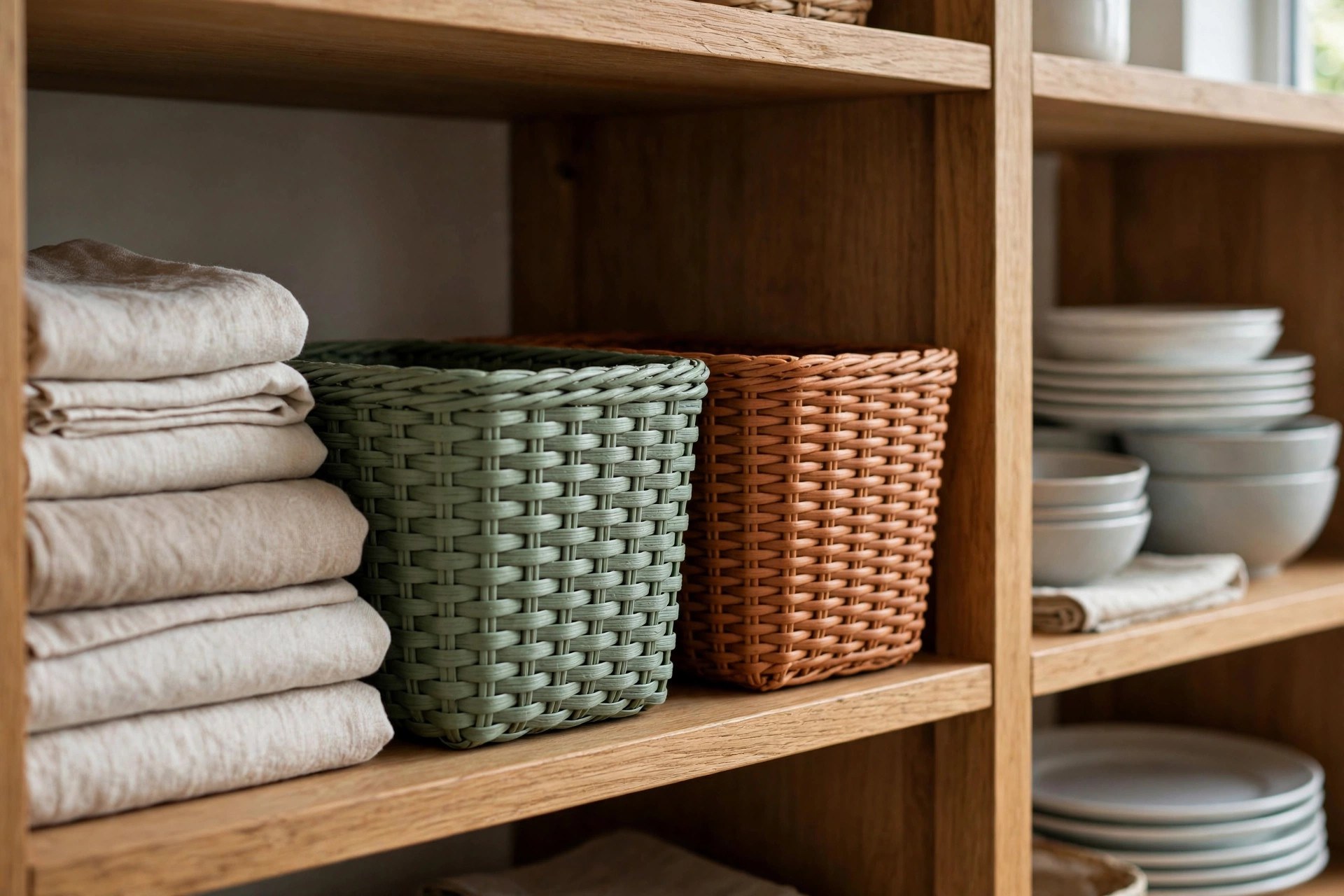
Set two kitchen rules that prevent 90 percent of problems. First, nothing sits in the sink: wash, dry, and put away within a few hours, or load the dishwasher immediately. Second, the fridge gets a shared zone system. Each person gets a shelf and one door rack. Leftovers get eaten or tossed within four days. Date a piece of tape if it helps. A fridge with assigned space almost never becomes a mystery-science experiment.
The Bathroom and Living Room: Boundaries That Work
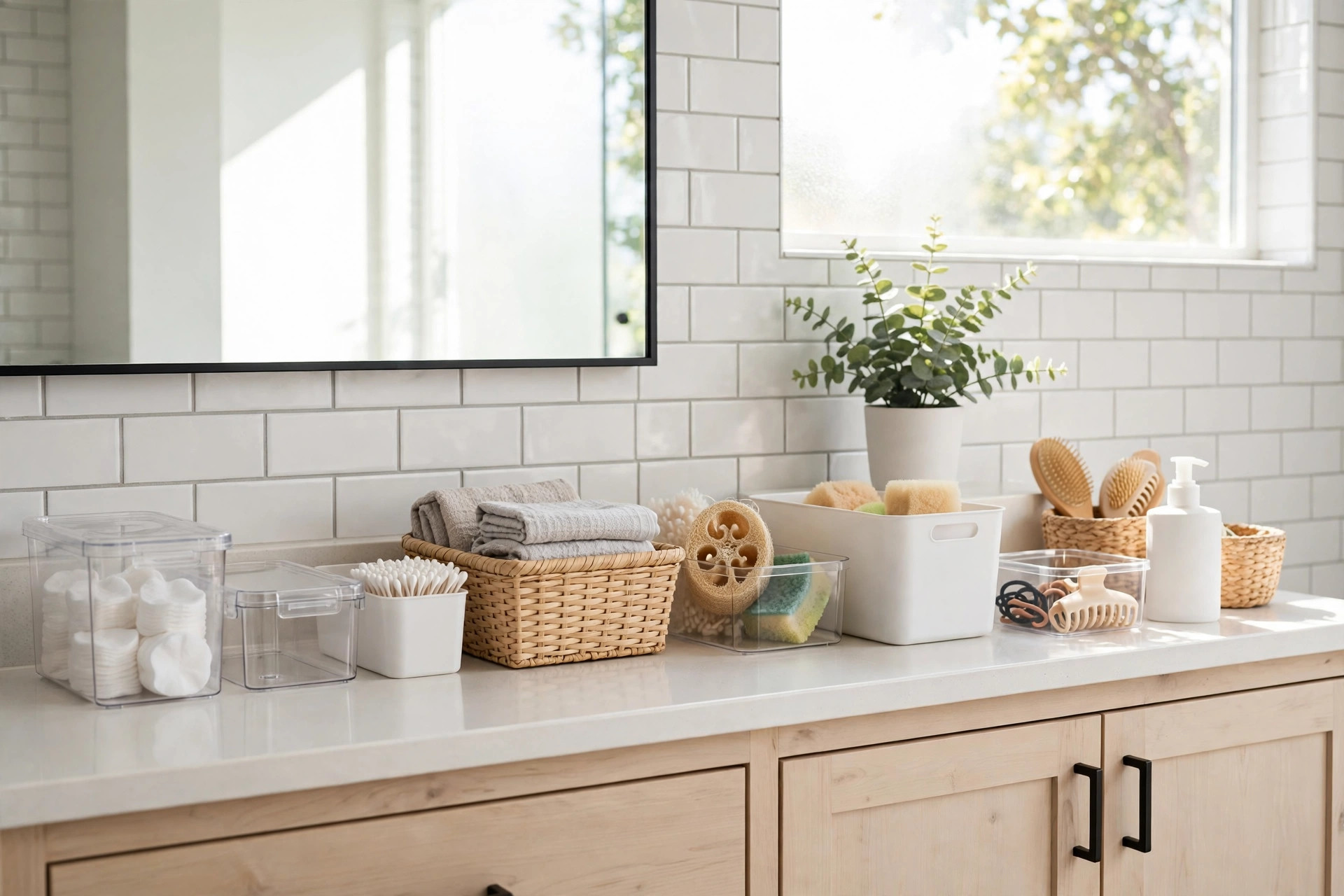
Bathrooms are easier than kitchens because the fixes are mostly about storage. Give each roommate a caddy or a shelf basket with their own toiletries. One basket per person, kept under the sink or on their assigned shelf, means nobody's products spread across the counter. Shared items (toilet paper, hand soap, cleaning supplies) live in one shared spot, and restocking them goes on the chore rotation.
Mornings need a schedule, not just storage. If two or more people leave at similar times, agree on shower windows: thirty-minute slots, booked the night before or set weekly. It feels overly formal the first week, then it feels normal. The alternative is the daily hallway standoff, which is worse.
The living room needs clear shared space and clear personal space. Agree on which surfaces are communal (the coffee table, the TV stand) and which are personal (your desk corner, your bookshelf shelf). The communal surfaces get the tidiness standard; the personal ones are each person's own business. For seating, a zone approach helps in small living rooms: one end can be the gaming and TV zone, the other a reading corner, so two people can coexist in one room without sharing an activity.
Chore Systems That Actually Stick
Chore charts fail when they are unfair, vague, or permanent. Build a rotation instead. List every recurring task (kitchen floor, bathroom, trash and recycling, vacuuming the living room, hallway dusting) and assign each one a rotation slot. Every week, everyone shifts one slot. Nobody gets stuck scrubbing the toilet forever, and nobody can claim they did not know it was their turn.
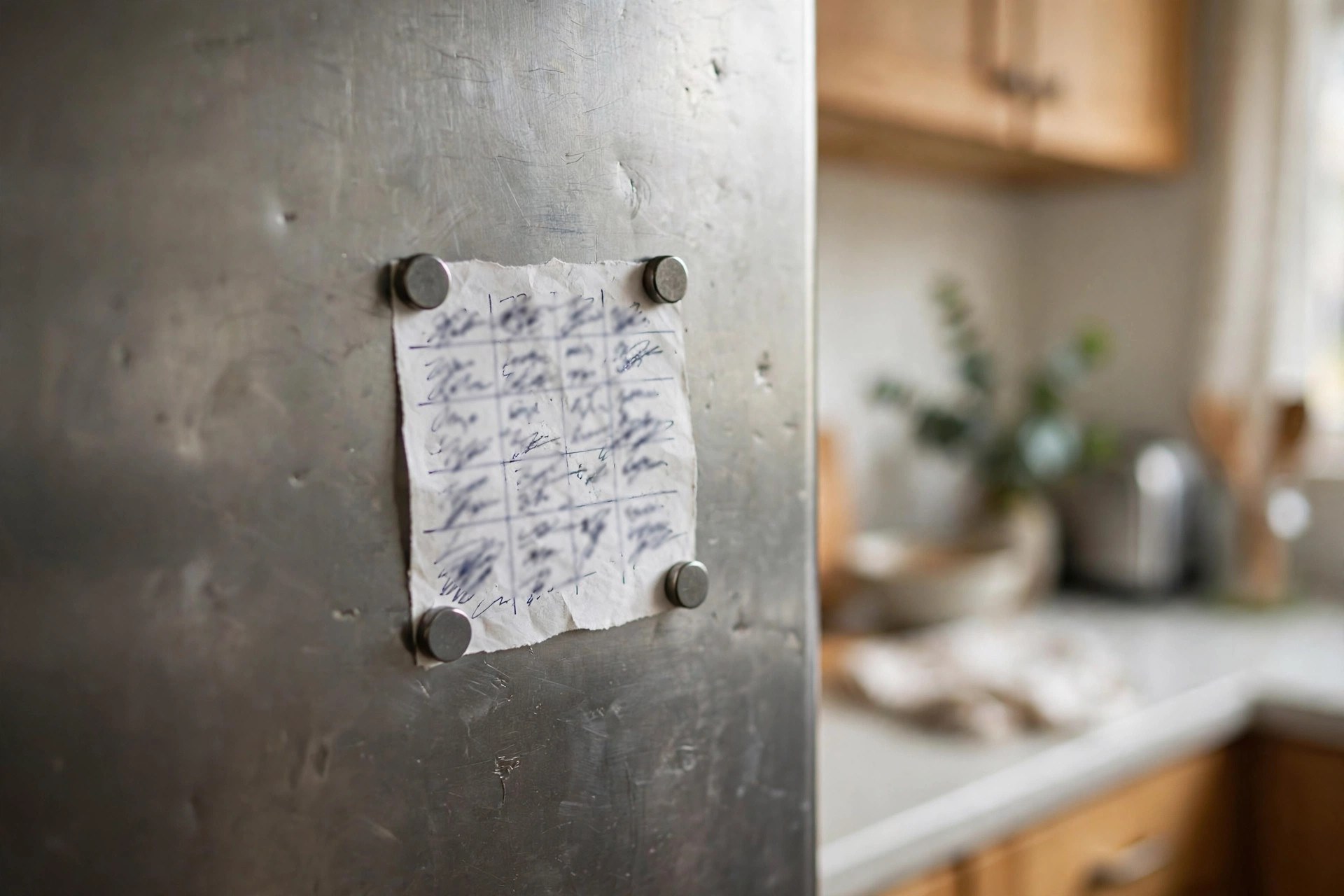
Keep the task list visible. A paper chart on the fridge beats a group chat reminder every time, because it is always visible and nobody has to play manager. One photo of the chart in the group chat at the start of the month covers anyone who wants it on their phone.
Add two habits that make the rotation actually work. First, the ten-minute reset: every evening, everyone tidies their own things and one shared surface for ten minutes. Ten minutes a day replaces a miserable Saturday deep clean. Second, handle the immediate: spills get wiped, trash goes out when full, the dishwasher gets unloaded before it is needed. Chores stay small only when they get done promptly. Our room-by-room decluttering guide is a good backup resource when a shared space has drifted into chaos and needs a reset.
What To Do When Someone Skips Their Turn
No system survives contact with a busy week, so plan for misses. The rule is simple: assume it was an accident the first time. A single friendly reminder, in person or by text, resolves most lapses. People forget; that is normal, and treating it as a character flaw is how small things escalate.
If the same task gets skipped twice, bring it to the monthly check-in instead of starting a group chat debate. Ask what is going on before assigning blame: maybe the task is genuinely harder than the others and needs rebalancing, or maybe someone's schedule changed. Often the fix is swapping tasks, not scolding. And build in a grace mechanism from the start, like a chore-swap board on the fridge where anyone can trade a week in advance. Flexibility inside a system keeps the system alive; rigid systems just get abandoned.
Storage Boundaries and Communication Habits
Every roommate needs territory. In the bedroom, this is easy; in the shared areas, draw the lines explicitly. Each person gets defined storage: a shelf, a basket, a drawer. Personal items stay inside those lines. If someone needs more room, the conversation is about renegotiating space, not about tolerating creep into everyone else's zones.
The single most important communication habit is the monthly check-in. Once a month, sit down for fifteen minutes and name one thing that is working and one thing that is bugging you. Small annoyances, said early and calmly, never become blowups. The dish that sat in the sink for two days is a conversation; three months of dishes in the sink is a fight. Agree on this habit in the first week, before anyone is annoyed, so it feels normal rather than dramatic.
Finally, write the big stuff down. A one-page roommate agreement covering rent splits, utility splits, guests and overnight guest rules, and how you handle someone moving out prevents the conversations everyone dreads. It does not have to be formal or signed; it has to be specific and somewhere everyone can find it. Shared apartments work best when the systems are boring, the boundaries are clear, and the only thing left to argue about is what to watch.