Emotional Zoning: Organize Your Small Apartment by Mood, Not Function
Traditional organizing divides a home by function: this is the bedroom, that is the office, the kitchen is for cooking. That logic falls apart in a small apartment, where one room is the bedroom, the office, and sometimes the dining room all at once. When every corner has to multitask, organizing by function just produces a room that feels like four half-finished jobs.
Emotional zoning offers a different lens. Instead of assigning spaces by what you do there, you assign them by how they should make you feel: a focus zone for clear-headed work, a calm zone for rest and unwinding, and a social zone for connecting with people. The furniture barely changes. What changes is the lighting, the texture, and the boundaries, so your brain gets a signal that you have moved into a different mode even when you have only moved six feet.
Let us be honest up front: this is a lens, not a miracle. Emotional zoning will not give you more square footage, and it will not fix a genuinely broken layout. But in a small rental where the rooms refuse to stay single-purpose, organizing by mood is a practical way to make the same space serve you better. Every idea here is renter-friendly, no-drill, and sized for small apartments.
Here's what you'll learn in this guide to emotional zoning in a small apartment: how to map your space into mood zones; how to build a focus corner that signals work mode; how to create a calm corner that actually helps you unwind; and how to carve out a social nook that makes a tiny space feel welcoming.
Map Your Moods to Your Corners
Start by listing the three to five modes your apartment actually hosts. Most small apartments need three: focus (work, study, admin), rest (reading, sleeping, doing nothing), and social (meals with a friend, a partner, a video call with family). Some people need a fourth, like a create mode for hobbies. Write your modes down, because naming them is what turns vague dissatisfaction into a plan.
Now walk your apartment and assign each mode to a spot. The focus mode goes near natural light if you can manage it, since daylight supports alertness. The rest mode goes in the dimmest, quietest corner you have. The social mode goes where people naturally gather, usually the largest open area. You do not need equal space for each; a rest zone can be a single armchair, and a social zone can be two chairs and a side table.
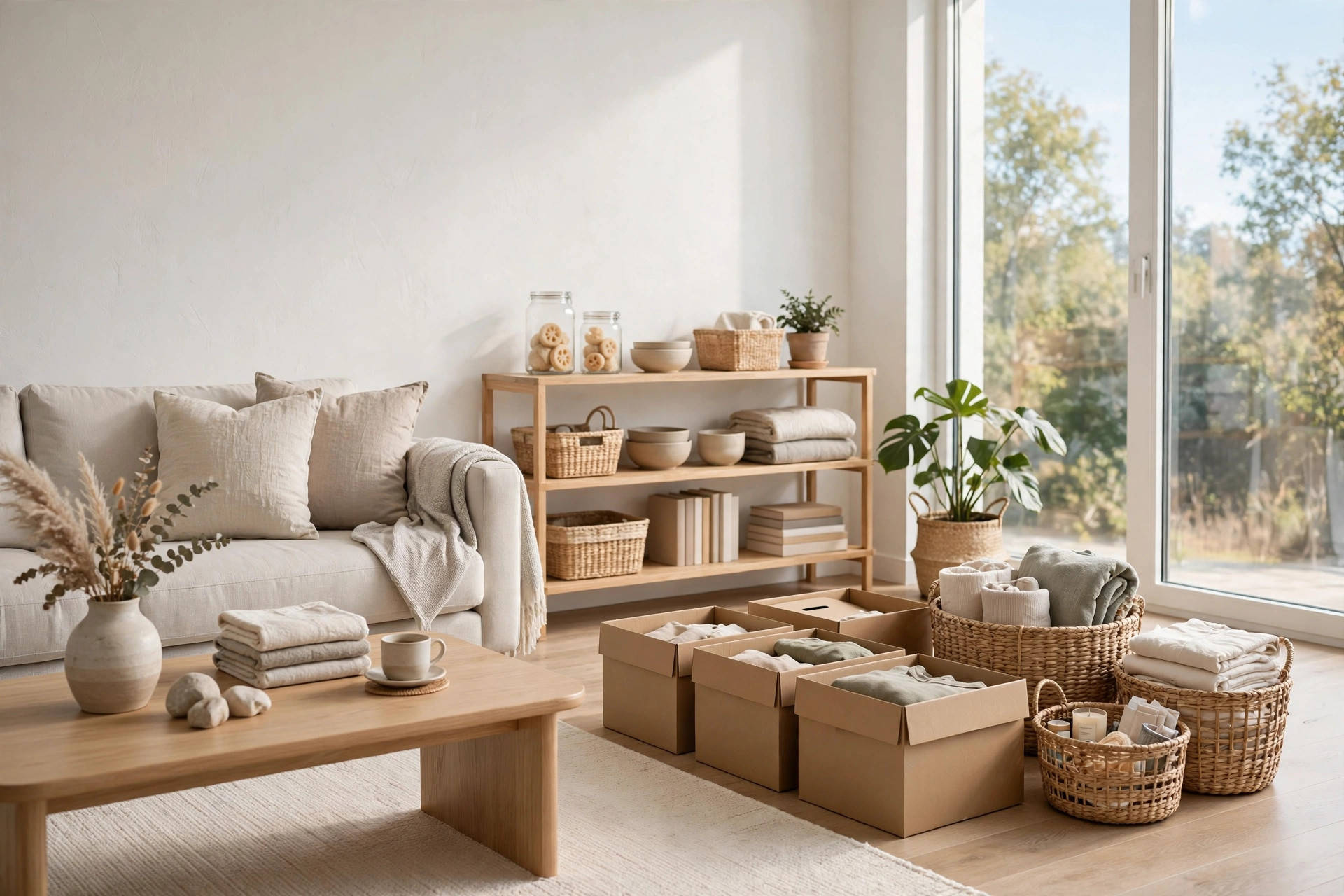
Draw the zones with soft boundaries, not walls. A rug, a different lamp, or a plant can mark where one zone ends and another begins. In a studio, even facing a chair a different direction is a boundary. These visual cues matter more than you would think: when your body can see the difference between the focus corner and the rest corner, your mind follows. For more on working with limited square footage, our guide to small living room storage for apartments pairs well with this zoning approach.
The Focus Zone: A Corner That Says Work
The focus zone exists to do one thing: tell your brain it is time to concentrate. The most powerful tool is dedicated lighting. A bright, cool-white desk lamp that you turn on only when working creates a Pavlovian signal. Keep the rest of the apartment's lighting warm and dim while you work, so the focus corner is literally the brightest spot in the room.
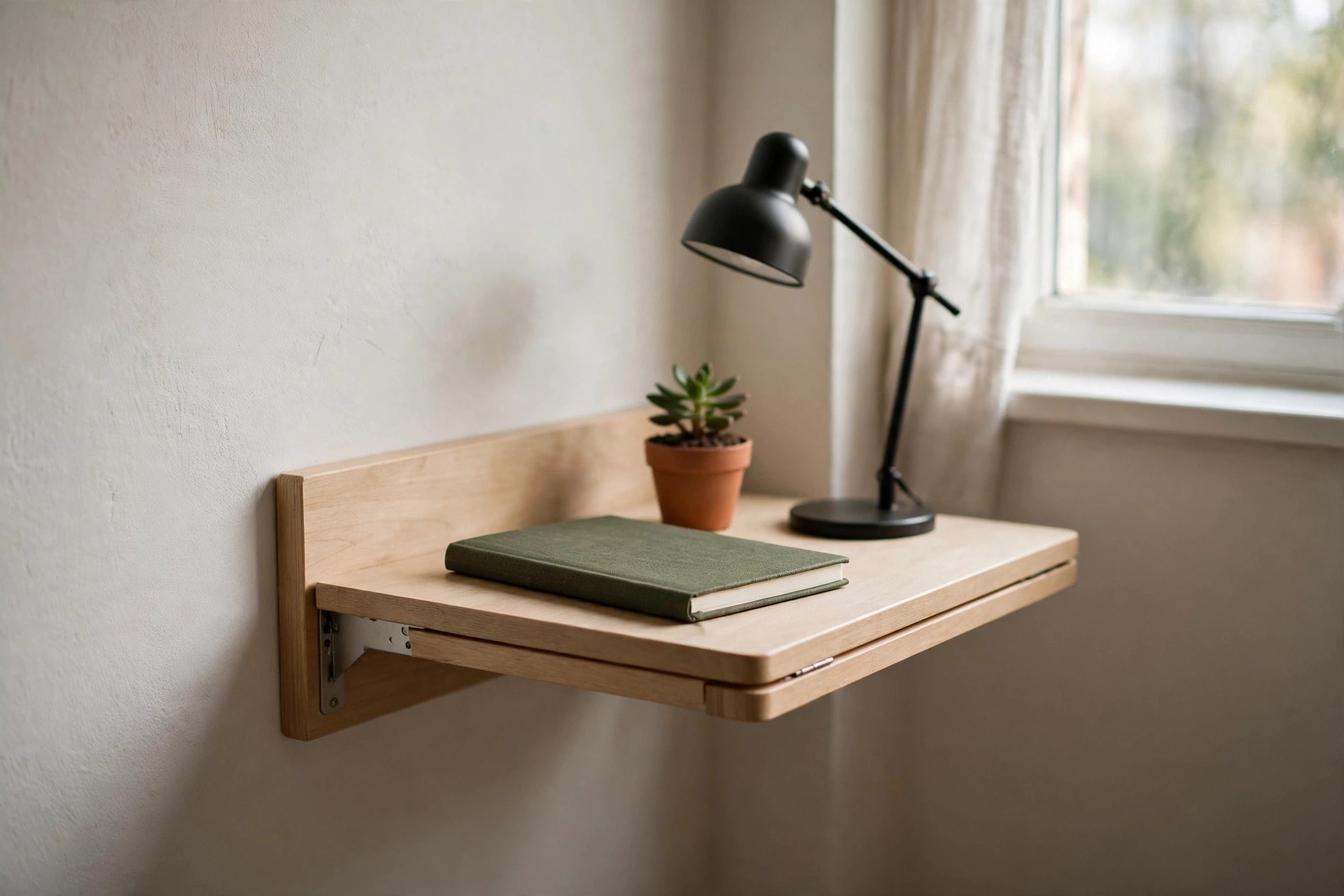
Keep this zone minimal and renter-friendly. A wall-mounted folding desk needs no floor space when closed and only two screws (or even adhesive brackets rated for the load) when open. A small cart on wheels can serve as a mobile office that rolls away at 6 p.m. Whatever you choose, the rule is: when work ends, the work disappears. Laptop closed and put away, papers into one tray, chair pushed in. A focus zone that still looks like an office at 9 p.m. will never let you rest.
Sound matters as much as sight. If your focus corner shares airspace with a partner's TV zone, a pair of noise-canceling headphones plus a consistent playlist or white noise builds an invisible wall. Scent works too: a particular candle or essential oil used only during work hours becomes a focus cue over time. Small rituals, repeated daily, are what turn a corner into a zone. If your budget for the workspace itself is tight, our home office organization on a budget guide covers the furniture side of this.
The Calm Zone: Designing for Unwinding
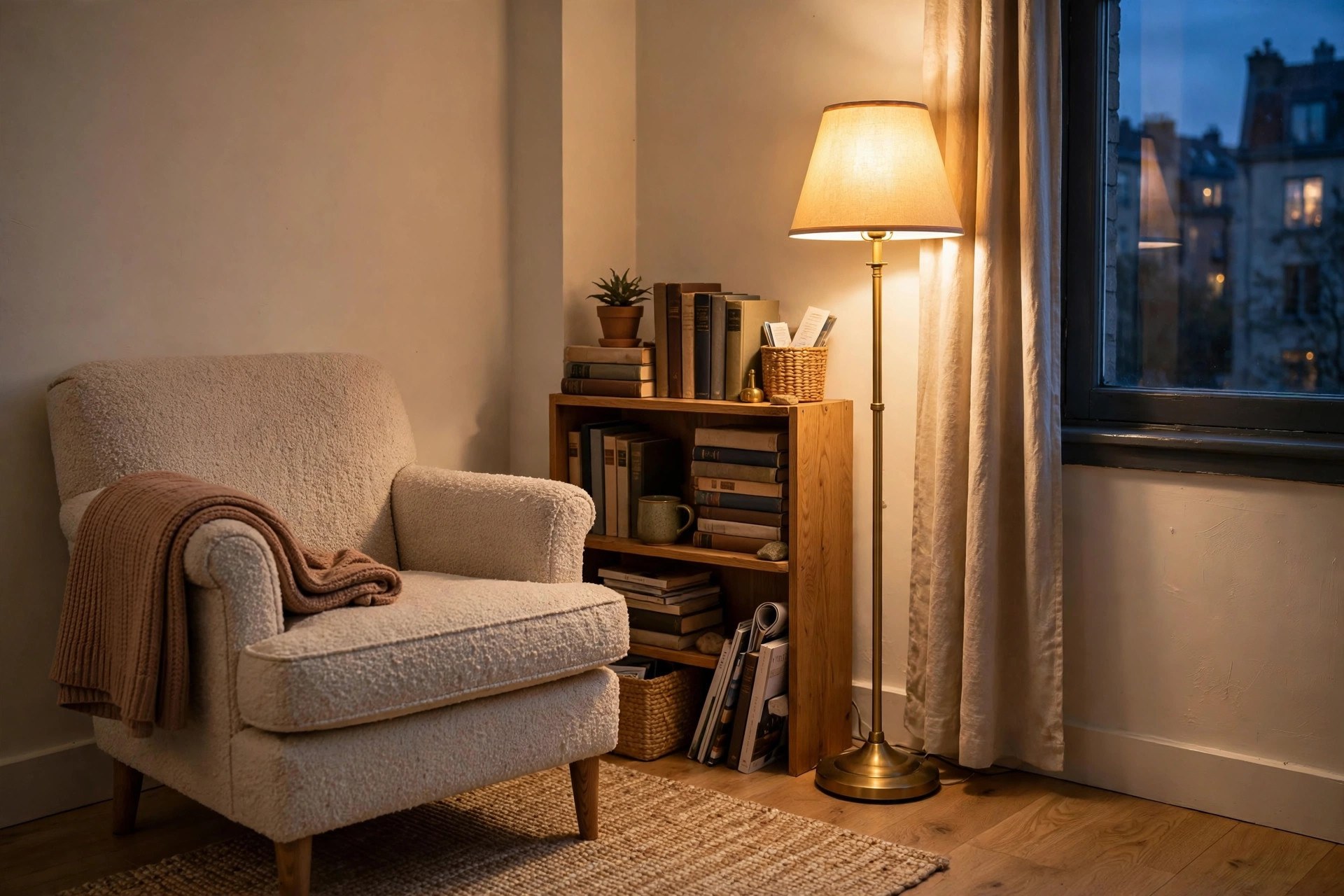
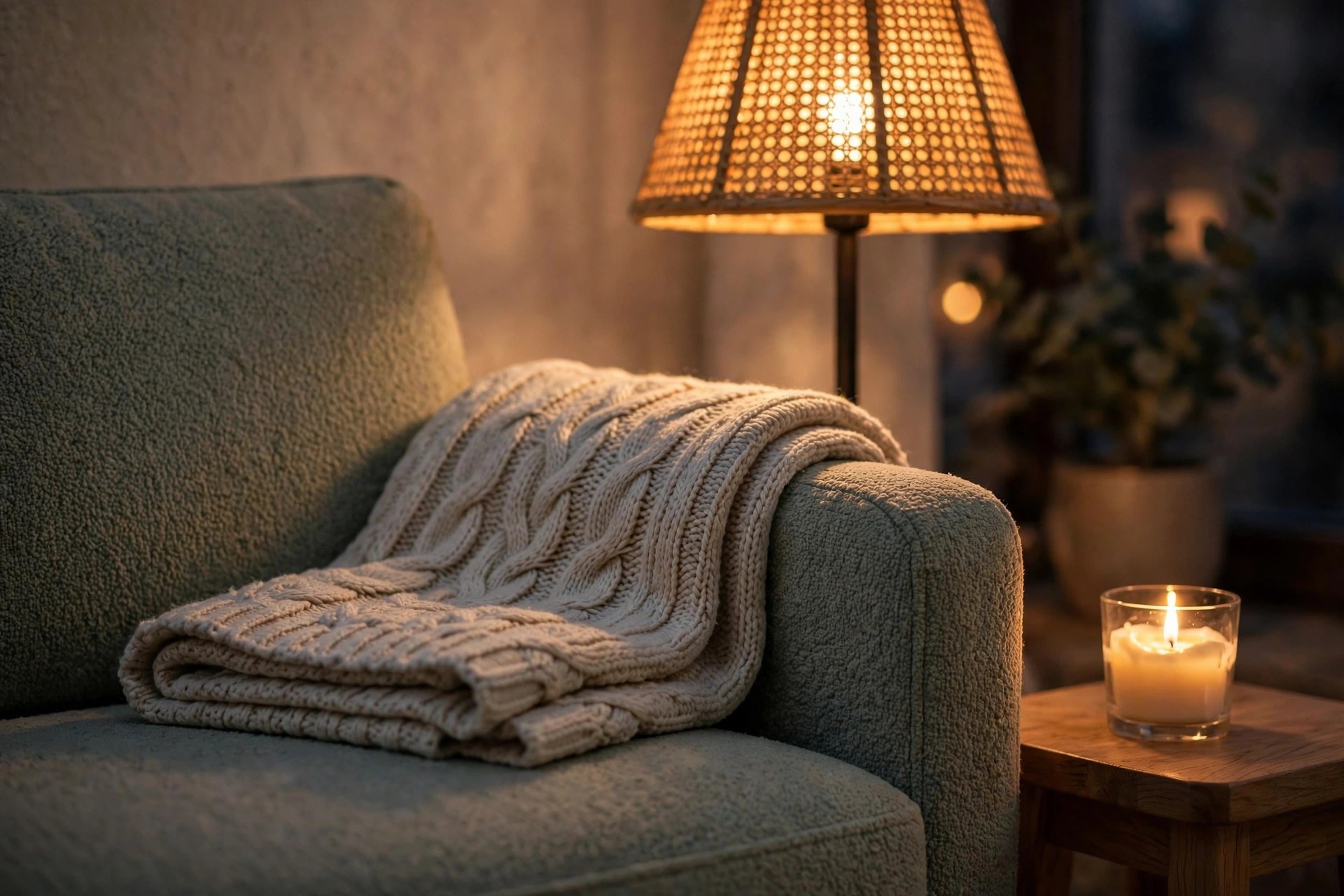
The calm zone is the opposite of the focus zone in every way: warm light, soft textures, nothing that demands action. A reading chair with a throw blanket and a warm-toned floor lamp is the classic version, and it is classic because it works. The key is that nothing in this zone should look like a task. No laptop, no to-do lists, no pile of mail waiting to be sorted.
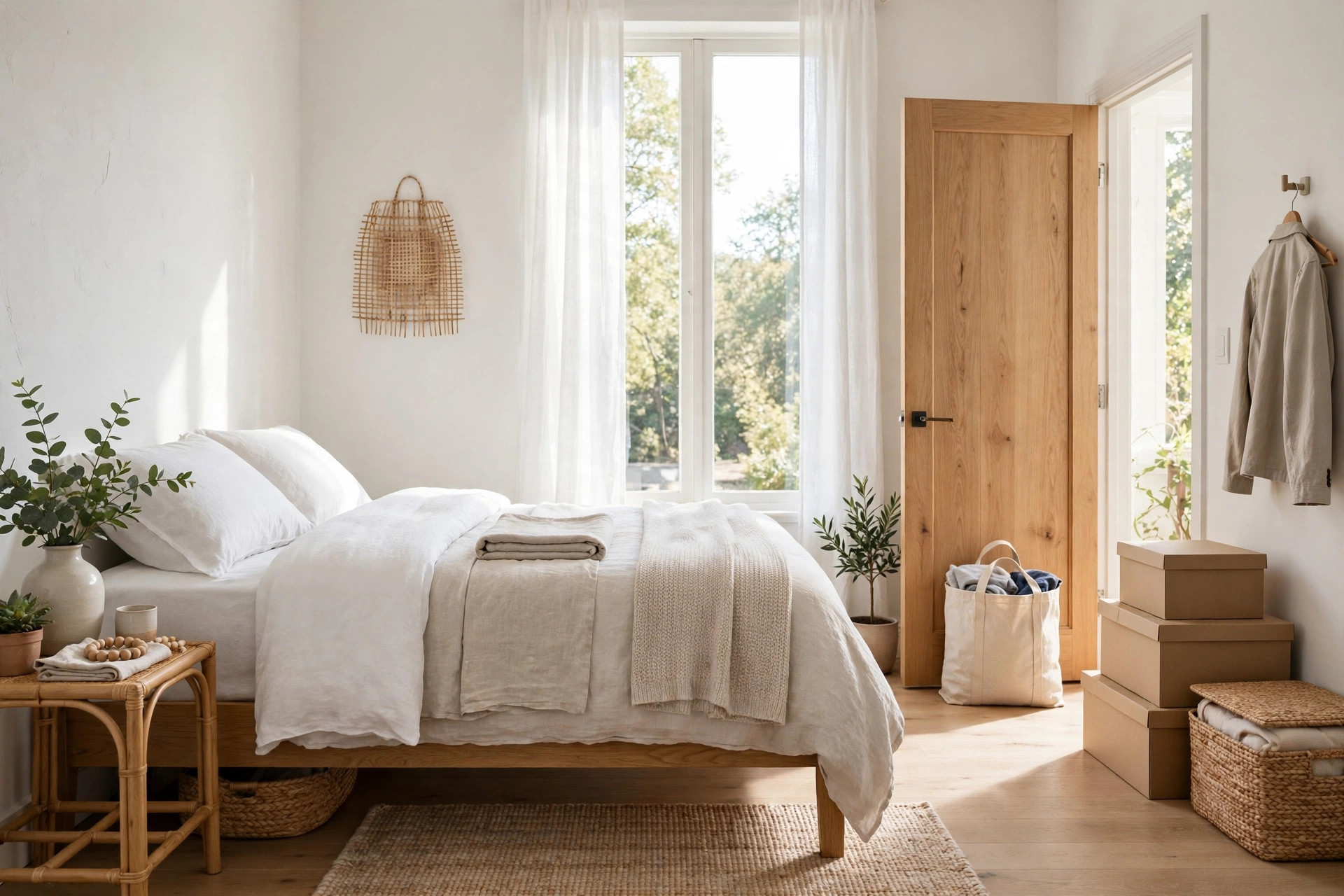
Build it with layers. Start with the seat, then add a warm light source (a lamp with a 2700K bulb, not the overhead fixture), then a soft layer (throw, cushion), then one sensory anchor: a candle, a small plant, or a stack of books you actually want to read. Each layer adds to the signal that this corner is for slowing down. In a bedroom studio, the bed itself can be the calm zone if you protect it: keep work and screens off it, and let it stay associated with rest.
Protect the calm zone from drift. When you are tired, it is tempting to bring the laptop to the reading chair, and that single habit dissolves the zone faster than anything else. If you catch yourself working there, notice it and move. The zone only works if its associations stay clean. Our no-drill renter-friendly decor ideas have plenty of adhesive-hook and leaning-frame tricks for dressing up a calm corner without touching the walls.
The Social Zone: Small-Space Welcoming
The social zone in a small apartment is usually just the clearest patch of floor plus somewhere to sit. That is fine. What makes it feel welcoming is not size but intention: seating that faces each other, a surface for drinks, and warm light. Two chairs angled toward each other around a small table signals "sit and talk" better than a row of seats facing a television.
Keep this zone flexible. Folding chairs that live in a closet, a drop-leaf table that expands for guests, and floor cushions stored in an ottoman let a studio host four people for dinner without devoting permanent square footage to entertaining. The social zone borrows space from the focus and rest zones on demand, then gives it back.
Finally, maintain the zones with tiny weekly resets. Fluff the calm corner's throw, clear the focus desk back to its minimal state, and return the social seating to its default arrangement. Five minutes on a Sunday keeps the boundaries crisp. Emotional zoning is not about buying more things or following a trend; it is about making the space you already have tell you, clearly and kindly, what each corner is for.