Home Office Organization on a Budget
You don't need a dedicated office room, a standing desk, or matching organizers to work from home comfortably. You need a clear surface, cords that don't look like spaghetti, and a simple system that keeps papers, chargers, and supplies from swallowing your day. In this guide, you'll learn how to declutter your desk surface for free, tame cables for a few dollars, set up simple paper and supply zones, organize desk drawers with things you already own, use your walls for storage, and keep work from bleeding into your life when your "office" is a bedroom corner. You'll finish with a 10-minute end-of-day reset routine that makes every morning start clean — all of it budget-friendly, no big spending required.
Start With a Total Desk Reset
Before you buy anything, clear everything off your desk. Every pen, notebook, sticky note, charger, and coffee mug goes onto the bed or a nearby table. Then wipe the surface down. A clean, empty desk is free motivation.
Now sort what came off into four piles: daily use (laptop, notebook, one pen, water bottle), occasional use (chargers, headphones, reference papers), decor (things you like but don't use), and leave (items that belong elsewhere). The "leave" pile is usually the biggest surprise — mail, snacks, and laundry migrate to home desks fast. Put those things back where they live right now.
When you rebuild your desk, only the daily-use pile comes back. Everything else gets a home in the zones below. Under ten items on the desk means it's already 80% organized.
Cable Management on the Cheap
Cables are the fastest way to make a workspace feel chaotic, and fixing them costs almost nothing.
- Bundle with what you have. Hair ties, rubber bands, bread-bag twist ties, or old velcro straps all work as cable ties. Group cables running the same direction and bind them every few inches.
- Mount the power strip under the desk. A couple of adhesive hooks keeps it off the floor, with one cord running to the wall.
- Label your chargers. A small piece of masking tape around each brick — "phone," "laptop" — saves you from unplugging the wrong thing.
- Drop cables behind the desk. Let the bundle fall behind the desk rather than dangling in front. A small fabric bin flipped on its side can hide a power strip and excess cord.
The goal isn't invisible cables. It's one neat bundle you never think about.
Set Up Paper and Supply Zones
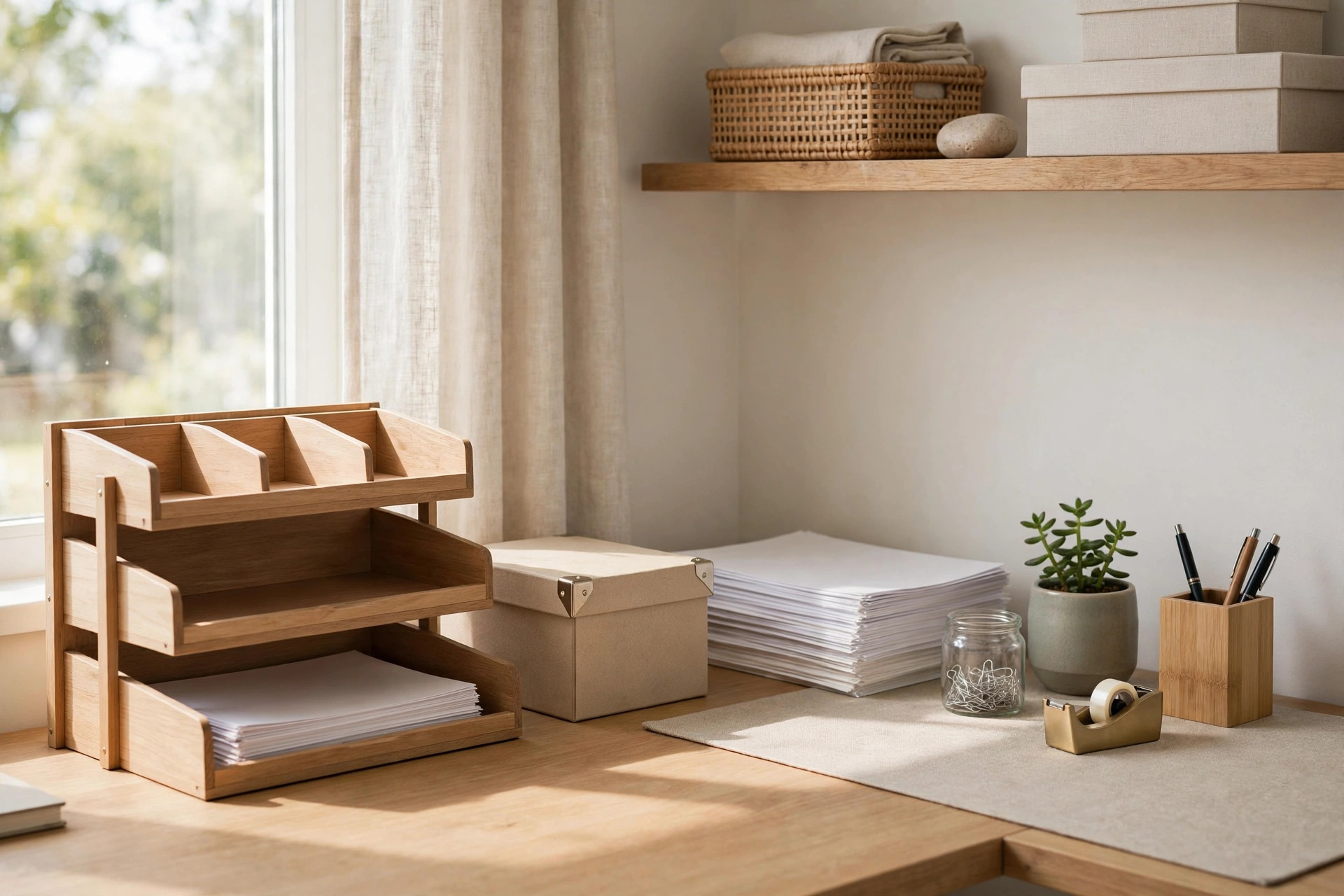
In a small home office, papers are the number-one clutter source. Give every kind of paper one place, and never let it live anywhere else.
The inbox zone. One tray, box, or large envelope labeled IN. Every paper that enters your work life goes there first. Once a week, process it: file it, act on it, or toss it.
The active zone. One folder or clipboard for papers you're working on right now — this week's bills, tomorrow's project notes. When something is finished, it leaves.
The supply zone. Corral small supplies in one container instead of scattering them. A mug or jar works as a pen cup; keep only what you use weekly. Everything else — extra staples, spare highlighters, the tape refill — lives in a labeled bag in a drawer or on a shelf. Your desk holds your tools, not your inventory.
Organize Desk Drawers With Things You Own
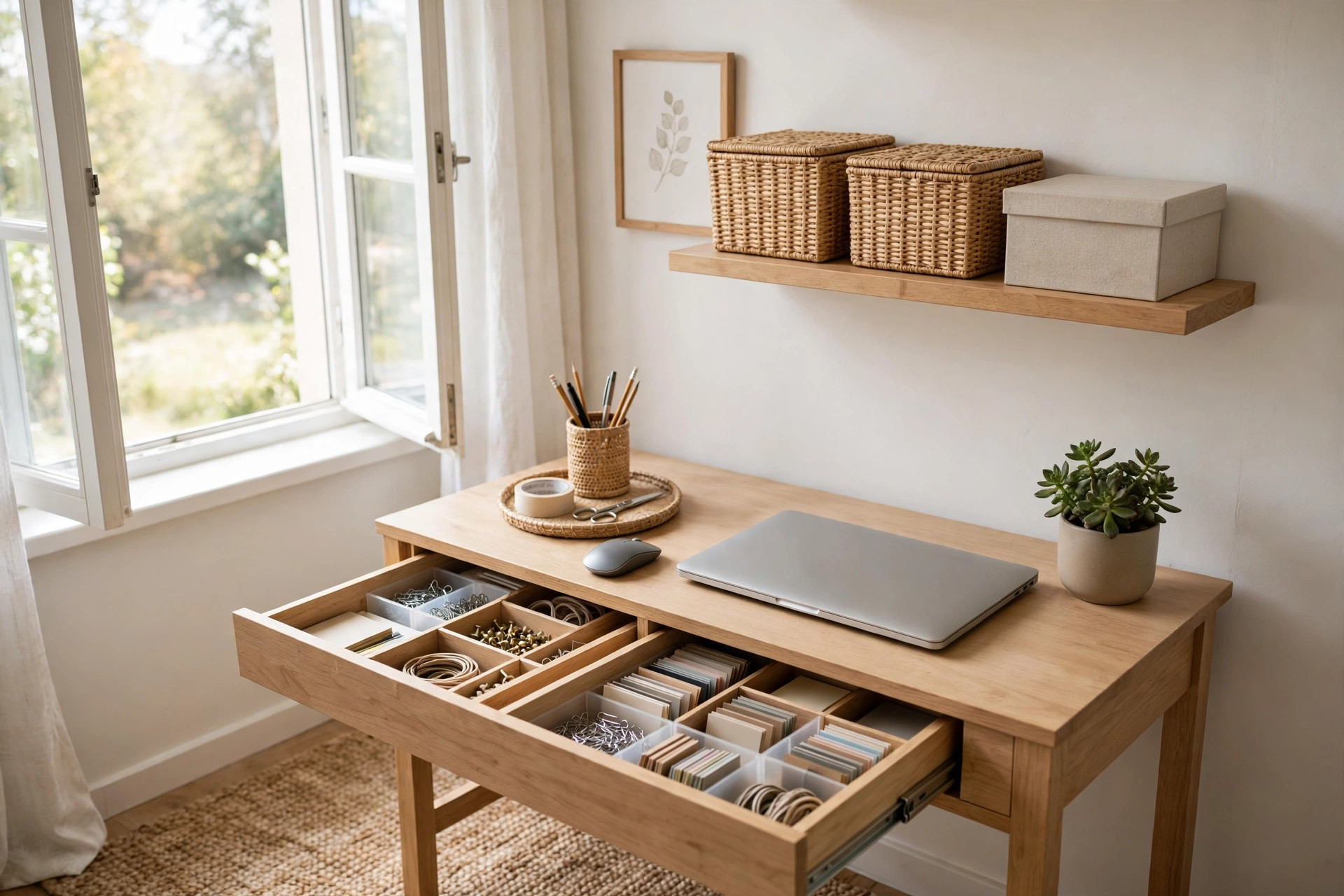
Skip the store-bought organizer sets. Cut cereal boxes or shoebox lids down to drawer height and arrange them as dividers. Muffin tins, ice cube trays, and old gift boxes work for paper clips, USB drives, and binder clips.
Assign every drawer section a category before anything goes back in: office supplies, tech accessories, papers to file, personal items. If a section has no category, it becomes a junk drawer. Lay things flat in a single layer so you can see everything at a glance. If you have to dig, the system has already failed.
Go Vertical: Use Your Walls
When you have no floor space and no spare room, the walls are your expansion plan. Vertical storage keeps the desk surface clear, which is the whole point.
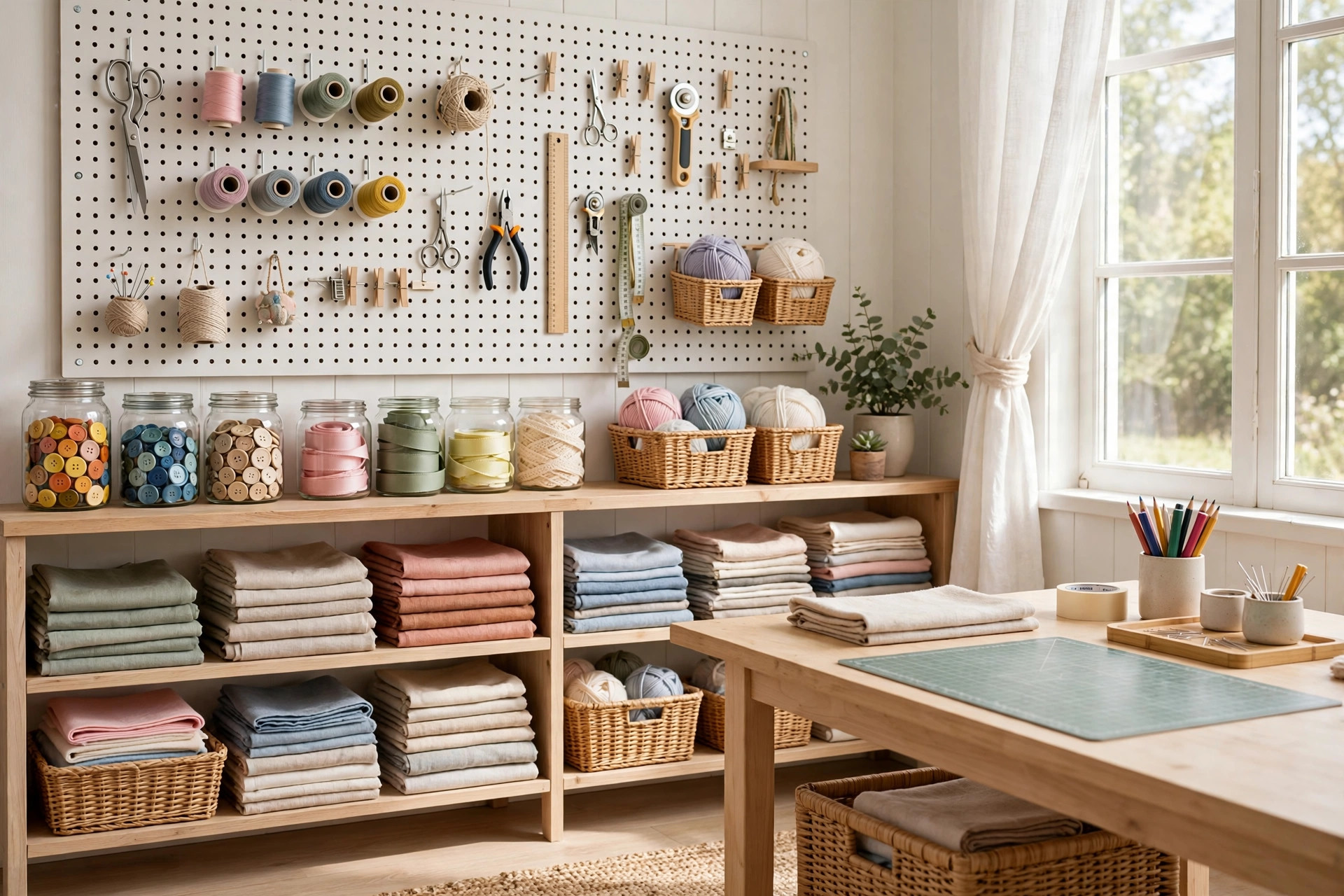
- A pegboard or corkboard above the desk holds scissors, headphones, and supply cups on hooks for a fraction of what shelving costs.
- One or two thrifted floating shelves hold books, binders, and a small plant — and can free up half a drawer.
- Wall-mounted magazine files beside the desk store your inbox tray and active folder off the surface.
- Twine with clothespins makes a free bulletin board for notes you'd otherwise stack on the desk.
Keep everything within arm's reach — storage too high to grab becomes decoration, not storage.
Keep Work and Life Separate in a Small Home
When your office is the kitchen table or a bedroom corner, boundaries blur. Physical and ritual boundaries fix that without costing a dime.
Create a "closed" signal. Roll up a desk pad, close a box, or turn your laptop face-down and cover it with a cloth to tell your brain the workday is over.
Contain work to one footprint. Everything work-related should fit in your desk zone. If work papers start colonizing the dining table, do a weekly sweep and bring the strays home.
Use a divider trick. A folding screen, a bookshelf turned sideways, or a curtain on a tension rod can separate a desk corner from the rest of the room — giving your eyes somewhere else to rest in the evening.
Set a shutdown time and announce it. Tell your household — or just yourself — when work ends. Stated boundaries get respected more easily than silent ones.
The 10-Minute End-of-Day Reset Routine
An organized home office stays organized because of a daily reset, not a one-time overhaul. Set a timer for ten minutes and work through this list before you log off:
- File or toss today's papers (2 min). Move inbox items to their zones. Papers needing action tomorrow go in the active folder.
- Clear the desk surface (2 min). Anything that isn't a daily-use item leaves: snacks to the kitchen, mugs to the sink, mail to the inbox.
- Tidy the cables (1 min). Coil your phone charger, tuck the headphone cord back, make sure nothing has slithered onto the floor.
- Empty the supply cup (1 min). Return stray pens and clips. If the cup overflows, some goes back to inventory.
- Wipe the surface (1 min). A damp cloth across the desk and keyboard keeps grime from building.
- Set up tomorrow (2 min). Lay out the notebook, the pen, and tomorrow's top priority.
- Close the office (1 min). Shut the laptop, roll up the desk pad, flip your "closed" signal. Work is done.
Ten minutes now saves a full hour of weekend cleanup later.
Where to Spend (and Where to Save)
If you have a small budget, spend it where it multiplies your effort: a trash can or recycling bin near the desk (it kills paper clutter at the source), a pack of adhesive hooks, and a chair cushion if your seat is hard.
Save on everything else: decorative organizers (jars and boxes from home work fine), a new desk (rearranging is free), and matching sets of anything. Thrift stores and dollar stores are goldmines for desk trays, baskets, and jars. Check what you own first, thrift second.
Frequently Asked Questions
How can I organize my home office with no budget at all?
Start with a total desk reset using the four-pile sort above, then use household items as organizers: mugs for pens, shoeboxes for drawer dividers, twist ties for cables.
What's the cheapest way to manage cables under a desk?
Bind cables with hair ties, rubber bands, or twist ties. Mount the power strip under the desk with adhesive hooks, label each charger with masking tape, and drop the bundle behind the desk instead of letting it dangle.
How do I keep work papers from taking over a small home?
Give every paper a zone: an inbox tray for everything incoming, one active folder for current work, and a weekly processing day to file, act, or toss. Keep only active papers at your desk; store the rest on a shelf or in a drawer.
How do I separate work and personal life when my desk is in my bedroom?
Use a visible "closed" signal like covering the laptop, contain all work items to the desk footprint, and set a stated end-of-work time. A simple screen, curtain, or bookshelf can visually separate the work corner from the room.
How long does the daily reset routine really take?
Ten minutes, timed. Filing papers, clearing the surface, tidying cables, wiping down, and setting up tomorrow's top priority fit that window once it becomes a habit.