The Toilet-Tank Foil Ball Hack: Why It Went Viral and Why Plumbers Say Do Not Do It
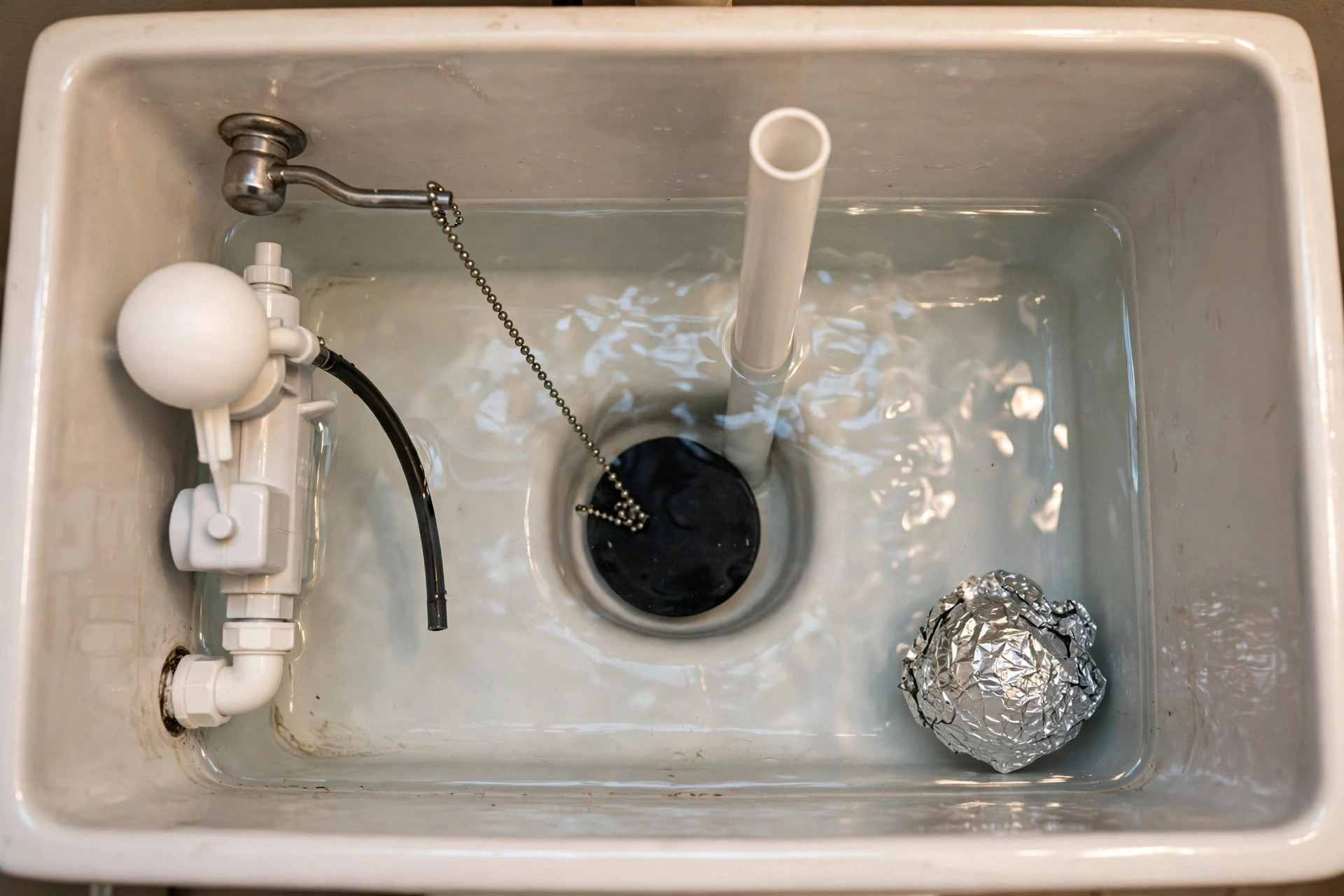
Sometime around mid-October, videos started circulating with an odd instruction: take a ball of aluminum foil, or a foil-wrapped ball of soap and toothpaste, and drop it in your toilet tank. According to the posts, the ball would keep the bowl fresher, fight odors, prevent rust, and even save water.
Within days, pushback arrived. Plumbers and cleaning writers say the hack ranges from useless to risky. One honesty note up front: no controlled test of the foil ball in a toilet tank was found. The debunk rests on plumbing principles, water chemistry, and professional guidance.
What the viral posts claim
The most detailed version, an Instagram reel by BiteWise (@bitewisehacks) with a listed post date of October 12, 2026, shows a soap-ball variant. None of the claims below are verified fact. The video was not viewed directly; the steps are from the fetched page content. Grated Dial soap, a whole tube of blue gel toothpaste, and multiple spoonfuls of baking soda are kneaded into a paste, shaped into a ball, wrapped tightly in aluminum foil, poked with several small holes using a toothpick, and placed in the tank away from the mechanisms. The video claims water flowing over the ball releases cleaning agents that keep the bowl fresher and reduce odors for weeks.
Other coverage describes the same general method. A meo.tips article by Clara Sterling (September 27, 2026, updated October 13) uses a similar recipe and claims the ball keeps the bowl clean for up to a month and kills bacteria. A boda.su piece corroborates the method with a different recipe but its publication date was unverifiable.
A second variant skips the soap: a crumpled ball of aluminum foil dropped in the tank, claimed to prevent rust, keep the toilet clean, save water, stop leaks, and reduce maintenance.
What is actually inside a toilet tank
According to This Old House, a tank has two working systems: the flush valve, which releases water into the bowl when you flush, and the fill valve, which controls the water level after each flush. The flush valve assembly includes a rubber flapper (the seal over the flush valve opening), a chain connecting the flapper to the flush lever, and an overflow tube. The fill valve assembly includes a float, an adjustment mechanism, and a refill tube (This Old House, "How To Repair Toilet Tank Components (2024 Guide)," 2020-01-09, updated 2026-05-28; checked 2026-10-19).
These are all moving parts that must move freely. Anything loose in the tank is a foreign object inside a working machine.
Why plumbers say do not put objects in the tank
This is the best-sourced part of the debunk. Sobieski Services, a plumbing and HVAC company serving Delaware, Pennsylvania, Maryland, and New Jersey, states that objects placed in the toilet tank may shift over time and obstruct proper sealing of the toilet flapper. Placing solid objects in the tank is not a recommended water conservation method; to reduce flush volume, ask a plumber to adjust the fill valve level (Sobieski Services, "Toilet Flapper Troubleshooting in Your Bathroom," 2016-05-10, updated 2026-06-17; checked 2026-10-19).
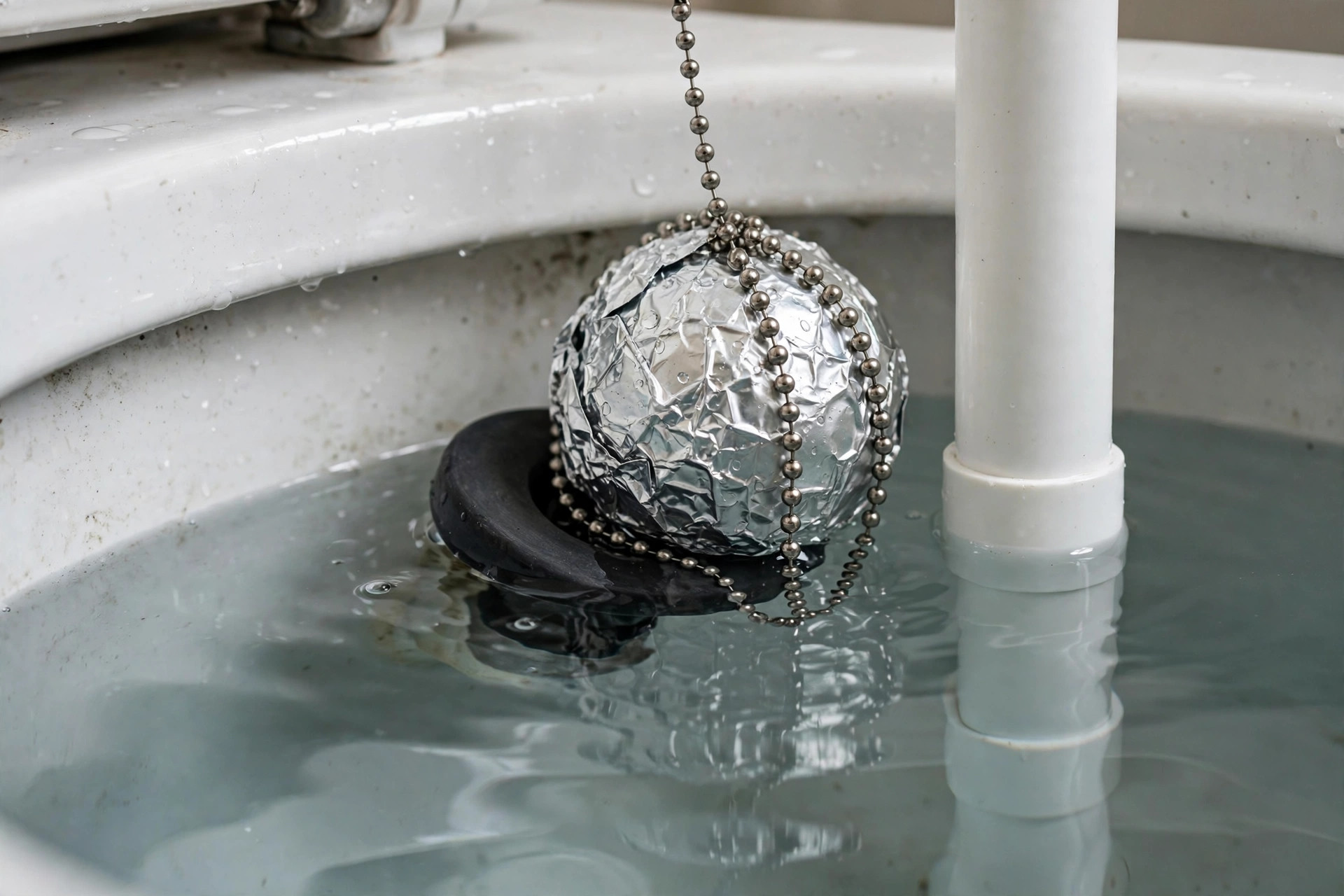
House Digest addressed the soap-ball trend directly. It warns that a small foil ball can wedge into corners, prevent valves from moving or the flapper from closing all the way, which can waste lots of water or stop the tank refilling, and that the ball could flow into the pipes and clog the toilet trap. It calls the DIY deodorant balls "not quite plumber-approved" and recommends white vinegar and baking soda instead (House Digest, 2025-05-14; checked 2026-10-19). That is editorial advice, not a tested finding, but it matches the plumber guidance.
If debris does end up stuck in the pipes, our guide on how to unclog a drain without a plumber covers mechanical methods that avoid chemical damage.
The plain foil ball: what chemistry actually says
The Suez / Degremont water handbook explains that aluminum forms a stable layer of aluminum oxide in contact with air, stable in its passive pH zone (approximately 4 to 8.5), and notes aluminum is "extremely corrosion-resistant in very pure water." Toilet tank water is cold municipal tap water at roughly neutral pH, well inside that zone. The researcher's inference, not a handbook statement, is that a submerged foil ball will not meaningfully dissolve or release cleaning agents into the water, contradicting the trend claim that foil prevents rust or scrubs minerals through the water (Suez / Degremont water handbook; checked 2026-10-19).
On the sacrificial-anode idea: aluminum can only protect a more noble metal against corrosion when the two are electrically connected, and a loose foil ball has no electrical connection to any tank hardware. That is standard electrochemistry reasoning by the researcher, not a handbook statement. No credible source was found showing loose foil in a tank prevents rust. The claim rests on no evidence at all.
Water savings: too little to matter
The viral water-savings claim fails on plumber guidance and on the displacement itself. cookzen (October 14, 2026) opines that a foil ball displaces too little water to make a meaningful difference, but no source tested the displaced volume.
The plumber-approved route is clear: have a plumber adjust the fill valve level (Sobieski Services), or adjust the float yourself via the fill valve's adjustment mechanism (This Old House). If you are weighing which route to take, read our guide on knowing when a repair is a job for a professional.
What the two October 14 debunk blogs actually said
Two debunk articles appeared in mid-October 2026: cookzen on October 14, and homeremediesseasy with an October 2026 URL and an embedded image dated October 14. Both cover the plain-foil-ball variant only. Both are low-authority blogs whose verdicts are expert-style opinion, not evidenced fact. The debunk here is anchored to the plumbing authorities above, not to these blogs.
cookzen claims the foil ball's attributed benefits, rust prevention, stain removal, water savings, leak prevention, reduced maintenance, are "not supported by reliable evidence," and that loose foil risks interfering with internal mechanisms. Verdict: "not recommended."
homeremediesseasy claims there is "no good evidence that placing aluminum foil in your toilet tank delivers the benefits these viral videos promise," and says the benefits would need proper testing. That is the one claim every source in this story agrees on, including this article.
Scope note: only these two debunk articles were verified, so the word "wave" should not be overstated.
What to do instead: safe tank cleaning
The cleaning goal behind the hack is legitimate. True Plumbers & AC, a licensed plumbing company (CFC1428965 and CRC1335717, Central Florida), recommends: shut off the supply valve, flush the tank empty, soak the inside with distilled white vinegar, scrub, then refill and flush twice. Vinegar dissolves calcium scale (calcium carbonate) but does not attack porcelain or rubber (True Plumbers & AC, "How to Clean Your Toilet Tank & Why You Should," November 2018; checked 2026-10-19). That is professional guidance, not controlled-test evidence. House Digest recommends white vinegar or baking soda plus a bit of liquid dish soap, and commercial deodorizers that cannot get stuck in the mechanisms. If you are stocking up on the basics, see our guide to organizing your cleaning supplies.
What never goes in a tank, per True Plumbers & AC: chlorine bleach, drop-in bleach tablets, any product mixed with another product, and chemical drain cleaners. Drop-in bleach tablets are the worst because they hold a bleach concentration in the tank permanently.
Fluidmaster, the toilet repair-parts manufacturer, warns in its own FAQ: "DO NOT USE IN-TANK DROP-IN TOILET BOWL CLEANERS CONTAINING BLEACH OR CHLORINE. USE OF SUCH PRODUCTS WILL RESULT IN DAMAGE TO TANK COMPONENTS AND MAY CAUSE FLOODING AND PROPERTY DAMAGE. USE OF SUCH PRODUCTS WILL VOID THE WARRANTY FOR FLUIDMASTER PRODUCTS." Drop-in bleach tablets can degrade flappers, fill valves, and flush valves so they leak within a year or two, and can cause fill valve failure with costly water damage (Fluidmaster FAQ pages; checked 2026-10-19). Add tank care to your seasonal home maintenance checklist.
FAQ
Does an aluminum foil ball in the toilet tank prevent rust? No credible source supports this. Aluminum is highly corrosion-resistant in neutral water and cannot act as a sacrificial anode without an electrical connection to the metal it would protect.
Does a foil ball clean the bowl or freshen odors? No published test shows that it does. For the plain-foil variant, water chemistry suggests foil in cold, neutral tank water will not dissolve or release cleaning agents.
Can a foil ball damage my toilet? It can. A plumber states solid objects in the tank may shift and obstruct the flapper from sealing, and House Digest warns a foil ball can wedge into corners, waste water, or clog the trap.
Will a foil ball save water on flushes? No meaningful amount. The displacement was never measured, and plumbers recommend against solid objects for water conservation. Adjust the fill valve level instead.
What is the safest way to clean a toilet tank? Shut off the supply, flush the tank empty, soak with distilled white vinegar, scrub, refill, and flush twice.
Can I use bleach tablets in the tank? No. A licensed plumber and Fluidmaster both warn against them: they degrade flappers and valves, can cause leaks and water damage, and void Fluidmaster warranties.
Has anyone actually tested the foil ball hack? Not in any published source found. The debunk rests on plumbing principles and professional guidance, not on controlled experiments. That is an honest limitation, and it is why the safest move is to skip the hack.