How to Unclog a Drain Without a Plumber: 5 Methods Ranked
A slow or stopped drain rarely needs a plumber. The trick is matching the method to the clog and working from gentlest to strongest, since aggressive methods can damage pipes. Below are five approaches ranked in the order to try them.
Method 1: Hot Water Flush (Gentlest)
- What it does: Dissolves soap scum, grease films, and light buildup clinging to pipe walls. Best as a first attempt on slow drains and as maintenance after any other method.
- How to do it: Pour a kettle of just below boiling water slowly down the drain in two or three stages, pausing between pours.
- The PVC warning: Do not pour fully boiling water into PVC pipes; it softens the plastic and weakens joints over time. Use hot tap water for PVC. Metal pipes handle boiling water fine.
- Cost: Free.
- When it fails: Move on after two attempts. Standing water needs a mechanical method, not more hot water.
Method 2: Baking Soda and Vinegar
- What it does: The fizzing reaction loosens light organic buildup and deodorizes the drain. Think of it as a mild scrub for the pipe interior, not a clog buster.
- How to do it: Pour half a cup of baking soda down the drain, followed by half a cup of white vinegar. Cover the drain, wait 15 to 30 minutes, then flush with hot water (not boiling, for PVC).
- Cost: Under $2.
- Honest limits: Popular online but weak against real clogs. It will not dissolve a hairball or clear a grease plug. If two rounds change nothing, the clog needs mechanical force.
- Safe for: All pipe types, including PVC and septic systems.
Method 3: Plunger (Best First Real Attempt)
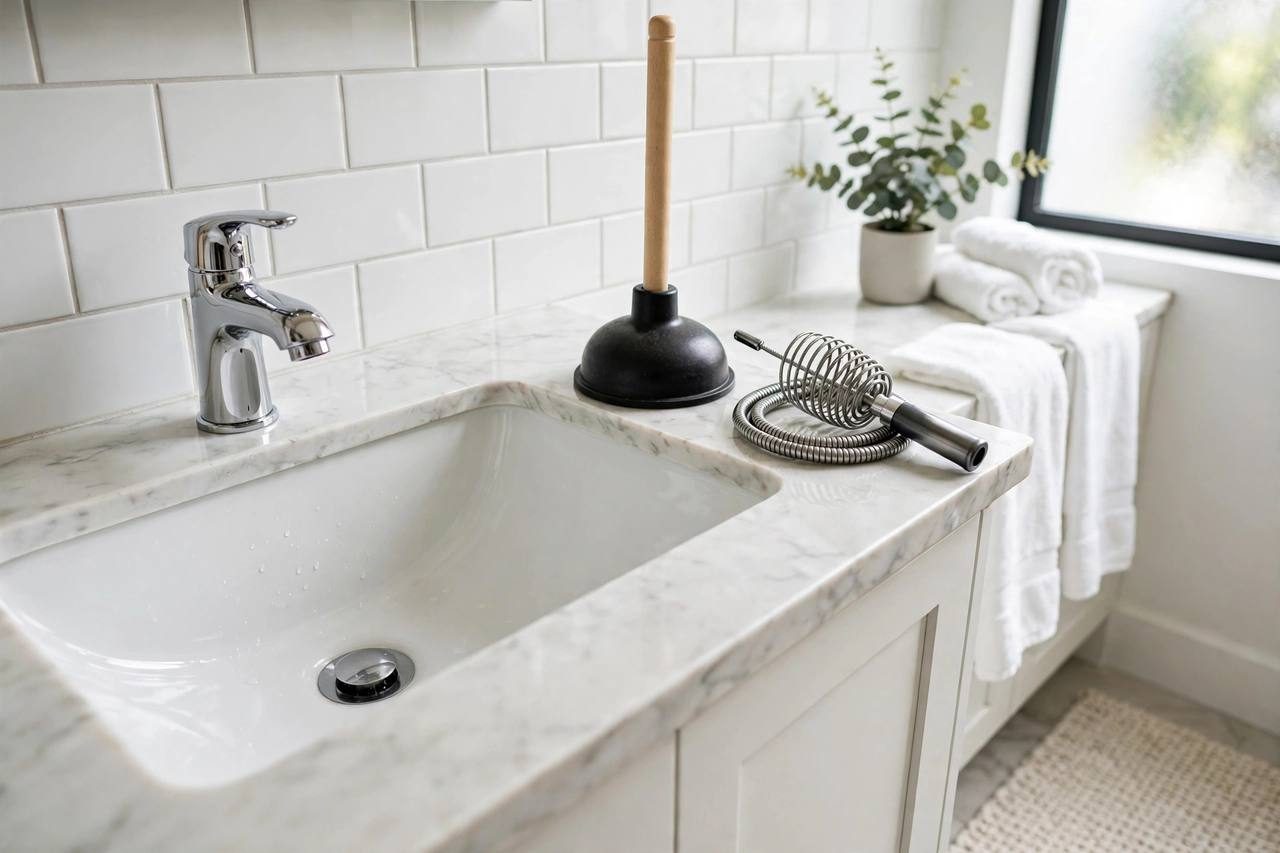
- What it does: Uses pressure and suction to dislodge clogs physically. This is the method that clears most bathroom sink, tub, and shower clogs when hot water and fizz fail.
- How to do it: Use a cup plunger for sinks and tubs, a flange plunger for toilets. Cover the overflow hole with a wet rag, fill the basin enough to cover the plunger cup, and plunge vigorously for 20 to 30 seconds. Repeat three or four rounds.
- Cost: $8 to $15 for a good plunger, and every home should own both types.
- Why it works: Most clogs sit within the first few feet of pipe, exactly where plunger pressure reaches. Fast, forceful strokes with a good seal beat slow pushing.
- Safe for: All pipe types. This is the safest effective method you have.
Method 4: Drain Snake or Hair Tool (Strongest Mechanical Option)
- What it does: Physically grabs or breaks apart clogs deeper in the pipe, especially hair masses in tub and shower drains that plungers cannot reach.
- How to do it: Start with a $5 plastic hair snake: feed it down, pull it back up. Disgusting and extremely effective on hair. For deeper clogs, use a 25 foot hand crank auger ($25 to $40): feed slowly, crank at resistance, pull debris back rather than forcing it through.
- Cost: $5 for a hair snake, $25 to $40 for a hand auger. Power augers rent for $50 to $75 per day but are overkill for most homes.
- Caution: Never force the snake. Aggressive cranking can scratch porcelain or damage the trap. If solid resistance does not give after a few minutes of gentle work, stop; it may be a fitting or collapsed section, not a clog.
Method 5: Enzyme Based Drain Cleaner (Strongest Chemical Option)
- What it does: Bacterial enzymes digest organic matter, hair, soap scum, and grease over several hours. It is slow but genuinely effective on organic clogs and excellent as monthly maintenance.
- How to do it: Pour the recommended amount down the drain before bed, let it sit overnight, and flush with hot water in the morning. Repeat for established clogs.
- Cost: $10 to $15 per bottle.
- Why this instead of caustic cleaners: No heat, no corrosion, safe for septic systems. The only drain chemical worth keeping.
Chemical Drain Cleaners: What You Must Know
Caustic chemical cleaners (the lye and acid based products) deserve their own warning section, because they cause a large share of DIY plumbing injuries and pipe damage.
- Never mix chemical drain cleaners. Mixing products can create toxic fumes or violent reactions. If one product failed, do not add a second. This is the most important rule in this article.
- They damage pipes. Caustic cleaners generate intense heat that softens PVC and corrodes older metal pipes from the inside. Habitual use shortens pipe life.
- They endanger the next person who works on the drain. Standing water becomes caustic, and plumbers have been seriously burned by undisclosed chemicals. Always tell a plumber exactly what you poured.
- They often fail anyway. They cannot dissolve hair, the cause of most bathroom clogs, and they sit on standing water instead of reaching the clog. A $5 hair snake outperforms a $12 bottle almost every time.
When to Stop and Call a Plumber
DIY has limits, and recognizing them saves money. Call a plumber if:
- Multiple drains are clogged at once. One slow sink is a local clog. Sinks, tubs, and toilets all backing up together means the blockage is in the main line, which needs professional equipment.
- You smell sewage. Persistent sewage odor can indicate a main line blockage. Sewer gas contains methane and hydrogen sulfide; do not troubleshoot it casually.
- Water backs up in odd places. Flushing the toilet makes the tub gurgle, or running the washing machine floods a floor drain. These are classic main line symptoms.
- The clog returns within days. Recurring clogs can mean a partial collapse, root intrusion, or a belly in the line, needing a camera inspection ($150 to $400).
- You have already tried two methods. If plunging and snaking both failed, the clog is beyond DIY reach or is not a clog at all. Further attempts risk pipe damage.
A standard drain visit runs $100 to $300; main line clearing runs $300 to $600. That is less than a pipe cracked with an overzealous auger.
Preventing the Next Clog
- Bathroom drains: A $3 mesh drain cover catches hair. Clean it weekly; this prevents most bathroom clogs.
- Kitchen sinks: Never pour grease down the drain. Wipe pans, trash the cooled grease, and run hot water 30 seconds after use.
- Garbage disposals: Feed waste gradually with cold water running. Avoid fibrous foods like celery and potato peels.
- Monthly maintenance: A monthly enzyme treatment or a baking soda and hot water flush keeps buildup from becoming a clog, especially in slow tub drains.
Frequently Asked Questions
What is the best way to unclog a drain without chemicals?
A plunger with proper technique clears most clogs with zero chemicals and zero pipe risk. For tub and shower hair clogs, a $5 plastic hair snake is even more effective.
Can I use a plunger on a double sink?
Yes, but you must seal the other drain first with a wet rag or a second stopper. Otherwise the pressure escapes through the open drain instead of pushing against the clog. The same applies to the overflow hole in bathroom sinks and tubs.
Why does my drain keep clogging in the same spot?
Recurring clogs usually mean incomplete clearing, improper pipe slope, or partial damage like a belly or root intrusion. If the same drain clogs three times in a few months, get a camera inspection.
Is it safe to use chemical drain cleaner in an old house?
It is risky. Older metal pipes are already thinned by corrosion, which caustic cleaners accelerate. In a house over 40 years old, stick to mechanical methods and call a plumber sooner.
How much does a plumber charge to unclog a drain?
Expect $100 to $300 for a standard clog during normal hours, plus $100 to $200 for after hours calls. Main line clearing runs $300 to $600; camera inspections run $150 to $400.