The Ultimate Fall Home Maintenance Checklist (Free Printable)
Fall is when small problems turn into expensive ones. A gutter you skip in October becomes a roof leak in January, and a forgotten furnace filter becomes a no heat call on the coldest night of the year. This checklist covers everything a house needs before winter, in a sensible order, with realistic cost ranges. Copy the printable list at the end and work through it over one or two weekends.
Gutters, Roof, and Drainage
Water is the number one winter threat to a house. Clogged gutters overflow, water backs up under shingles, and you get ice dams and interior leaks.
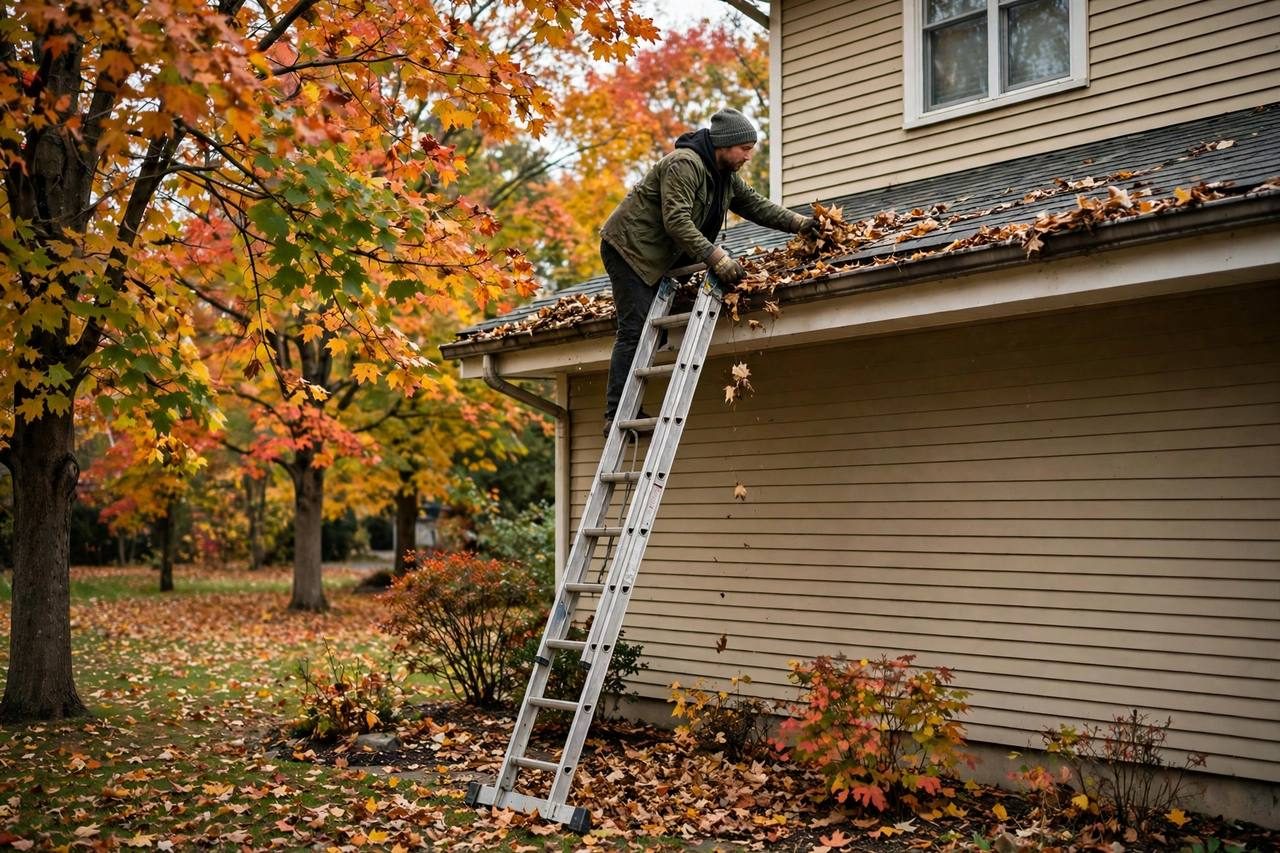
- Clean the gutters: Scoop out leaves after most have fallen, usually late October or November. Flush with a hose to confirm downspouts drain freely. Hiring this out costs $100 to $250 for a typical two-story home.
- Check downspouts: Water should land at least 4 to 6 feet from the foundation. Add plastic extensions ($10 to $15 each) if it pools near the house.
- Inspect the roof from the ground: Use binoculars to look for missing, curled, or cracked shingles and damaged flashing around chimneys and vents. A $10 tube of roofing sealant now beats a $500 to $1,500 repair in February. Leave actual roof work to a roofer.
- Trim overhanging branches: Limbs over the roof drop leaves into gutters and can break under ice. Cut them back at least 6 feet from the roofline, and leave anything near power lines to the utility company.
Heating System: Test It Before You Need It
Fire up the heat in early fall, while repair companies still have open schedules, not on the first freezing night.
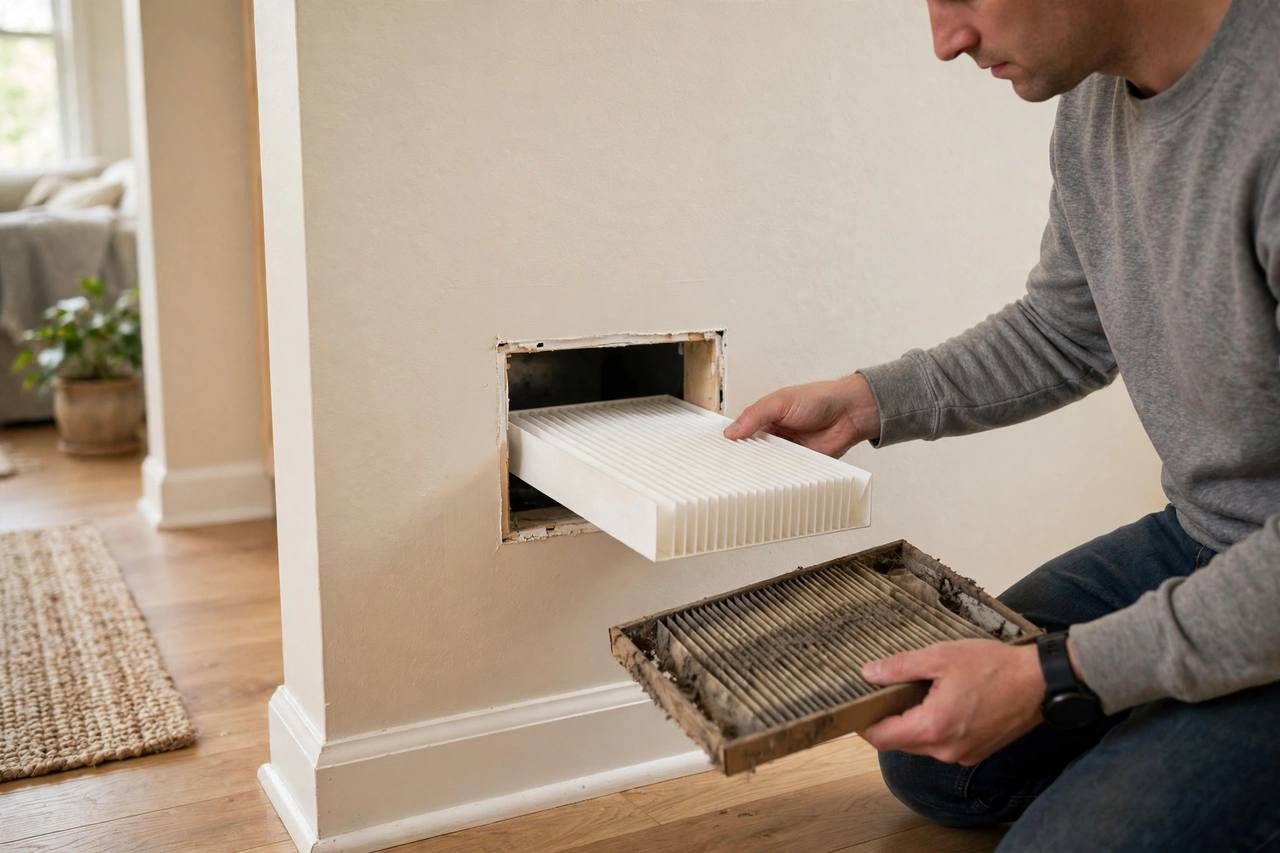
- Replace the furnace filter: The easiest heating task that matters most. A clogged filter makes the furnace work harder, shortens its life, and raises your bill. Standard 1 inch filters need replacing every 1 to 3 months in heating season; 4 inch media filters last 6 to 12 months.
- Test the thermostat and heat: Turn the heat on and listen. If the furnace short cycles, makes new noises, or blows lukewarm air, call for service now. A fall tune up runs $75 to $200 and includes cleaning, inspection, and a safety check.
- Bleed radiators and check baseboards: Bleed hot water radiators so heat reaches every room. Vacuum baseboard heaters and keep curtains and furniture clear of them.
- Fireplace and chimney: Wood burners need a yearly chimney sweep ($150 to $300) to prevent creosote fires. Gas fireplace owners should check the pilot and damper. Test carbon monoxide detectors too.
Windows, Doors, and Insulation
A few hours of sealing in fall pays you back every month through spring.
- Weatherstrip doors and windows: On a windy day, hold a tissue near frames; if it flutters, you have a leak. Self-adhesive foam weatherstripping costs $5 to $15 per window and takes minutes.
- Caulk exterior gaps: Walk the perimeter and seal gaps around window frames, siding joints, and anywhere pipes or wires enter the house. One tube of exterior caulk costs about $8.
- Reverse ceiling fans to clockwise: Set fans to run clockwise on low. The gentle downdraft pushes warm air trapped at the ceiling back into the room, which helps all winter.
- Check the attic insulation: If you can see the ceiling joists through the insulation, you need more. Most US climates need R-38 to R-60, roughly 12 to 20 inches of fiberglass. Blown-in insulation costs $1 to $2 per square foot installed and pays back fast.
- Insulate exposed pipes: Foam sleeves ($3 to $8 per 6 foot length) on pipes in unheated crawlspaces and garages prevent freeze bursts, among the costliest winter emergencies.
Plumbing and Water Protection
Frozen pipes cause some of the costliest winter damage claims, and almost all of it is preventable.
- Disconnect outdoor hoses: Detach hoses, drain them, and store inside. Close the interior shutoff for outdoor spigots and open the outside valve to drain remaining water.
- Locate your main water shutoff: Every adult in the house should know where it is. Turn it now to confirm it works; a stuck valve during a burst pipe emergency is a nightmare.
- Blow out sprinklers: If you have in-ground sprinklers, blow them out with compressed air before the first hard freeze, or cracked lines will greet you in spring.
- Service the water heater: Drain a few gallons from the tank to flush sediment, which improves efficiency and extends its life. If the unit is more than 10 years old, start budgeting for a replacement ($800 to $1,800 installed).
Yard, Driveway, and Outdoor Gear
- Fertilize the lawn: Fall feeding is the most important lawn treatment of the year. A bag of winterizer fertilizer costs $20 to $40 and sets roots up for spring.
- Store patio furniture and grills: Clean and cover or store outdoor furniture, and shut off the gas to the grill.
- Test the snowblower and stock supplies: Start the snowblower now, not during the first storm. Buy ice melt and check shovels, flashlights, and batteries.
Safety Checks Before the Dark Months
- Test smoke and CO detectors: Press the test button on every unit and replace any detector older than 10 years.
- Check fire extinguishers: Confirm the pressure gauge is in the green zone and the extinguisher is accessible, not buried in a closet.
- Clean the dryer vent: A clogged dryer vent is a leading cause of house fires. Vacuum the vent hose, or hire a service for $100 to $200.
- Refresh the emergency supply kit: Replace dead batteries in flashlights, check blankets, and restock anything you raided during summer.
Your Free Printable Checklist
Copy this list, print it, and check items off as you go. The total DIY spend for a typical house lands between $100 and $300.
Exterior
- [ ] Clean gutters and confirm downspouts drain
- [ ] Inspect roof from the ground for damaged shingles
- [ ] Trim branches at least 6 feet from the roofline
- [ ] Caulk exterior gaps around windows, doors, and penetrations
- [ ] Disconnect hoses and shut off outdoor spigots
Heating
- [ ] Replace furnace filter
- [ ] Bleed radiators and clear baseboard heaters
- [ ] Test heat and thermostat before cold weather
- [ ] Schedule furnace tune up if due ($75 to $200)
- [ ] Chimney swept (wood burning) or gas fireplace checked
- [ ] Test carbon monoxide detectors
Sealing and insulation
- [ ] Weatherstrip drafty doors and windows
- [ ] Reverse ceiling fans to clockwise
- [ ] Check attic insulation depth
- [ ] Insulate exposed pipes in unheated spaces
Plumbing
- [ ] Know where the main water shutoff is and confirm it turns
- [ ] Blow out sprinkler system
- [ ] Flush sediment from water heater
Yard and gear
- [ ] Fertilize lawn with winterizer
- [ ] Store or cover patio furniture and grill
- [ ] Test snowblower, stock ice melt and shovels
Safety
- [ ] Test smoke and CO detectors, replace batteries
- [ ] Check fire extinguisher pressure gauge
- [ ] Clean dryer vent
- [ ] Refresh emergency supply kit
Frequently Asked Questions
When should I start fall home maintenance?
Start in September and aim to finish by late October, before the first hard freeze. Clean gutters after most leaves have fallen; many homeowners do a first pass in October and a quick second pass in November.
How much does fall maintenance cost if I hire everything out?
Gutter cleaning, a furnace tune up, and a chimney sweep typically run $350 to $750 together. Doing the DIY friendly items yourself and hiring only the tune up and sweep cuts that roughly in half.
Is a furnace tune up really necessary every year?
Manufacturers recommend annual service. It improves efficiency by 5 to 10 percent and catches dangerous problems like a cracked heat exchanger early. It is also often required to keep a furnace warranty valid.
What is the most commonly skipped fall task?
Disconnecting outdoor hoses. Two minutes of work prevents a burst hose bib leaking inside the wall all winter.
Do renters need to do fall maintenance?
Renters should handle small items like filters and detector tests, and report bigger issues like roof leaks and furnace problems to the landlord in writing before winter. Document requests with dates in case of disputes.