Set Up a Gift Closet Before the Holidays
Today is Wednesday, November 11, 2026. Thanksgiving falls on Thursday, November 26, 2026, which is 15 days away. Christmas falls on Friday, December 25, 2026, which is 44 days away. That gap is the reason to set up a gift closet now, while there is still time to buy the right gift when you see it, instead of buying whatever is left in December.
A gift closet is a dedicated space where you store a collection of gifts bought in advance. USA TODAY defines it exactly that way, and the point is simple: you buy items when they are on clearance or during a major sale, and you have a stash of presents on hand for birthdays, holidays, baby showers, and just-because moments. It prevents the panic of needing a gift at the last minute and overspending. Living on the Cheap makes the same case in plainer terms: if you find the perfect gift in July and the birthday is not until November, a gift closet lets you buy it in July and wrap it when the time comes.
Pick one spot and keep it consistent
The closet is more of a concept than a physical space. USA TODAY is clear on that: a large plastic storage bin under a bed, a dedicated shelf in a pantry or linen closet, a couple of drawers in a dresser, or a basket or decorative box in a less-used corner of a room all count. The most important thing is that it is a designated, consistent space.
Living on the Cheap agrees, and adds the reason: instead of storing some things under the bed and other things in closets, it is best to create one central location. Ideally, devote a section of a closet in a guest room, office, hallway, or finished basement that you already use for storage. Its author keeps a tote for gifts bought in advance on the top shelf of a closet, and places anything too big for the tote beside it. If closet space is tight, an under-bed flat tote or sweater box, a tote or box in a corner, or a storage bench all work.
If you are clearing space for the closet as part of a wider pre-holiday clear out, our pre-holiday decluttering checklist pairs well with this step, and our No-Clutter November plan works backward from Thanksgiving in the same spirit.
Gather what you already own
Before buying anything new, pull together every gift you have already bought and stashed around the house. Check each one is still in good condition, and set aside anything damaged or past its best. What is left is your starting stash, and it is almost always bigger than you remembered.
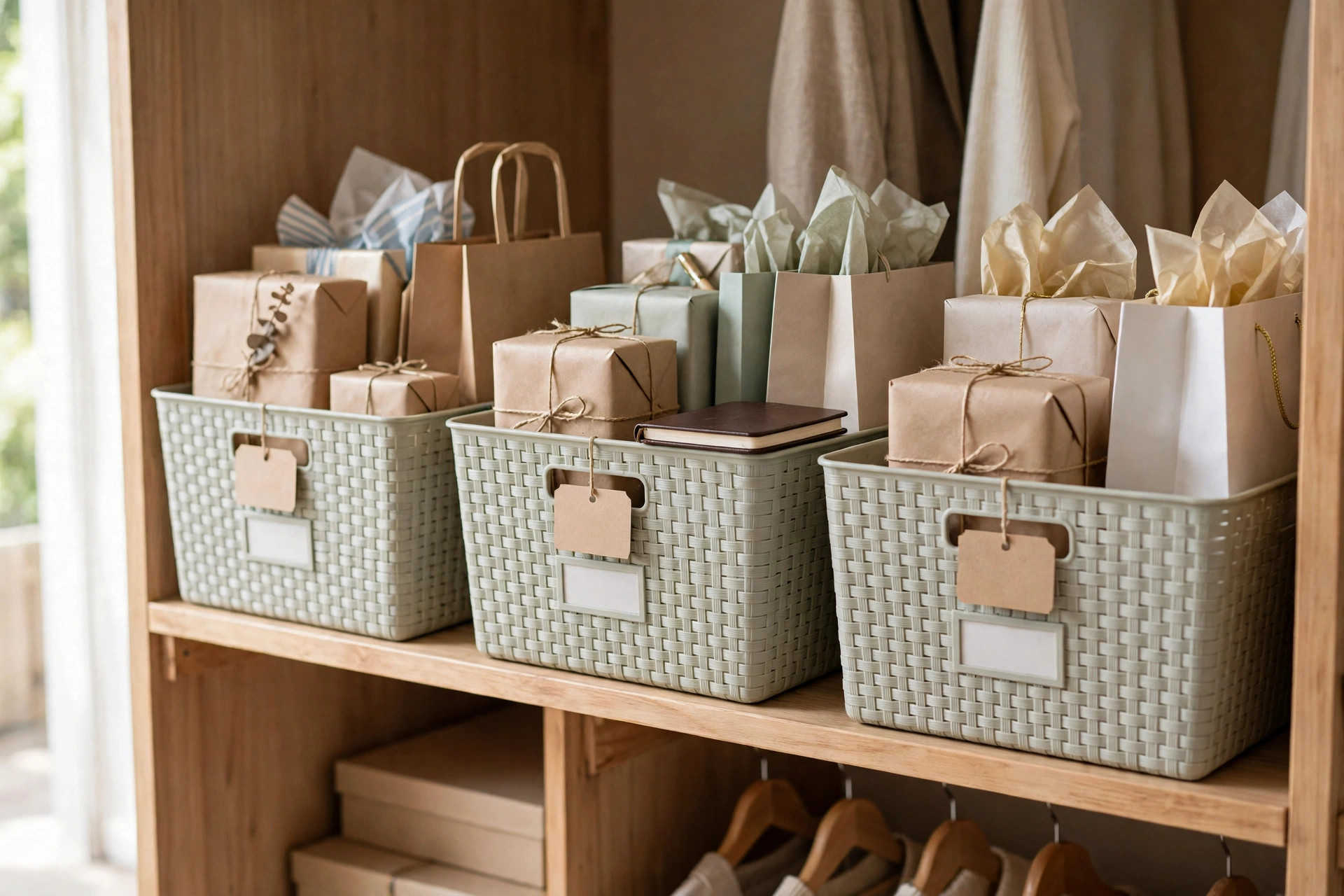
Then give the stash a simple structure. USA TODAY advises organizing the closet by recipient or occasion, using bins or labeled boxes for each category, so a gift can be grabbed when a last-minute event comes up. Living on the Cheap offers the same idea in a smaller form: put items for each recipient in a bag labeled with that person's name, and keep one bag or separate tote for general gifts versus gifts bought for a specific person. Label the outside of the tote, and masking tape and a marker work fine, so you can find what you need quickly.
Keep a gift log, or the closet forgets for you
A gift bought nine months in advance is easy to forget, and a forgotten gift is money wasted. Living on the Cheap warns about exactly that, and advises keeping a paper or mini journal, or a note-taking app on a phone, to track what was bought and for whom, plus a list of birthdays and annual gift-giving events. Keep the log with the tote or attached to the inside of the gift closet door, so it is there when you are at a store or craft fair.
USA TODAY lists the same three tracking options: a simple list on a phone or in a small notebook, noting the item, who it might be for, and how much was paid; a digital inventory in a spreadsheet or simple inventory app, adding where it was bought, the original price, and the occasion it would suit; and a labeling system, with bins labeled by recipient type such as kids, generic adults, hostess gifts, and delivery workers. Pick the one you will actually update. A notebook that never leaves the drawer is no better than no log at all.
Stock the standbys first
Not every gift in the closet is for someone specific. The standbys are the generic gifts that cover the unexpected: a thank-you gift, a teacher gift, a party invitation that arrives the night before. Living on the Cheap recommends always keeping items on hand that are not too personal but still nice, giving journals, candles, bath and beauty products, or pretty mugs as examples. USA TODAY's generic list is similar: journals, nice kitchen towels, puzzles or books, plus a selection of nice stationery and blank cards for any occasion.
For adults, USA TODAY lists gourmet food items with a long shelf life, kitchen gadgets, trendy books, picture frames, luxury beauty products and cosmetics, high-quality candles, and notebooks. For kids, it lists Lego sets, art supplies, classic books, and puzzles. Living on the Cheap agrees on kids: keep a few generic kid gifts on hand, such as Lego sets bought on sale, art supplies, puzzles, and small stuffed animals, so you are not frantically shopping an hour before a birthday party.
USA TODAY also lists tumblers and drinkware, tote bags and smart tag trackers, cozy wear such as slippers or a blanket, gift cards and gift certificates, concert and sporting event tickets, and store memberships, noting memberships are great for teachers. And remember the people who keep your life running. USA TODAY lists service providers such as the mail carrier, trash and recycling collectors, housekeeper or cleaner, and gardener or landscaper; professional care such as a hair stylist or barber, nail technician, babysitter or nanny; and community helpers such as a child's teacher or coach, school bus driver, doorman or security guard, and crossing guard.
Pair small finds into complete gifts
One item from a clearance bin can feel skimpy on its own. USA TODAY's fix is the add-on gift: pair it with a little something extra. Its example pairs a coffee mug found on sale with a packet of gourmet coffee or hot cocoa and a decorative spoon, and suddenly a single clearance find is a thoughtful, complete gift. Keep small, inexpensive add-ons on hand for exactly this: travel-size lotions, fun pens, or snack packs that can lift a smaller gift.
Living on the Cheap makes the same point from the other side. A gift closet is also a good place to keep items to regift, such as a butter dish or bubble bath you will never use, and wacky items for an office White Elephant or Yankee Swap party. If you make homemade gifts, make a few extra to keep in the closet, such as homemade bath salts, magazine bowls, or crocheted stuffed animals. One caution from Living on the Cheap: do not keep food gifts such as homemade soup mixes for months in the closet, though mason jars or DIY supplies can be stored there.

Set a limit, or the stash becomes clutter
A gift closet can quietly turn into a second clutter pile. Living on the Cheap warns about going overboard buying cute gifts for no one in particular, overspending, and never giving the items away, and advises imposing limits: designate a small bag or box for generic gifts and, once it is full, buy no more, or keep no more than five to 10 unassigned gifts in the closet.
USA TODAY frames the same guardrail as mindful shopping. The closet does not encourage spending more, because it forces you to wait for sales and buy strategically instead of buying at full price in a time crunch, and the year-round approach spreads spending out and removes the financial stress of last-minute gift shopping. The limit is what keeps that true. A closet with a cap is a system. A closet without one is a shopping habit with a shelf.
Keep the wrapping supplies in the same place
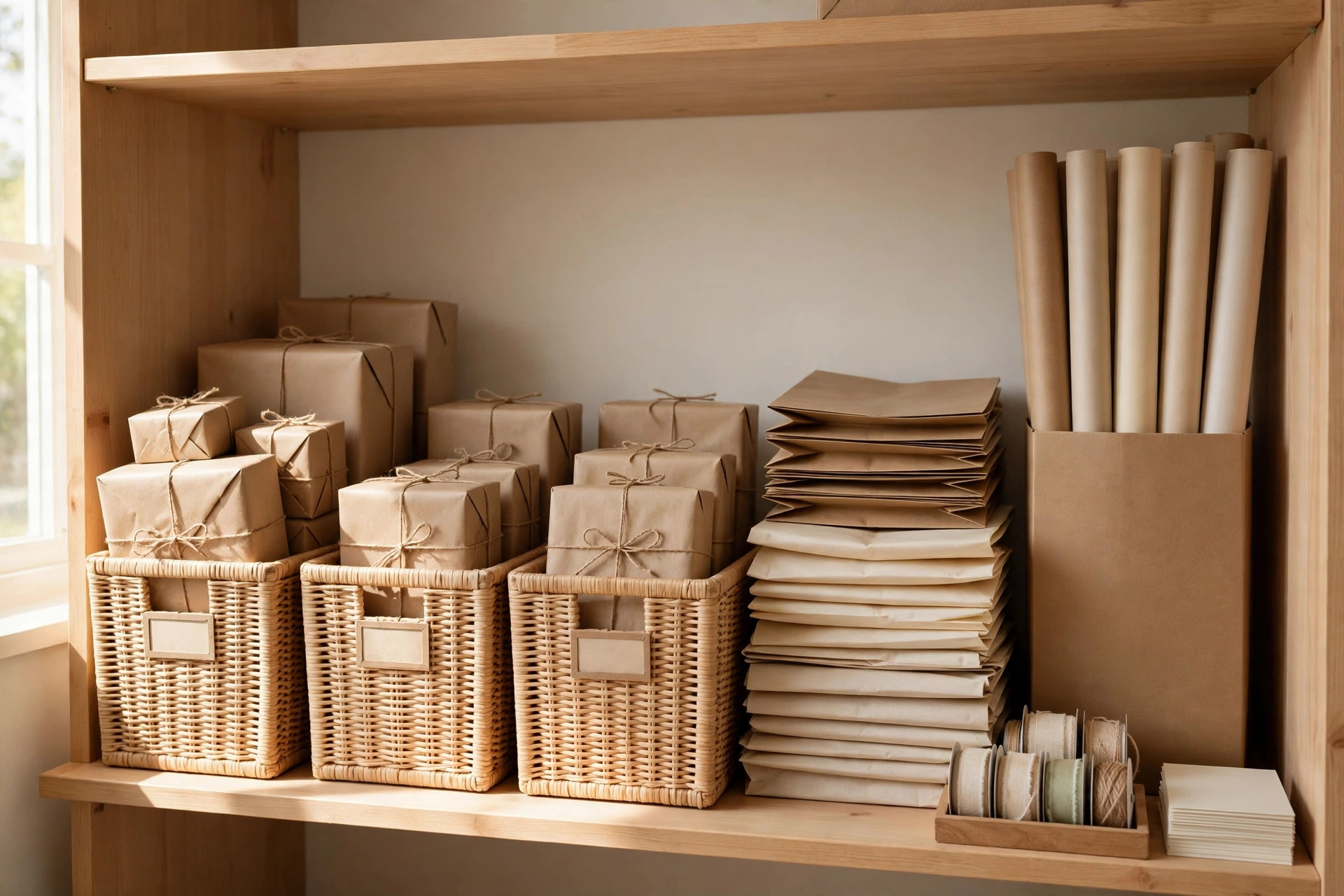
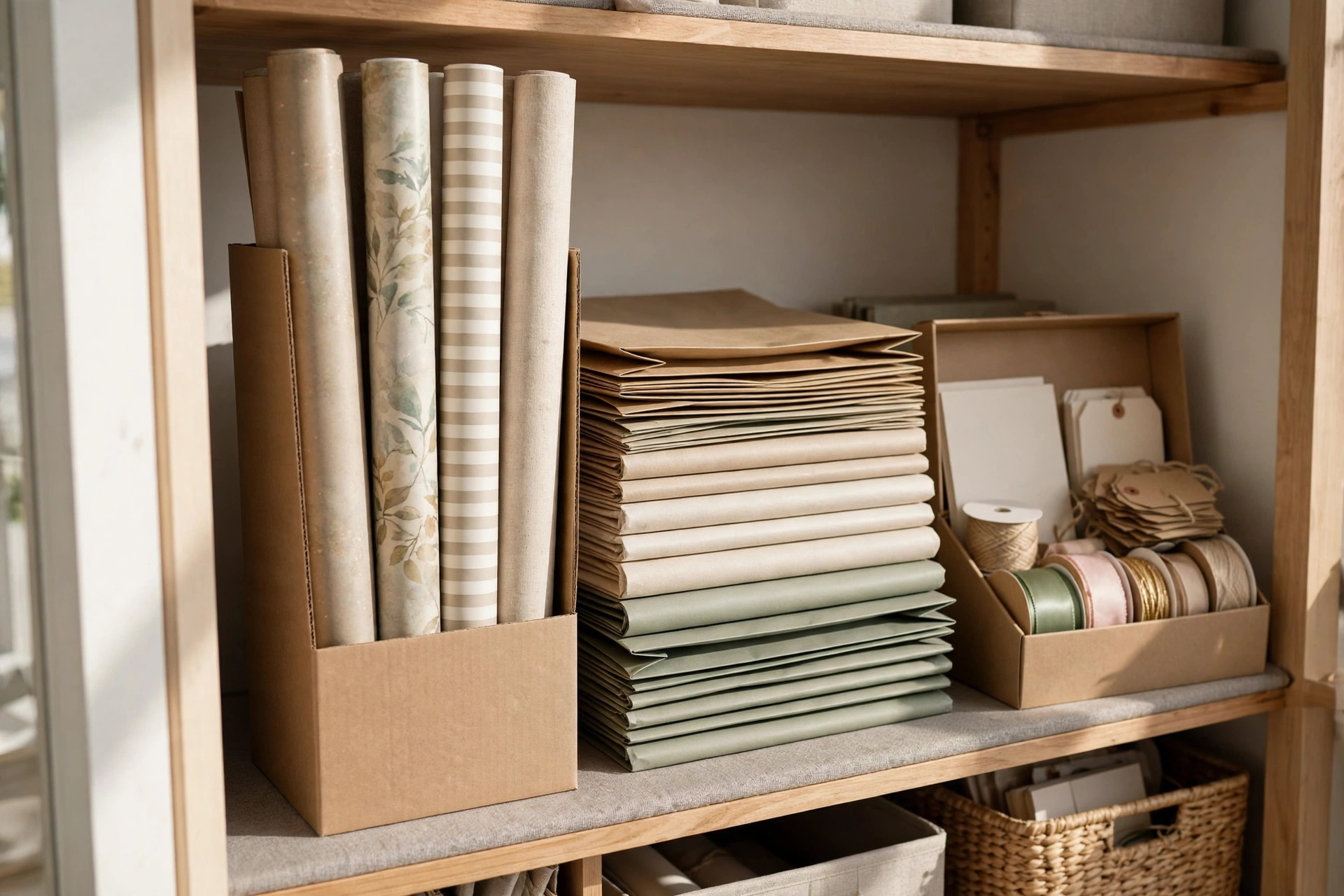
A gift closet doubles as a command center for gifting supplies. USA TODAY states that keeping wrapping paper, gift bags, tissue paper, ribbons, and gift tags neatly organized in the closet means a gift can be wrapped in minutes without a last-minute scramble for tape or scissors. Living on the Cheap agrees: stock generic birthday or blank cards, wrapping paper, tissue paper, gift bags, boxes, and tags or labels, and buy them on sale or recycle gift bags and boxes received as gifts. Charities sometimes send note cards as a thank-you, and those can be stored in the gift closet too.
For storage, Living on the Cheap advises a plastic tote or sturdy box, a separate bag or box for ribbons and gift tags, and wrapping paper rolls stood up in a tall narrow box or old umbrella stand. The accessories need not cost much, and friends or neighborhood groups may have items they no longer need. If you want a fuller wrapping setup, our gift wrapping station guide covers paper, bags, ribbon, and tools in detail, and our guide to storing Christmas decorations covers the seasonal pack away when the holidays end.
Start now, while the sales are still coming
Set the closet up this week, while Thanksgiving is still 15 days away and Christmas is 44 days away. Gather what you already own, sort it by recipient, start the log, and set the cap on unassigned gifts. Then, when a sale or a craft fair turns up the perfect gift for someone, you can buy it, log it, and put it on the shelf, knowing it will be there when the occasion arrives. If a gift turns out to be wrong for its recipient, our guide to unwanted Christmas gifts covers that without the guilt. And if the gifts share space with a wider craft stash, our craft room organization guide can help keep the two systems separate.
FAQ
What is a gift closet?
A dedicated space where you store gifts bought in advance, plus gift wrap, cards, ribbons, and other gift-giving supplies. You buy presents and wrapping throughout the year, when prices are discounted or when you find the perfect gift, and store them until you need them.
Where should I put a gift closet if I have no spare closet?
Any designated, consistent space works: a large plastic storage bin under a bed, a dedicated shelf in a pantry or linen closet, a couple of drawers in a dresser, or a basket or decorative box in a less-used corner of a room. One central location beats gifts scattered around the house.
How do I keep track of what is in my gift closet?
Keep a running list on your phone or in a small notebook, noting the item, who it might be for, and how much you paid, or use a spreadsheet or inventory app with where it was bought and the occasion it would suit. Label bins by recipient type, and keep the log with the tote or on the closet door.
What should I keep in a gift closet?
Generic standbys anyone could use, such as journals, candles, bath and beauty products, pretty mugs, puzzles, and blank cards, plus gifts for specific people, kid gifts such as Lego sets and art supplies, and small add-ons such as travel-size lotions and snack packs. Wrapping paper, gift bags, tissue paper, and tags belong in the same place.
How many unassigned gifts should I keep?
Living on the Cheap advises keeping no more than five to 10 unassigned gifts, or designating one small bag or box for generic gifts and buying no more once it is full. The limit is what keeps the closet a system instead of a clutter pile.
Will a gift closet make me spend more?
Both sources say the opposite, as long as the closet has a limit. Buying on sale and spreading spending across the year replaces full-price panic buying, and a cap on unassigned gifts stops the stash from growing without end.