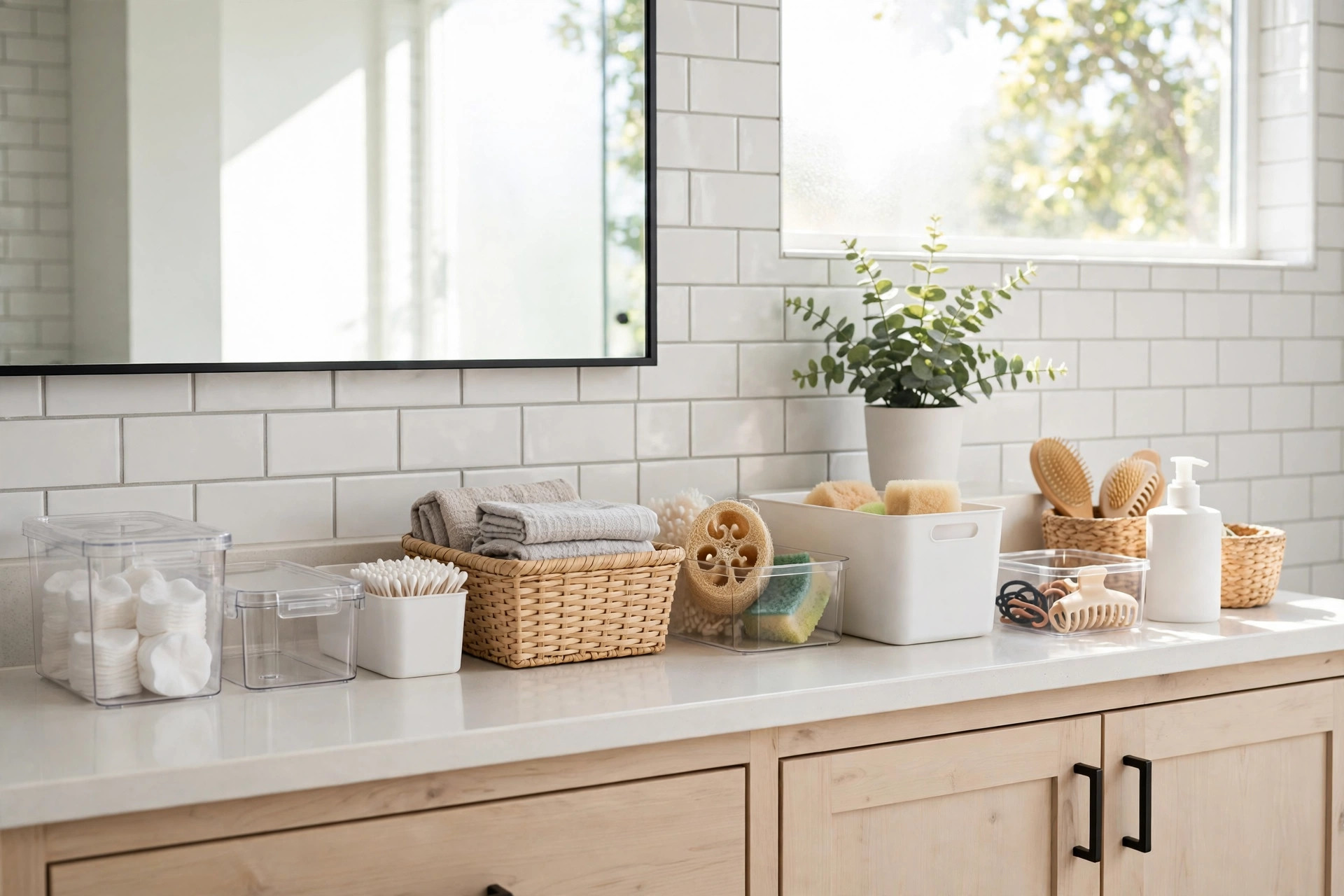
No-Clutter November: A Pre-Holiday Declutter Plan That Works Backward From Thanksgiving

Thanksgiving in the United States falls on Thursday, 26 November 2026, the fourth Thursday in November. That date gives November a natural deadline. Guests are coming, gifts are coming, and the rooms they will use still hold summer and early fall clutter.
The fix is not a last minute weekend purge. It is a small daily habit, started now, aimed at the rooms guests will actually see and use. Creators are posting November decluttering challenges on Instagram and Facebook in late October and early November 2026, and this plan uses the simplest version of the idea: a little bit every day, working backward from Thanksgiving.
Holiday clutter arrives in two waves: guests, who need a clear entryway, a guest room, and a kitchen with room to cook and serve, and then gifts, which need somewhere to go. A whole-house plan gives the guest room the same attention as a storage closet nobody will open. This plan does the opposite: it clears guest spaces, kitchen and dining space, and entryways first, and it stops before Thanksgiving Day.
The daily habit: 15 minutes, 15 items
The method is called the Daily 15/15, as described in creator posts: set a 15 minute timer and remove 15 items. Sort each item at once into keep, sell, donate, or toss. There is no "maybe" pile: a maybe pile is just clutter with a new name.
Fifteen items a day for 30 days adds up to 450 items, a creator challenge target, not a measured result or a promise. Some creators post a 30 day 1,000 item challenge target instead, again as a target, not an outcome. Pick the target that fits your home, or ignore both numbers and keep the habit going.
If you miss a day, skip it. Do not double up the next day: a doubled session turns a light habit into a dreaded chore.
The week by week plan
The plan runs on the November 2026 calendar, in four weeks ending at Thanksgiving, plus a short reset note.
Week 1: 2 to 8 November, entryway and surfaces
Start where guests look first. Clear the entryway: coats that belong elsewhere, bags by the door, shoes that have migrated from the closet. Then clear the surfaces guests see: hallway table, coffee table, kitchen counter. Keep a bag by the door for outgoing items, and pick your donation drop-off spot now.
Week 2: 9 to 15 November, kitchen, dining, and pantry
Holiday cooking needs counter space and a pantry you can find things in. Clear the kitchen counters fully, then return only what you use daily. Work through the pantry shelf by shelf, checking dates and setting aside unopened, in-date food you will not eat. Clear the dining table and chairs.
Week 3: 16 to 22 November, guest rooms, living areas, and linen
This is the guest readiness week. Clear the guest room surfaces and floor, leaving room for a suitcase and a bag. Sort the linen closet so clean guest bedding is easy to reach. Most important, get donation bags out before Thanksgiving week.
Week 4: 23 to 26 November, final sweep of guest rooms only
In the final days, clean and clear only the rooms guests will use. Do not start a new room, and do not open a storage area you have not touched yet. Walk the guest-used rooms with one bag and pick up anything left behind.
Set a gift inflow rule: one in, one out. Stop before Thanksgiving Day. The plan ends on 26 November.
After Thanksgiving: 27 to 30 November, a short reset
This is not a second challenge. Put holiday items away as they arrive.
Sell, donate, or toss: how to decide
Every item you remove needs an exit, or it comes back. Pre-holiday declutter guides published in early November 2026 frame the same choice: sort outgoing items into sell, donate, or toss.
Sell only items worth real money and worth your time to list, with a one week listing deadline. If an item is unsold after a week, move it to donate.
Donate clean, working items. Broken, stained, or worn-out items go to trash or recycling.
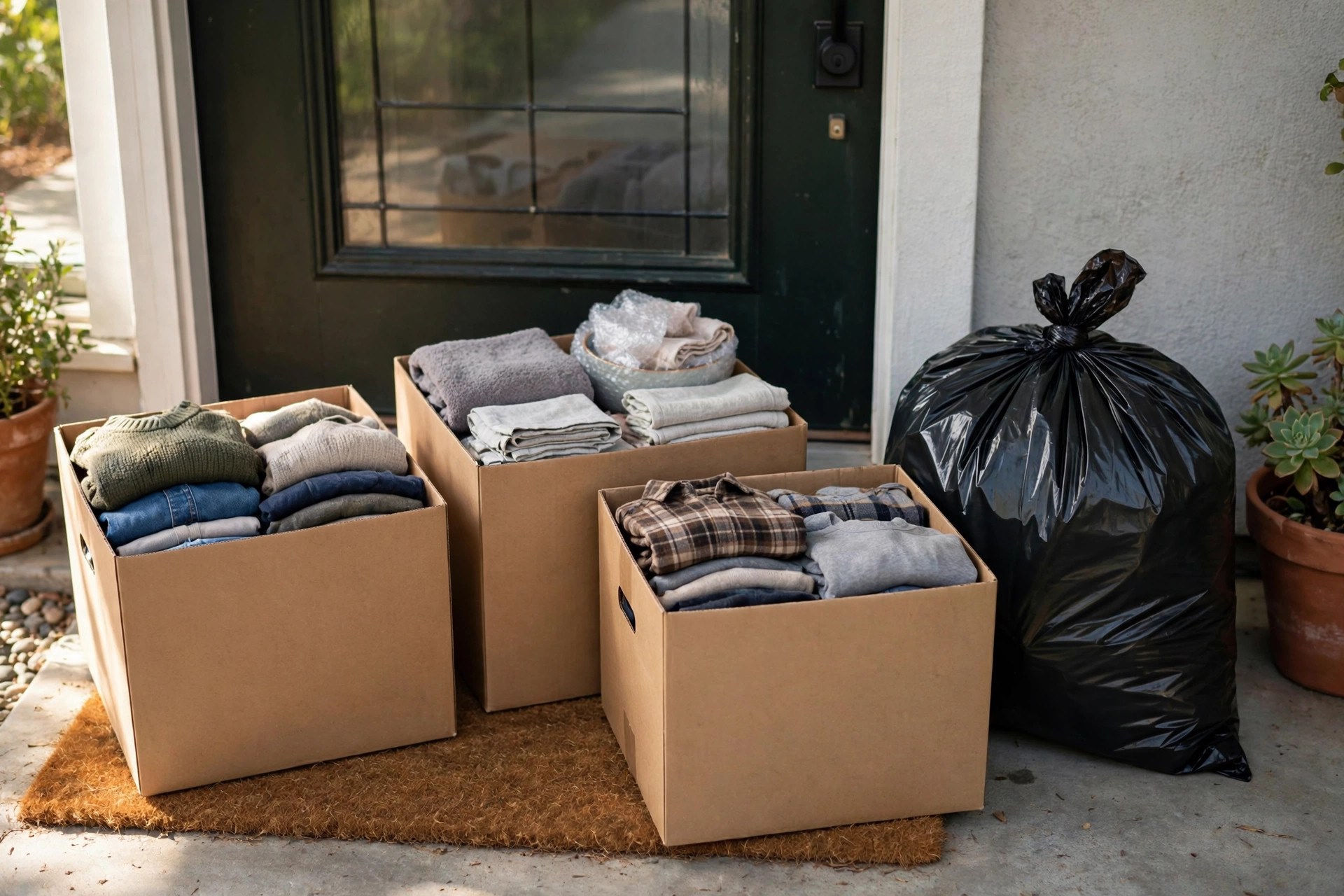
Donation records and the IRS rules
If you donate items and plan to claim a US federal tax deduction, the record rules are worth getting right before the bags leave. This section summarizes IRS guidance, and it is not tax advice. US rules do not apply to readers in the EU, so check IRS guidance or a tax professional if unsure.
Clothing and household items donated for a US federal tax deduction must generally be in good used condition or better, and the gift must go to a qualified organization. Gifts to specific individuals, political organizations, or candidates are not deductible.
Under the general rule, a taxpayer files Form 1040 and itemizes deductions on Schedule A. Fair market value, the value used for donated property, is generally the price at which property would change hands between a willing buyer and a willing seller, neither having to buy or sell, and both having reasonable knowledge of all relevant facts.
For any cash or property contribution of $250 or more, the IRS allows a bank record, payroll records, or a written acknowledgment as alternatives, and one document may satisfy both the record and acknowledgment requirements. If total noncash contributions for the year are more than $500, the donor must complete and attach IRS Form 8283. An item or group of similar items valued at more than $5,000 generally requires Section B of Form 8283 and an appraisal by a qualified appraiser.
A separate rule applies for tax year 2026, for returns filed in 2027. Eligible taxpayers who do not itemize may be able to deduct up to $1,000 of qualifying cash contributions to eligible charitable organizations, or $2,000 for married taxpayers filing jointly. This is a cash contributions rule only, not a rule for donated goods. Donations to donor-advised funds generally do not qualify, and donors should keep records, such as receipts or bank records, to support it.
The practical point for November is simple: list what you donate and keep the receipt.
What not to do in November
Three mistakes undo a November plan. First, no sentimental deep dives. Sorting old photos and keepsakes takes hours and stalls the whole plan, so leave sentimental items for a quieter month. Second, no buying storage before decluttering. Organize what remains after the clear-out, not before it, or you will buy boxes for things you were about to remove. Third, no whole house weekend marathon, which usually leaves the house half sorted and fully disrupted.
If you want a longer, any-time-of-year version, the 30-day decluttering challenge runs one small task a day for a full month. This November plan is different: it is tied to the calendar, ends at Thanksgiving, and aims at guest-ready rooms.
Frequently Asked Questions
What is the Daily 15/15 habit?
It is a creator challenge method: set a 15 minute timer and remove 15 items a day.
What counts as one item?
One thing you remove: a single book, one chipped mug, a pair of shoes you never wear.
What if I miss a day?
Skip it and pick up with the current day. Do not double up the next day.
How many items will I remove in November?
Fifteen items a day for 30 days adds up to 450 items as a creator challenge target, and some creators post a 30 day 1,000 item challenge target. Both are targets, not results or promises.
Can I deduct donated items on my taxes?
In the US, clothing and household items donated for a federal deduction must generally be in good used condition or better, and the gift must go to a qualified organization. Under the general rule you file Form 1040 and itemize on Schedule A. The 2026 non-itemizer rule covers qualifying cash contributions only, not donated goods. This is not tax advice: check IRS guidance or a tax professional.
What should I do after Thanksgiving?
Treat 27 to 30 November as a reset, not a second challenge. Put holiday items away as they arrive.