Robot Vacuum vs Stick Vacuum for Pet Hair: An Honest Comparison
Pet hair is the ultimate vacuum stress test. It weaves into carpet, clings to upholstery, drifts into corners, and regenerates daily. Robot vacuums and stick vacuums both claim to handle it, but they solve different parts of the problem. A robot keeps floors maintained while you're out. A stick gives you the power and precision for the hair a robot leaves behind.
How They Compare at a Glance
- Daily hair control: Robot wins. It runs on a schedule, so hair never accumulates. This is the single biggest advantage for pet owners.
- Deep pickup on carpet: Stick wins. Stronger suction and a powered brush head pull embedded hair that robots pass over.
- Upholstery, stairs, and cars: Stick wins by default. Robots only do floors.
- Effort required: Robot wins. Press a button or set a schedule and forget it. Stick vacuums require you to do the work.
- Upfront cost: Comparable. Decent pet-hair models of either type run $200 to $400; premium models of either type run $500 to $900.
- Ongoing maintenance: Robot demands more. Brushes, filters, sensors, and dustbins need regular attention or performance drops fast.
- Noise: Stick vacuums are louder during use but run for minutes. Robots are quieter but run for an hour or more.
Robot Vacuums: Strengths for Pet Hair
The robot's superpower is frequency. Pet hair management is a volume game: a German Shepherd sheds roughly a grocery bag of hair per week, and no weekly vacuuming session fully keeps up. A robot running daily prevents the accumulation that makes hair visible and makes deep cleans miserable.
Look for these features in a pet-focused robot:
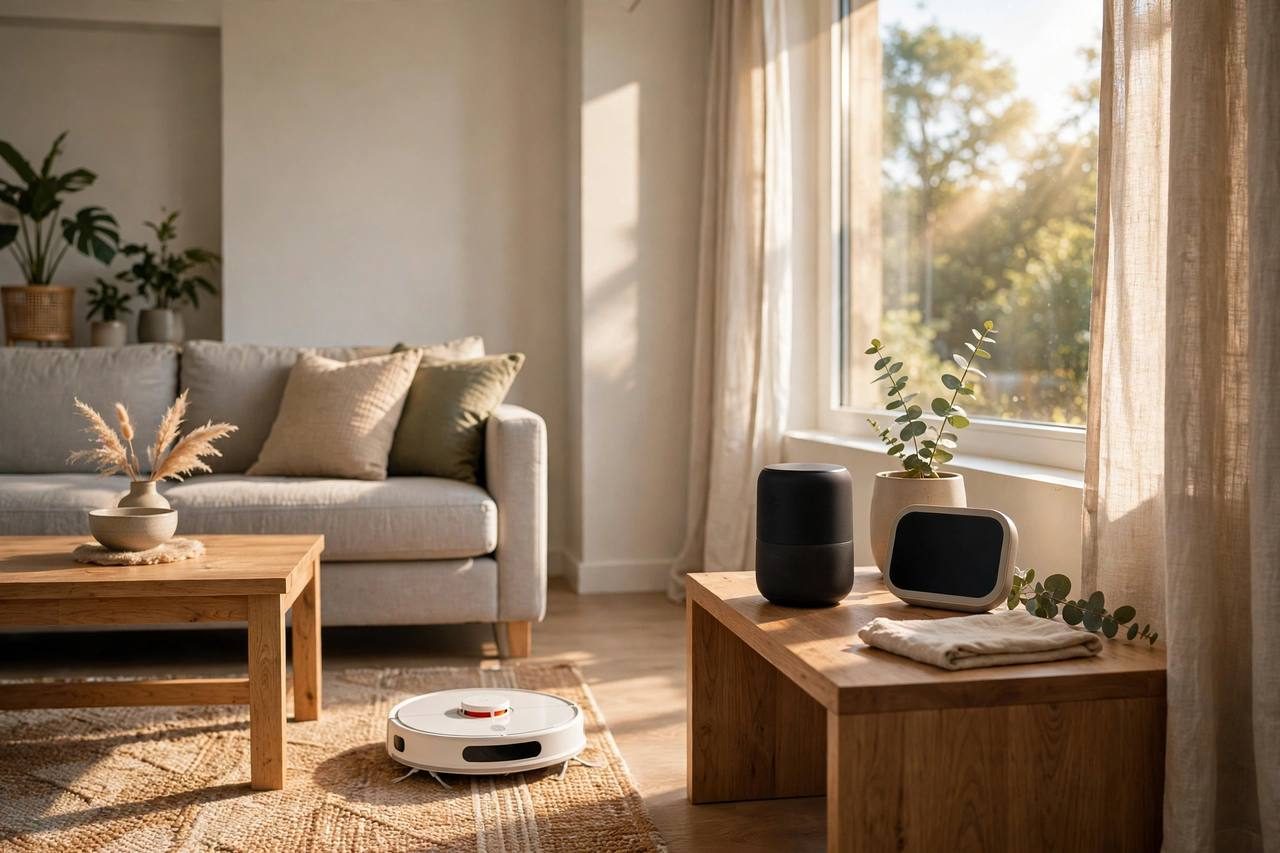
- Self-emptying base: This is the feature that matters most for pet owners. Without it, you'll empty a tiny dustbin every single run. With it, the robot empties itself into a base that holds 30 to 60 days of debris. Self-emptying adds $150 to $250 to the price and is worth every dollar for multi-pet homes.
- Rubber brush rollers: Dual rubber extractors resist hair tangles dramatically better than bristle brushes, which need de-tangling weekly in pet homes.
- Strong suction: Pet models advertise 4,000 to 6,000+ Pa. Avoid budget robots under 2,500 Pa for pet homes.
- Obstacle avoidance: Pet toys, chews, and the occasional accident are robot hazards. Camera or laser-based avoidance reduces stuck incidents and the truly awful scenario of a robot spreading a mess across the house.
The honest limitations: robots struggle with thick or high-pile carpet, where hair embeds below their suction reach. They can't do stairs, upholstery, or car interiors. Corners and baseboard edges collect hair that round robots physically can't reach. And they're maintenance divas: in a heavy-shedding home, plan on 15 minutes per week cleaning brushes, wiping sensors, and checking wheels.
Stick Vacuums: Strengths for Pet Hair
The stick vacuum's superpower is power and precision. A good cordless stick delivers suction that no robot matches, with a motorized head you drive directly into the problem areas: the rug where the dog naps, the carpeted stairs, the sofa cushions, the car seats.
For pet hair specifically, these features matter most:
- Motorized pet head: A powered brush roll agitates carpet fibers and pulls out embedded hair. A stick without one is just a loud broom.
- Whole-machine filtration: HEPA-level sealed filtration matters more with pets, because you're stirring up dander with every pass.
- Battery runtime: Pet hair sessions run long. Look for 40 to 60 minutes of real runtime on standard mode. Swappable batteries are a plus for larger homes.
- Hair-resistant brush design: Some brands now offer anti-tangle brush heads that strip hair off the roller as it spins.
The honest limitations: it's manual labor, full stop. The best stick vacuum in the world does nothing sitting in the closet, and most people don't vacuum daily by hand. Battery degradation is real: after two to three years of heavy use, runtime drops noticeably. Dustbins are small (typically 0.5 to 0.8 liters), so multi-pet homes empty them mid-session.
The Real Cost of Ownership
Robot vacuum with self-emptying base: $400 to $900 upfront. Annual consumables (bags or filters, replacement brushes, mop pads if it's a hybrid) run $60 to $120 per year. Expected lifespan: 3 to 5 years with maintenance.
Quality stick vacuum: $250 to $700 upfront (Dyson, Shark, and similar pet models). Annual consumables (filters, replacement brush heads) run $30 to $60 per year. Batteries are the wildcard: a replacement battery costs $60 to $120 and you'll likely need one around year three.
Over five years, total ownership costs land in a similar band for both: roughly $500 to $1,500 depending on the model tier. Neither is a clear budget winner. The cost question that matters more is whether you're buying one tool or two.
Which Should You Pick?
Pick a robot vacuum if: your main problem is hair accumulating on hard floors and low-pile carpet between cleanings, you want cleaning to happen without your involvement, or your schedule makes manual vacuuming inconsistent. Multi-pet homes on hard floors get the most value from a robot.
Pick a stick vacuum if: your home has carpeted stairs, lots of upholstery, or thick rugs; you need to clean cars or pet crates; your budget covers one tool; or you genuinely don't mind 20 minutes of vacuuming a few times a week.
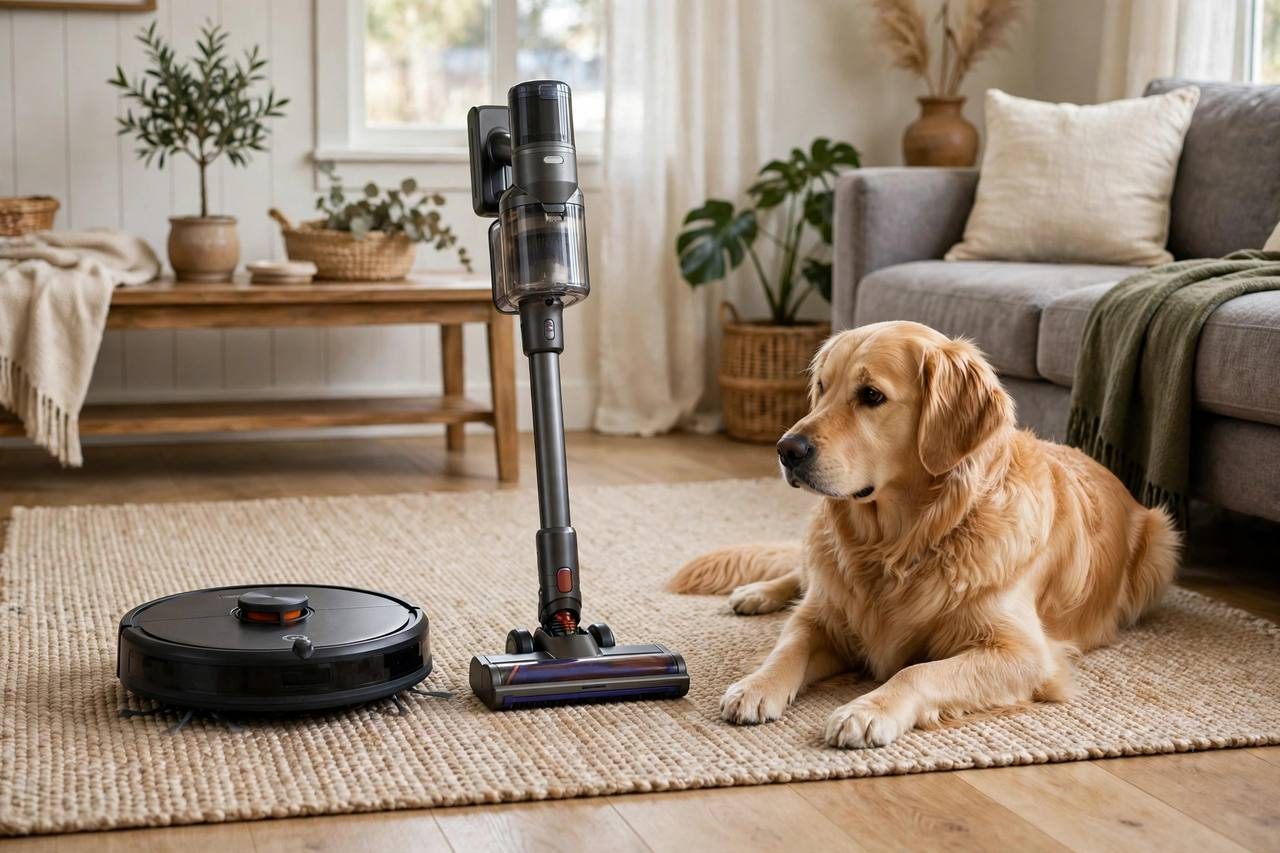
Get both if: you have multiple shedding pets and mostly carpeted floors. This is the honest answer for heavy-shedding households. The robot handles daily maintenance so hair never builds up, and the stick handles the weekly deep pass on stairs, upholstery, and high-traffic carpet.
Making Either Choice Work for Pet Hair
Whichever you buy, these habits determine whether it actually solves the problem:
- Groom the pet, not just the floor. Regular brushing removes loose hair before it hits your floors. Five minutes of brushing cuts vacuum workload noticeably, especially during spring and fall shedding seasons.
- Wash pet bedding weekly. Beds and blankets hold an enormous share of household pet hair. Washing them keeps it out of circulation.
- Run the robot when pets are calm or out. Excited dogs attack robots; anxious cats hide from them. Schedule runs for when pets are settled or you're away.
- Maintain the machine. A vacuum with a clogged brush or full bin performs at half capacity. For robots in pet homes, that's a weekly five-minute check. For sticks, empty the bin when it hits the max line, not after.
- Use washable covers. Slipcovers on sofas and washable throws on pet-favorite chairs catch hair that no vacuum reaches efficiently. Toss them in the wash weekly.
Frequently Asked Questions
Can a robot vacuum fully replace a regular vacuum in a pet home?
For homes that are mostly hard floors with low-pile rugs, yes, a good self-emptying robot can be the primary floor vacuum. For carpeted homes with stairs or heavy upholstery use, no: you'll still need a stick or upright for stairs, furniture, and deep carpet cleaning.
Do robot vacuums scare pets?
Some pets ignore them, some are terrified, and some try to ride them. Most cats and dogs habituate within one to two weeks if you introduce the robot gradually: run it in short sessions while you're home and let the pet observe from a distance. Truly anxious pets may never adjust, in which case schedule runs for when they're in another room.
How often should I vacuum with pets?
Daily floor maintenance (robot or quick stick pass) plus one thorough vacuum per week is the baseline for one moderate-shedding pet. Heavy shedders and multi-pet homes do better with twice-daily robot runs and two thorough sessions per week.
Are bagged or bagless self-empty bases better for pet hair and allergies?
Bagged bases are better for allergy sufferers: you toss the sealed bag without contacting the dust cloud. Bagless bases save money on bags but release a puff of fine dust and dander every time you empty them. If anyone in the home has pet allergies, the bagged option is worth the $15 to $25 per year in bags.
Why does my vacuum smell like wet dog?
Pet dander and oils build up in filters, brush rolls, and dustbins, and moisture makes it worse. Wash or replace filters on schedule, wipe out the dustbin monthly, and clean the brush roll of wrapped hair. If the smell survives all that, the filter needs replacing.