The 4-Hour Whole-House Speed-Cleaning System
Deep-cleaning a whole house feels like a weekend project because most people clean the wrong way: room by room, task by task, wandering back and forth. Professional cleaners don't work that way. They follow a system, one pass through the house, top to bottom, with each task done everywhere before moving on. Borrow their method and a genuinely dirty house takes about four hours, not a full weekend.
This system assumes a typical 2 to 3 bedroom home of around 1,200 to 2,000 square feet. Smaller apartments finish faster, larger homes need a fifth hour or a second person.
The Core Principle: Task-Based, Not Room-Based
The mistake almost everyone makes is cleaning one room completely, then moving to the next. That means you carry the vacuum to every room, then the bathroom cleaner to every bathroom, then the duster everywhere again. Professionals batch tasks: dust the entire house in one pass, clean every bathroom in one pass, vacuum everything at once.
This cuts your total time roughly in half for one reason: setup and tool-switching are the hidden time sink. Every time you put down the duster and pick up the glass cleaner, you lose minutes. Batching removes that friction.
There are three rules that make the whole system work:
- Rule 1: Work top to bottom. Dust falls downward, so always finish floors last in every area.
- Rule 2: Work in one direction around the house. Move clockwise from room to room. Never double back.
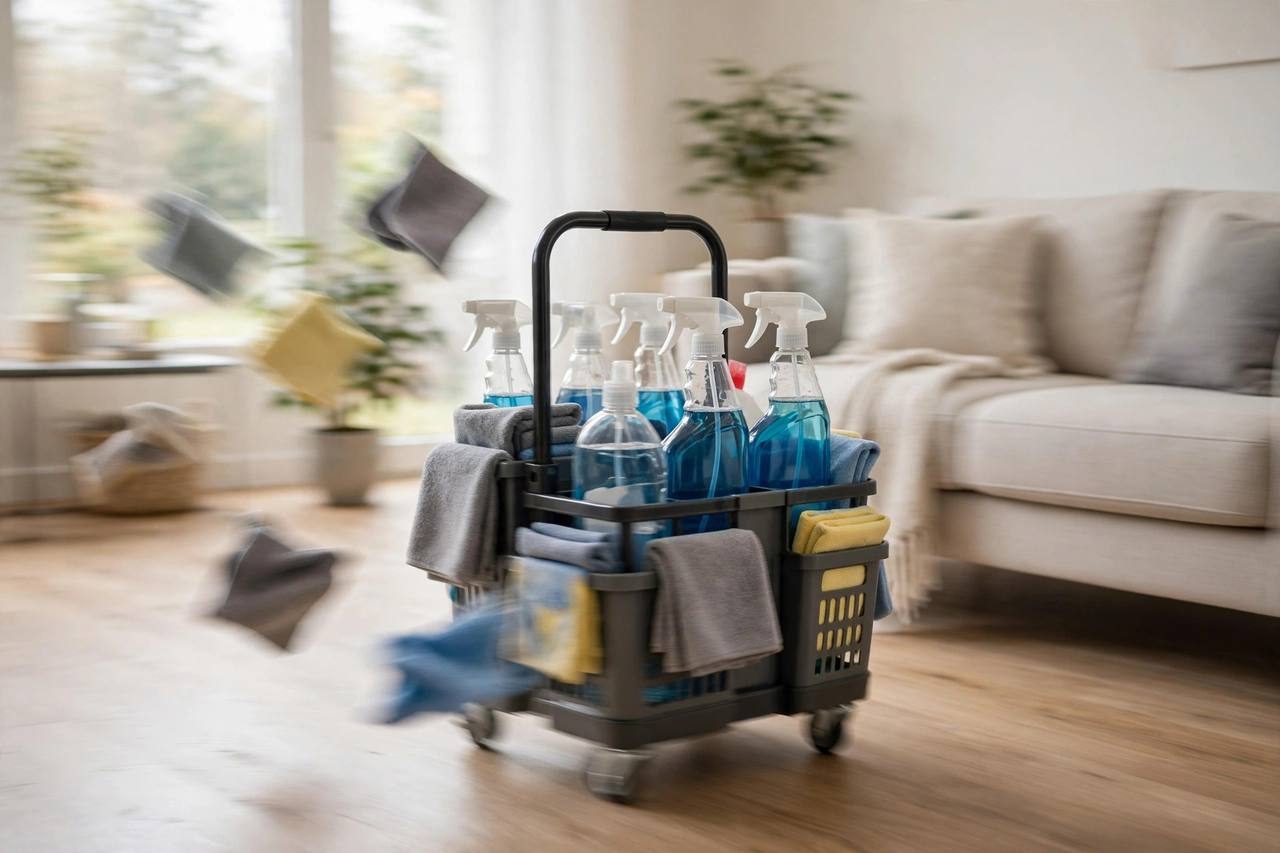
- Rule 3: Carry a caddy. A small tote with your core supplies goes with you everywhere.
Your 4-Hour Tool Kit
You don't need a closet full of products. Speed cleaning runs on a short list:
- All-purpose cleaner: One good spray bottle handles counters, appliances, and most surfaces.
- Bathroom cleaner: A foaming tub and tile cleaner, plus toilet bowl cleaner.
- Glass cleaner or a damp microfiber: For mirrors and windows.
- Microfiber cloths: At least six. Faster than paper towels, no lint.
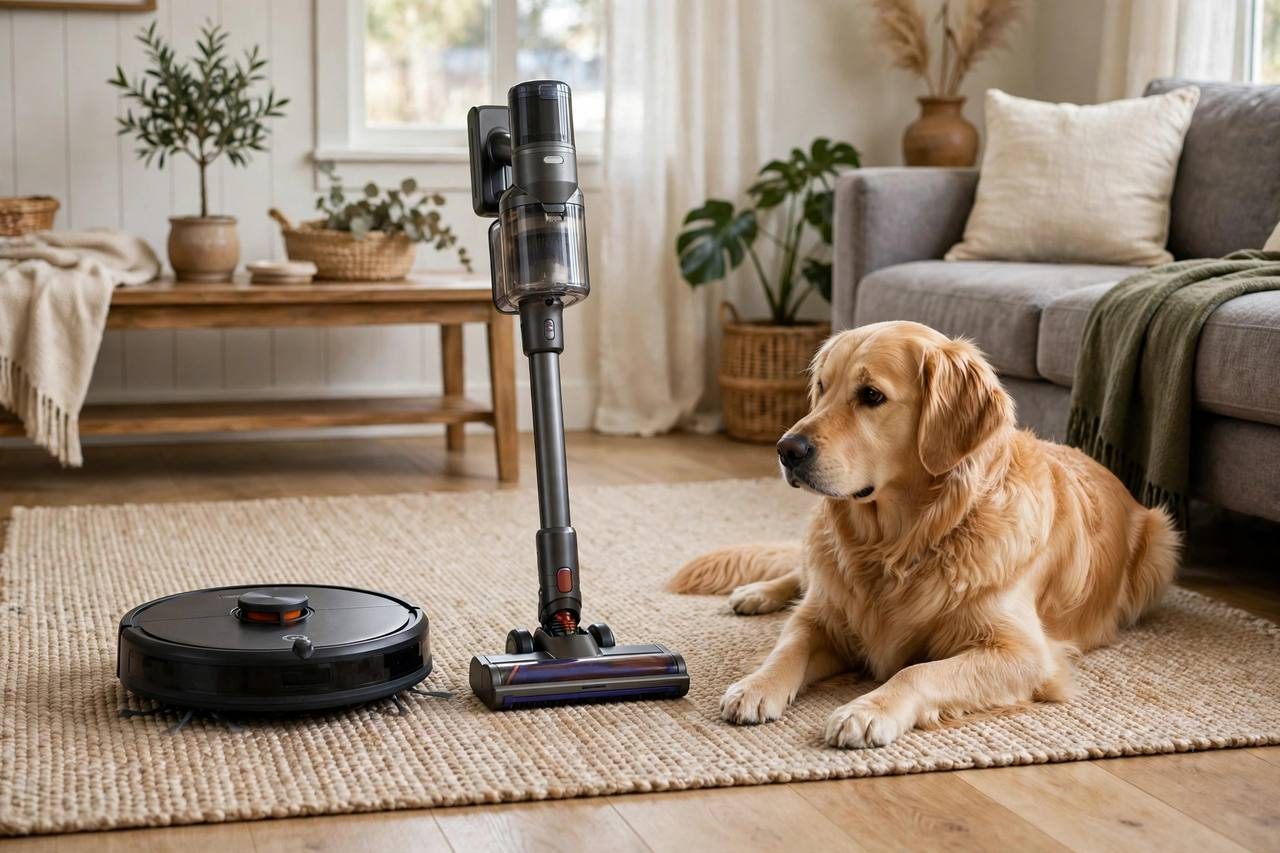
- A vacuum with attachments: Plus the crevice tool and dusting brush.
- A mop or flat-head mop with washable pads: For hard floors after vacuuming.
- Trash bags and a laundry basket: The basket is your clutter shuttle (see Hour 1).
- Rubber gloves: Non-negotiable for bathrooms.
Hour 1: The Declutter Sweep (60 Minutes)
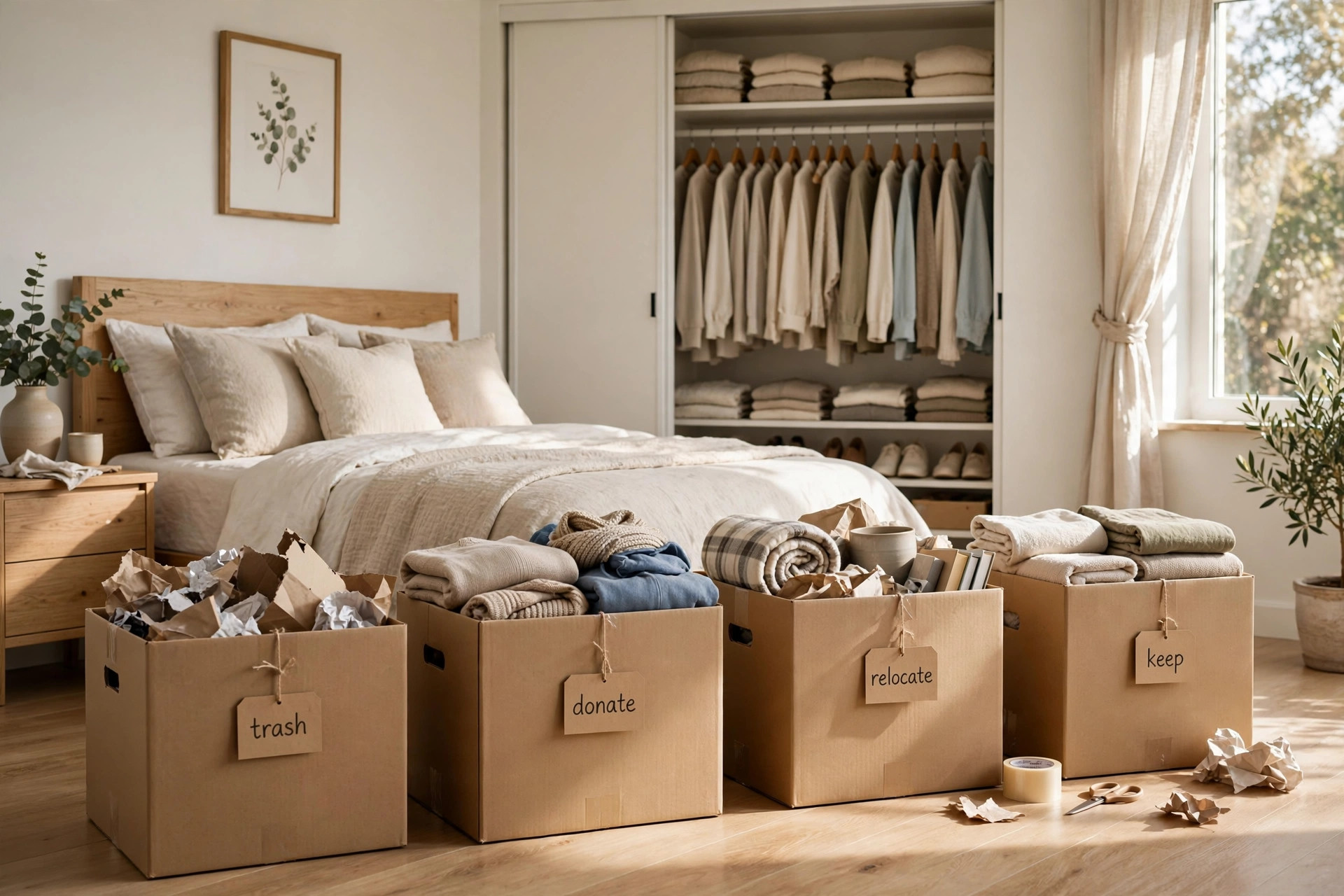
Cleaning around clutter doubles the time of every later step, so the first hour removes it. Grab the laundry basket and walk every room. Anything that doesn't belong in the room goes in the basket: clothes, toys, mail, dishes, random objects. Don't organize anything yet, just relocate. When the basket is full, empty it into the rooms where the items belong, and keep going.
- Pick up trash first: Walk with a trash bag and clear every room's obvious trash. Five minutes, huge visual payoff.
- Strip the beds: Toss sheets in the washer now so they're clean by Hour 4.
- Load the dishwasher: Dishes out of the sink go in the dishwasher or a hot soapy basin to soak.
- Handle the worst piles: If a room has a doom pile of mail or laundry, don't sort it. Bag it or bin it and move it to a closet temporarily. This is a speed clean, not a sorting day.
You'll be shocked how clean the house already looks at the end of this hour. Clutter removal is responsible for roughly 60 percent of the visual difference.
Hour 2: Bathrooms (60 Minutes)
Do all bathrooms in one batch, dirtiest first. Start by spraying: toilet bowl cleaner in every bowl, foaming cleaner on tubs and showers, all-purpose on counters and sinks. Spraying everything at once lets the products dwell while you work the first bathroom.
- Toilets: Scrub the bowl, then wipe the outside from top to bottom: tank, seat, base.
- Tubs and showers: Scrub with a sponge or brush, rinse. For glass doors, squeegee after scrubbing to skip water spots.
- Sinks and counters: Wipe down, clear soap scum, clean the faucet handles where grime hides.
- Mirrors: Glass cleaner and a dry microfiber. Don't use a wet cloth here or you'll streak.
- Floors last: Quick sweep or vacuum, then mop around the toilet base where dust collects.
Two bathrooms take about 45 minutes once you've done this a few times. Refill soap dispensers and hang fresh towels as you finish each one.
Hour 3: Kitchen and Dusting Pass (60 Minutes)
Split this hour: 30 minutes on the kitchen, 30 minutes dusting the whole house.
Kitchen (30 minutes):
- Counters: Clear everything that doesn't live there, spray and wipe every surface including the backsplash.
- Stovetop and microwave: Hit them while the all-purpose cleaner dwells on the counters.
- Appliance fronts: Wipe the fridge, dishwasher, and oven doors.
- Sink: Scrub, rinse, and shine the faucet. An empty, gleaming sink makes the whole kitchen look finished.
- Trash: Take it out now so you don't carry a full bag through a clean house later.
Whole-house dusting pass (30 minutes):
Walk your clockwise route through every room with the extendable duster and a microfiber cloth. Dust ceiling fan blades, shelves, baseboards, window sills, and electronics. Hit light switches and doorknobs with a disinfecting wipe as you go.
Hour 4: Floors and Final Touches (60 Minutes)
Floors are last because everything above them has been shedding dust all day.
- Vacuum everything (25 minutes): Carpets, rugs, and hard floors. Use the crevice tool along baseboards and under sofa cushions, where crumbs and pet hair collect.
- Mop hard floors (20 minutes): Kitchen, bathrooms, entryway, and any other hard surfaces. Work backward toward the door so you don't walk on wet floors.
- Remake the beds (10 minutes): Sheets from the washer go back on. A made bed is the single fastest way to make a bedroom look clean.
- Final walkthrough (5 minutes): Fluff sofa cushions, straighten throws, empty the small trash cans into the main bag, and take that bag out.
Adapting the System to Your Home
The four-hour target assumes an average home and an average mess level. Adjust honestly:
- Apartments and small homes: Drop to two and a half or three hours. The system works the same, just with fewer rooms in the loop.
- Larger homes (2,500+ square feet): Add an hour, or split across two people working the same sequence in parallel.
- Homes with kids or pets: Add 20 to 30 minutes to the declutter hour and the floor hour.
- Houses that haven't been deep cleaned in months: Your first run may take five to six hours. The second run, done within two weeks, will hit four.
The maintenance version is worth adopting: once the house is clean, run a 90-minute version weekly (quick declutter, bathrooms, kitchen, floors) and you'll never need the full four hours again.
Frequently Asked Questions
Does the order really matter, or can I just start in the kitchen?
The order matters. Top to bottom prevents rework, because dust from shelves lands on floors you've already cleaned if you do floors first. Task batching (all bathrooms at once, all dusting at once) is the bigger time saver though, and that's the part most people skip.
What if I only have two hours?
Cut in this order: skip the dusting pass, do bathrooms and kitchen only (the rooms guests judge), then vacuum the main living areas and entryway. Bedrooms with the door closed can wait. Two focused hours on bathrooms, kitchen, and visible floors covers 80 percent of what anyone notices.
Should I use natural cleaners or store-bought products for speed cleaning?
Whichever you'll actually use consistently. Commercial all-purpose and bathroom cleaners are formulated to cut through grime faster, which is the point of a speed clean. The system works with either, as long as you limit yourself to a few products and keep them in the caddy.
How do I keep the house clean between speed cleans?
The daily ten-minute reset: every evening, run the dishwasher or wash the dishes, wipe the kitchen counters, do a five-minute clutter pickup in the living room, and take out trash if it's full. That nightly habit keeps the weekly speed clean at two to three hours instead of creeping back to six.
Is it faster to clean alone or with help?
One focused person beats two distracted people, but two focused people following the same sequence cut the time nearly in half. If you recruit help, assign whole hours (you take bathrooms, they take the declutter sweep), not rooms.