Renter-Friendly Ways to Cut Your Heating Bill This Winter
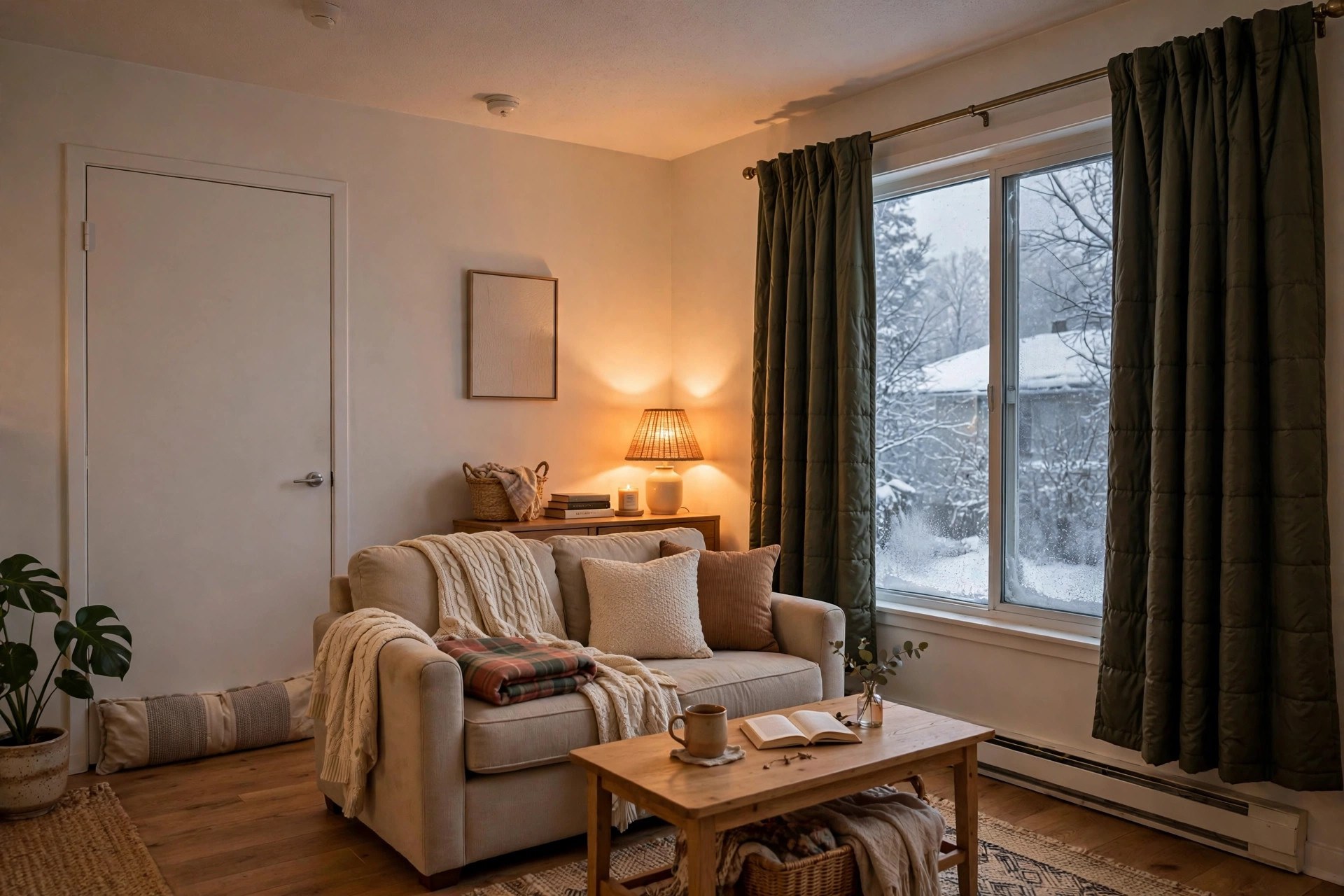
January's heating bill has a way of arriving like a second rent payment. And if you rent, the usual advice feels useless: you cannot add insulation to the walls or replace the drafty windows. The big-ticket fixes belong to your landlord.
Here is the good news: the fixes that matter most are not the big ones. Heat loss in a rental comes overwhelmingly from a handful of weak points: drafts under doors, leaky windows, and thermostat habits that heat empty rooms all day. Every one of those can be addressed without drilling a hole, making a permanent change, or risking a dollar of your deposit.
Here's what you'll learn in this guide to renter-friendly ways to lower your heating bill: the ground rules that keep every project deposit-safe, how to seal door drafts, window fixes including insulation film and thermal curtains, thermostat habits that move the needle, how to heat only the rooms you use, and what to ask your landlord for.
The Renter's Ground Rules
Every suggestion in this article passes three tests before it makes the list.
No drilling, no screws, no permanent changes. If a project needs a drill or leaves a hole, it is out. Adhesive, tension, friction, and gravity are your tools.
Fully reversible. Undo everything in an afternoon at move-out, leaving the place exactly as you found it.
Deposit-safe materials. No adhesive that pulls paint, no film that damages glass, no caulk you cannot remove. When in doubt, test any adhesive in a hidden spot first, and keep the product packaging until move-out so you know exactly how it is meant to come off.
These rules are not just about the deposit. They are about leverage: when everything you do is reversible, there is nothing for a landlord to object to at move-out.
Seal the Drafts: The Biggest Win
If you do one thing from this article, do this. Drafts are the largest source of heat loss in most rentals, and the cheapest to fix. Cold air pours in under exterior doors, and your heating system runs constantly to replace it.
Draft stoppers
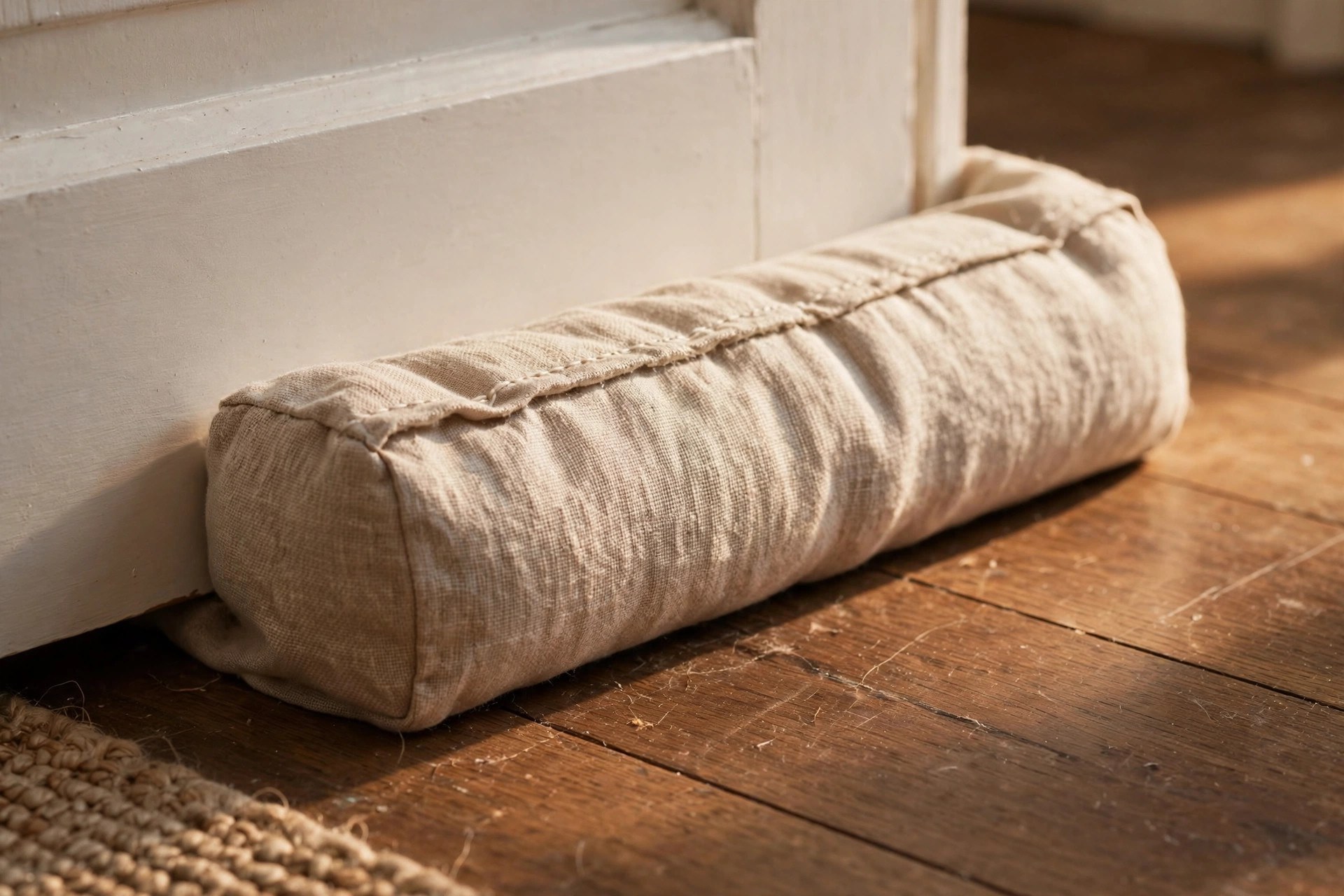
A draft stopper is a weighted fabric tube that sits against the base of a door, blocking the gap where cold air streams in. They cost very little, require zero installation, and work immediately. Place them at every exterior door and at doors to unheated spaces like basements and garages.
Door sweeps that do not damage frames
For doors you use constantly, where a loose stopper gets kicked aside, an adhesive door sweep is the step up. These brush or rubber strips have a peel-and-stick backing, no screws needed. Measure the door width, clean the surface with rubbing alcohol so the adhesive bonds, and press firmly along the full length. At move-out, warm the adhesive with a hair dryer and peel slowly.
Winterize the Windows
Windows are the second-biggest heat leak in a rental, especially old single-pane ones. You cannot replace them, but you can dramatically reduce what escapes through them.
Window insulation film
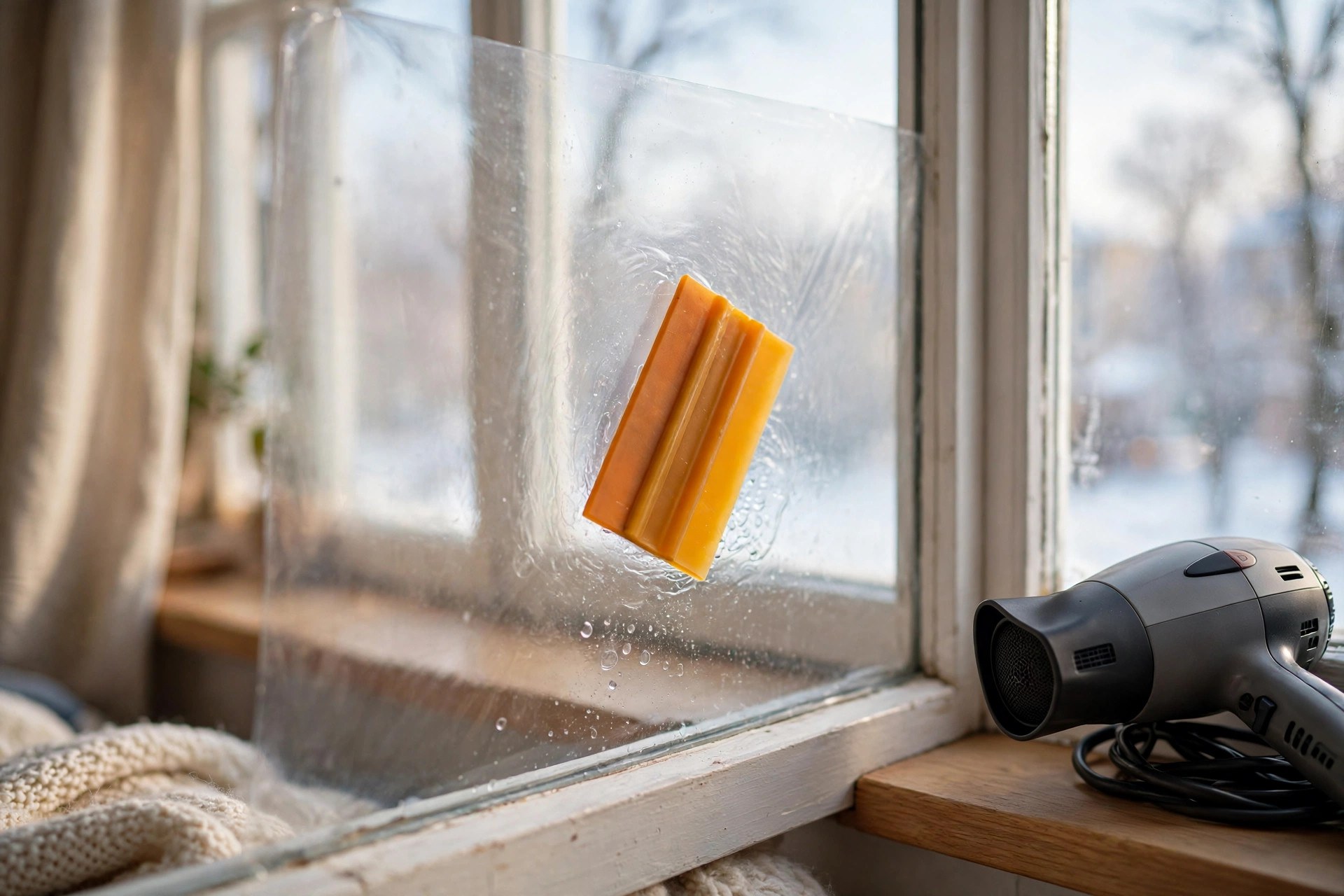
Insulation film is a clear plastic sheet you tape over the window frame and shrink tight with a hair dryer, creating a still-air pocket between the film and the glass. That trapped air is an insulator, and one kit can make a drafty window feel like a different window. The film is nearly invisible once shrunk and peels off cleanly in spring. Start with the rooms you use most.
Thermal curtains
Heavy, lined curtains add a real layer of insulation over glass. Hang them on a tension rod inside the window frame and keep them closed after dark, when heat loss peaks. Open them on sunny days for free solar heat, then close them as the light fades.
Removable weatherstripping
Self-adhesive foam weatherstripping tape seals the gaps where window sashes meet the frame. Choose the removable kind, test a small piece first, and replace it each season since the adhesive weakens over time. Fifteen minutes per window, with an outsized payoff on the rattly ones.
Thermostat Habits That Actually Save
You may not be able to replace the thermostat, but how you use the one you have matters more than the model.
The setback strategy
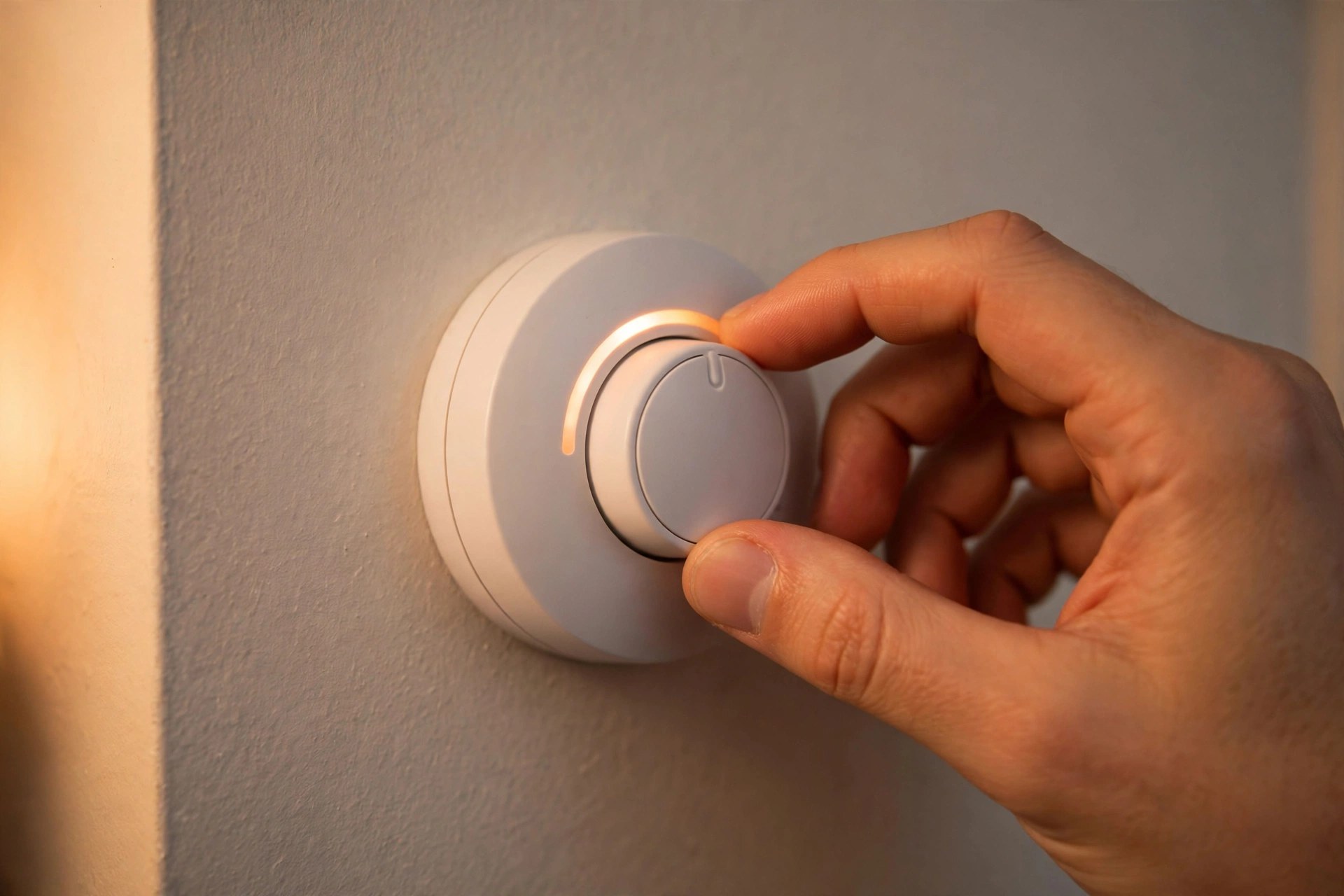
Every degree you lower the thermostat for eight hours (overnight or while at work) saves a noticeable percentage on heating. The standard guidance: 68 degrees when you are home and awake, lower when asleep or away. If your rental has a programmable thermostat, set the schedule once and forget it. If it is an old manual dial, make it routine: down when you leave and at bedtime, back up when home.
Stop heating rooms you are not in
Close the doors to spare bedrooms and storage rooms you do not use daily. Close their vents partway if you have forced air (never fully, which can strain the system). You are not trying to heat the whole apartment evenly; you are keeping the rooms you live in comfortable while the empty ones coast a few degrees cooler.
Be careful with space heaters
A space heater feels like savings but usually is not: electric resistance heat is the most expensive kind per unit of warmth. If you use one, warm a single room for a short time while the main thermostat stays low, never as an all-day furnace substitute. Plug it directly into the wall, keep three feet of clearance, and never leave it running unattended.
Heat the Room You Are In
Beyond the thermostat, a few low-effort moves make the rooms you occupy feel warmer at the same temperature.
Lay down rugs. Bare floors, especially over unheated spaces, make the whole room feel colder. A thick rug with a pad underneath is insulation you can take with you when you move.
Reverse the ceiling fan. Most ceiling fans have a small direction switch. Set it to run clockwise on low in winter, which pushes risen warm air back down to where you are. Many renters never realize the switch exists.
Close the curtains, open the interior doors. At night, curtains closed against the glass; during the day, interior doors open so warmth circulates instead of pooling in one room. Small airflow choices add up over a season.
These are the same kinds of low-commitment upgrades that make a rental feel like home, which is why our renter-friendly organization ideas pair well with this guide. And if your entryway is part of the problem, our small apartment mudroom ideas show how to turn that transitional space into a buffer against the cold.
What to Ask Your Landlord For
Some fixes belong to the property owner, and asking is always worth it. Frame every request around their asset, since landlords pay for building improvements while you pay the utility bills.
A fresh furnace filter. A clogged filter makes the whole system work harder. Ask when it was last changed, and offer to swap it yourself if they provide the filters. See our guide on how often to change your HVAC filter.
Sealing obvious gaps. If you can see daylight around a door frame or feel a strong draft that weatherstripping cannot fix, photograph it and report it as maintenance. Sealing the envelope protects their property from moisture damage, not just your bill.
A thermostat upgrade. If the unit has an ancient manual thermostat, ask about a programmable replacement (see our smart thermostat buying guide for models worth suggesting). It is cheap, protects their HVAC from short-cycling, and makes the unit more attractive to future tenants.
Attic and pipe insulation. You will likely never see the attic, but you can ask whether it is insulated. In cold climates, uninsulated attics and exposed pipes are a frozen-pipe risk, which is the landlord's nightmare far more than yours.
Put requests in writing, keep them friendly and specific, and give a reasonable timeline. "The front door has a half-inch gap letting in cold air; could maintenance add weatherstripping before December?" beats a vague complaint every time.
The Deposit-Safe Winter Checklist
Run through this once in late fall and head into winter with the easy wins banked:
- Draft stoppers at every exterior door and doors to unheated spaces
- Adhesive door sweeps on high-traffic doors
- Window insulation film on the draftiest windows
- Thermal curtains hung on tension rods, closed at night
- Removable weatherstripping on rattly window sashes
- Thermostat set back overnight and while away
- Unused rooms closed off, vents partially closed
- Rugs down on bare floors, ceiling fan reversed
- Landlord requests sent in writing for filters, gaps, and thermostat
None of it requires permission, none of it risks the deposit, and together it can take a real bite out of the winter bill. The landlord owns the building, but the drafts, the windows, and the thermostat are yours to manage.