Prevent Frozen Pipes: A Winter Checklist for the Thaw
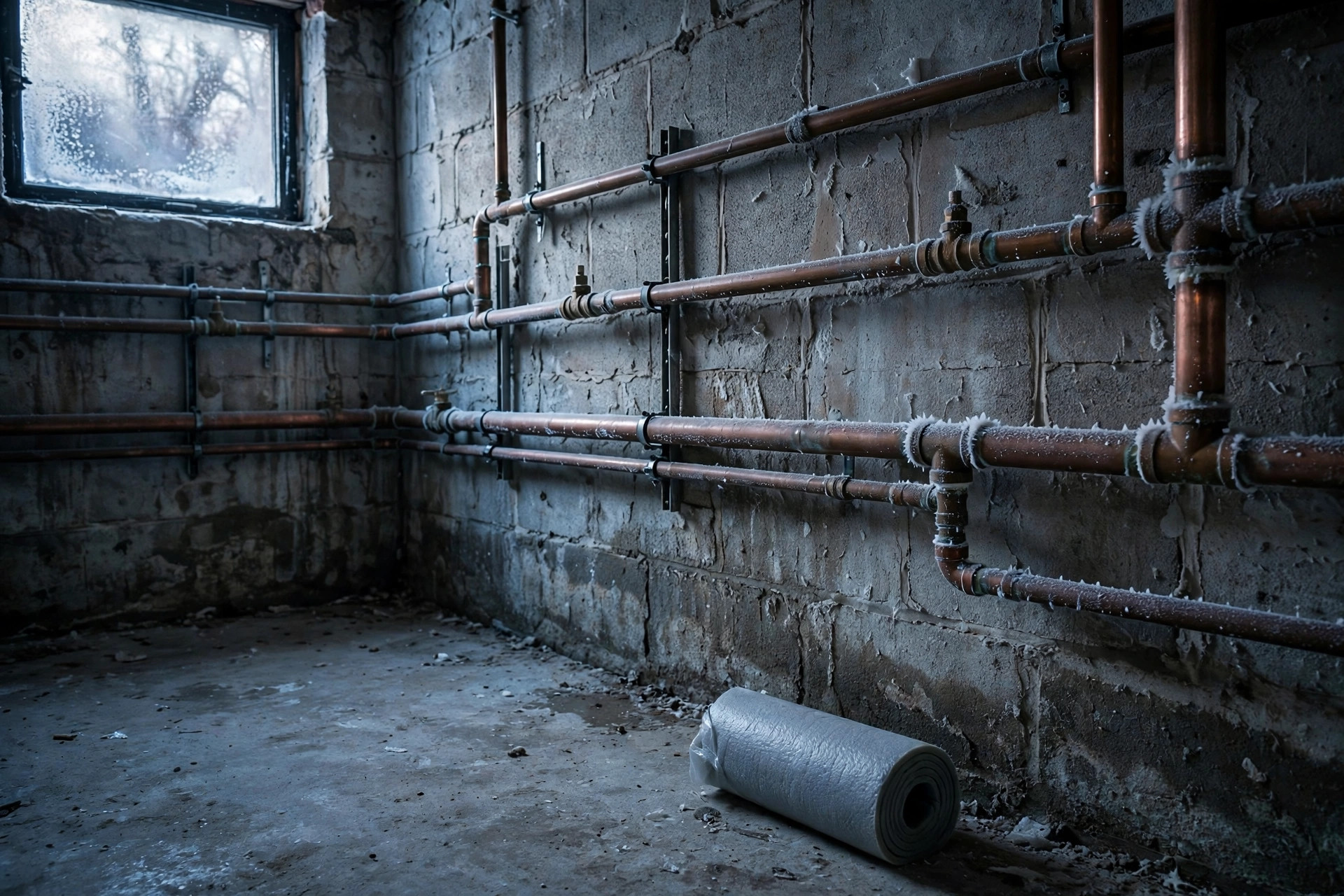
prevent frozen pipes winter checklist: winter arrived early. On 12 November 2026, the National Weather Service said polar air would surge into the eastern half of the nation, with "overnight lows will fall into the 20s across much of the central U.S." and freezing temperatures reaching the Deep South by Saturday morning 14 November.
That cold snap has already happened: the freeze arrived that weekend, the season opener. If your pipes survived it, the coldest weeks are still ahead, and the work that protects them takes an afternoon.
Here is the part most homeowners get wrong: the disaster is usually not the freeze, it is the thaw.
Why a frozen pipe bursts, and why the leak shows later
Water expands by about 9 percent as it turns to ice. The expansion itself is not what splits the pipe: a frozen pipe usually does not burst where the ice is.
Once ice forms a complete blockage, freezing continues behind it and pressure builds between the ice and a closed faucet until the pipe fails. As the Insurance Institute for Business and Home Safety puts it: "Usually the pipe bursts where little or no ice has formed."
That is why the leak usually shows when the pipe thaws, not when it freezes. The pipe splits under pressure while frozen, and water only escapes once the ice plug melts.
Which pipes are at risk, and at what temperature
The pipes that freeze most frequently, per the American Red Cross: outdoor hose bibs, pool and sprinkler supply lines, pipes in unheated basements, crawl spaces, attics, garages and kitchen cabinets, and pipes against exterior walls with little or no insulation.
Pipes in unheated spaces are most at risk once outdoor temperatures fall to about 20 degrees F or below. The Insurance Institute for Business and Home Safety calls 20 degrees F a "temperature alert threshold" for southern states and other areas where freezing weather is the exception, based on Building Research Council field tests at the University of Illinois: uninsulated pipes in an unconditioned attic began freezing at 20 degrees F or below.
But 20 degrees F is a threshold, not a guarantee: pipes exposed to cold air through cracks, or with no insulation, can freeze above it, and wind driven cold air accelerates the blockage.
What a burst pipe costs
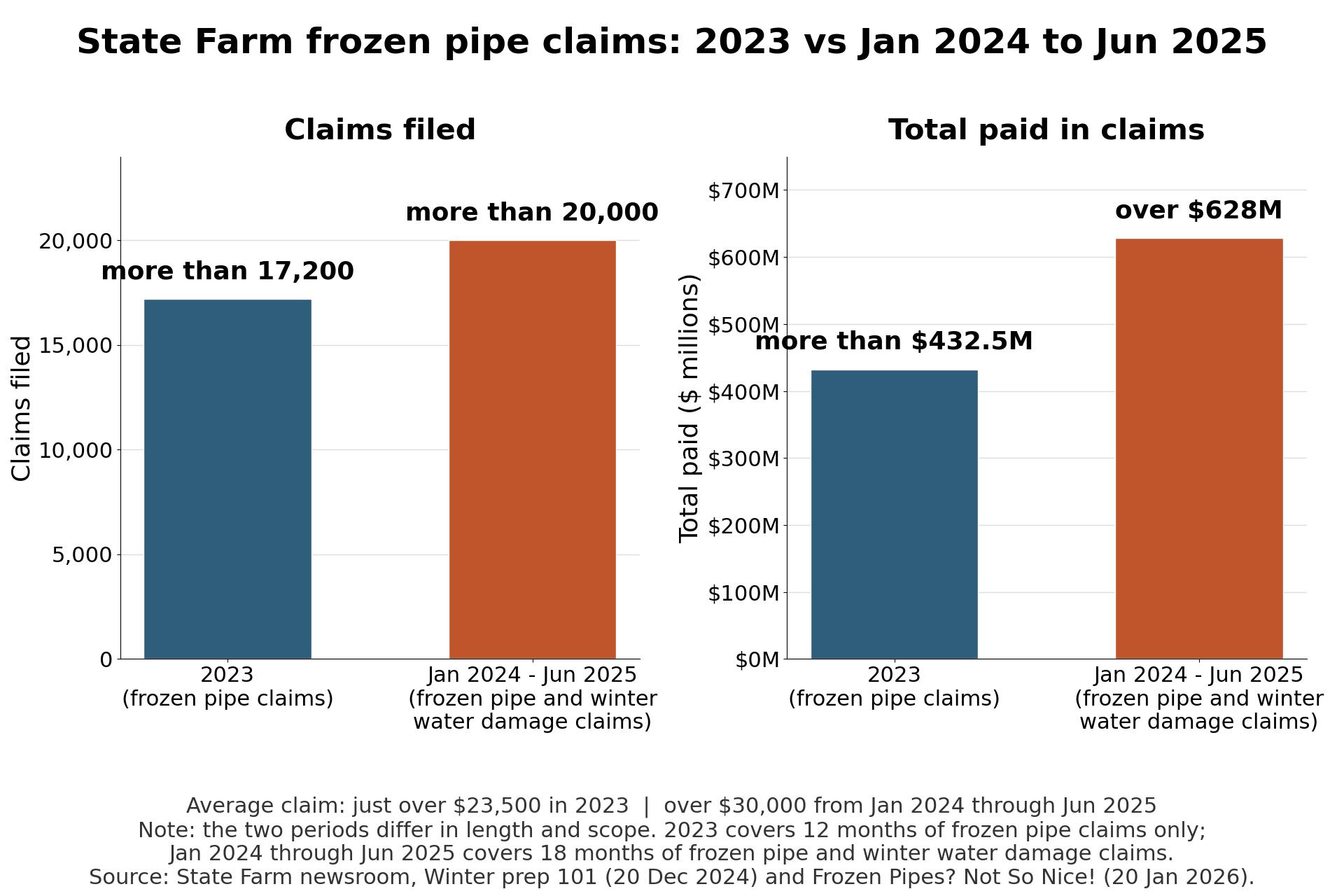
State Farm reports: "According to 2023 State Farm claims data, the company received more than 17,200 claims related to frozen pipes, paying more than $432.5M, with the average claim just over $23,500."
Fresher figures, for frozen pipe and winter water damage claims, show the problem has not eased: "From 2024 through June 2025, more than 20,000 claims were filed, totaling over $628 million in paid losses. The average claim payment exceeded $30,000."
The Association of British Insurers said the average weather related home insurance claim for burst pipes in the UK was 9,300 pounds in 2021. In the US the average State Farm claim was just over $23,500 in 2023 and over $30,000 from January 2024 through June 2025, so a burst pipe is a five-figure repair in the US, and every step below costs far less.
The checklist: do these before the next cold night
1. Keep the heat on, at 55 degrees F or higher, even when you are away. The Red Cross advises: "If you will be going away during cold weather, leave the heat on in your home, set to a temperature no lower than 55° F." State Farm gives the same 55 degree floor.
2. Keep the thermostat at the same temperature day and night. Suspending lower nighttime temperatures may raise the heating bill, but it can prevent a much more costly repair. See our November winter prep checklist.
3. Disconnect hoses, shut off and drain exterior faucets. Remove, drain and store outdoor hoses, close the inside valves supplying outdoor hose bibs, then open the outside bibs to drain them. Keep the outside valve open so remaining water can expand without breaking the pipe.
4. Drain pool and sprinkler supply lines. Drain swimming pool and water sprinkler supply lines following the manufacturer or installer directions. Do not put antifreeze in these lines unless directed.
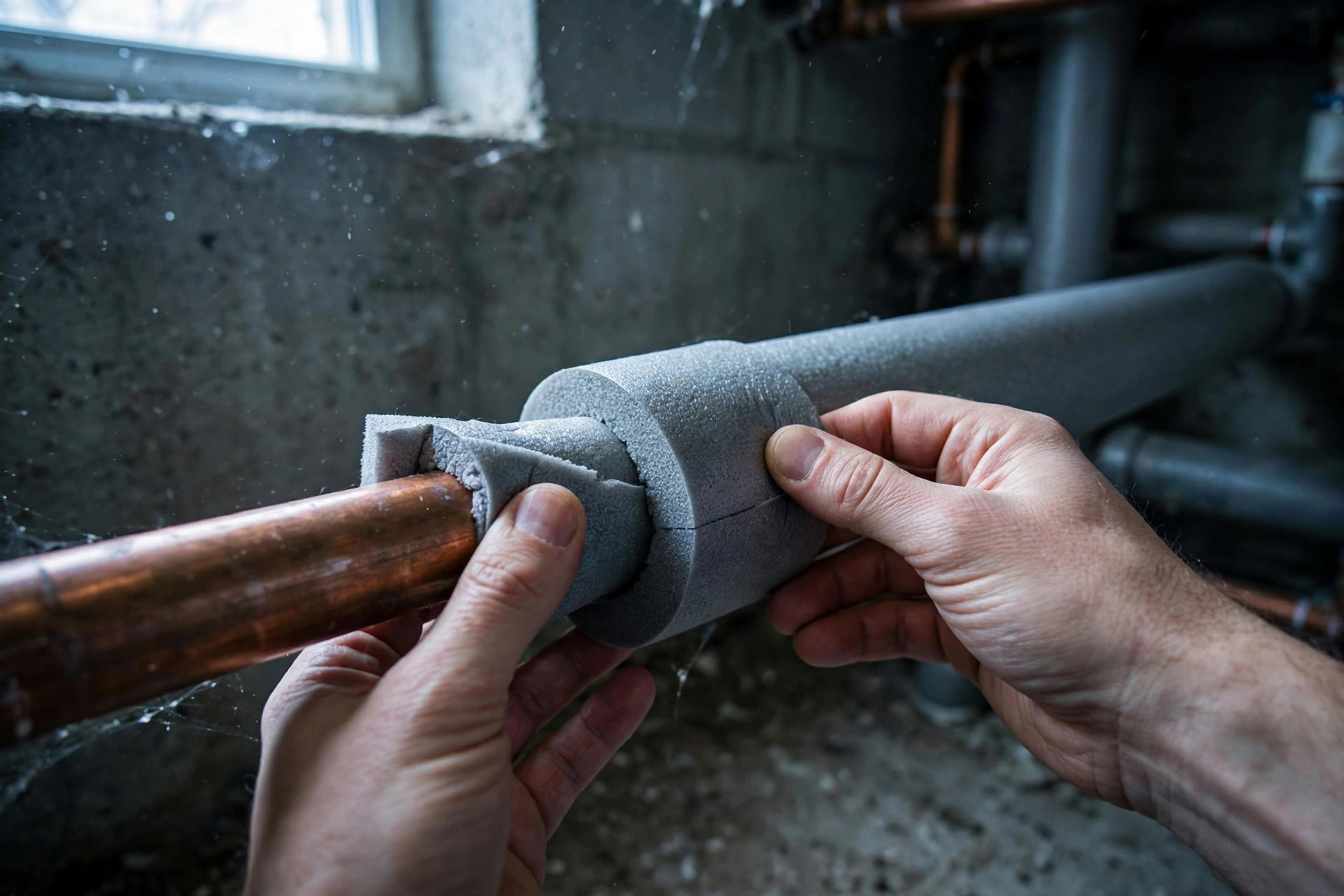
5. Insulate exposed pipes. Insulate both hot and cold water pipes in unheated areas, and add insulation to attics, basements and crawl spaces. Use pipe sleeves, or UL listed heat tape or heat cable on exposed pipes, used with extreme caution: follow the manufacturer instructions, check that the product conforms to UL 2049, and prefer a built-in thermostat.
6. Open kitchen and bathroom cabinet doors. Let warmer air circulate around the plumbing, and move harmful cleaners and chemicals out of the reach of children.
7. Let a faucet drip on very cold nights. The Red Cross says to let cold water drip from the faucet served by exposed pipes, since running water, even at a trickle, helps prevent freezing. State Farm says to let warm water drip overnight, preferably from a faucet on an outside wall. The Insurance Institute for Business and Home Safety explains why it works: a drip relieves pressure between the faucet and an ice blockage, and if both hot and cold lines serve a spigot, each should contribute. If the dripping stops, leave the faucet open.
8. Seal air leaks near pipes. Seal leaks around the dryer vent and where outside wiring and pipes enter the home, with caulk or insulation, and seal cracks and holes in outside walls and foundations near water pipes to keep cold wind away.
9. Keep garage doors closed if there are water supply lines in the garage.
10. Find the main shutoff valve now, before anything bursts. Everyone in the family should know where it is. It is usually at the water meter or where the main line enters the house. If a water pipe bursts, turn off the water there and leave the faucets open until repairs are completed. See our DIY or hire a pro guide.
Going away for a long trip: drain the system down
Shut off the main valve, then turn on every fixture, both hot and cold lines, until water stops running. When you return, turn on the main valve and let each fixture run until the pipes are full again. State Farm gives the same advice, and asks you to have a neighbor check the house daily.
If a pipe freezes anyway
Suspect a frozen pipe when a faucet gives only a trickle. Keep the faucet open for pressure relief, and remember the thaw hook: if the pipe has already split, the leak will show when the ice melts, so stay nearby.
Thaw it with an electric heating pad, hair dryer, portable space heater kept away from flammable materials, or towels soaked in hot water. Start warming close to the faucet and work toward the coldest section. Never use a blowtorch, kerosene or propane heater, charcoal stove, or other open flame device. Do not use electrical appliances while standing in water.
If the frozen area cannot be located or thawed, call a licensed plumber. If a pipe has burst, turn off the water at the main shutoff valve first.
Frequently Asked Questions
At what temperature do pipes start to freeze?
About 20 degrees F or below. Pipes can still freeze above it where cold air enters through cracks or insulation is missing.
Why does a frozen pipe burst, and why does the leak show at the thaw?
Water expands by about 9 percent as it turns to ice, and pressure builds behind the blockage until the pipe fails. The split opens while frozen, so water escapes only when the ice melts.
What temperature should I keep the heat at when I am away in winter?
No lower than 55 degrees F, the floor given by both the American Red Cross and State Farm.
Should I let a faucet drip, cold water or warm water?
Either. The Red Cross advises cold water, State Farm advises warm water. The drip relieves pressure behind any ice blockage.
How do I drain my water system before a long winter trip?
Shut off the main valve, then open every fixture until water stops running. On return, turn it back on and run each fixture until the pipes are full.
What should I do if a pipe freezes?
Keep the faucet open and thaw it with a heating pad, hair dryer, space heater, or hot towels, starting close to the faucet. Never use an open flame. If you cannot find or thaw it, call a licensed plumber.
Sources: National Weather Service, Short Range Forecast Discussion, 12 November 2026; American Red Cross, "Preventing and Thawing Frozen Pipes"; Insurance Institute for Business and Home Safety, "Freezing and Bursting Pipes"; State Farm, "Ideas on How To Help Prevent Pipes From Freezing", 14 January 2026; State Farm newsroom, "Winter prep 101", 20 December 2024, and "Frozen Pipes? Not So Nice!", 20 January 2026; Association of British Insurers, "Winter is coming so don't be frozen out", November 2022; CRC Handbook of Chemistry and Physics, via FluidProps. Checked 2026-11-18.