How to Do a Fall Closet Changeover Without the Chaos
Every October, the same scene plays out in bedrooms everywhere: a mountain of clothes on the bed, summer dresses tangled with wool sweaters, one person sitting in the middle of it wondering how a simple seasonal swap turned into a full-blown crisis. The fall closet changeover doesn't have to be that kind of day.
A closet changeover is simply the seasonal swap from warm-weather clothes to cold-weather clothes: summer items get washed and stored, fall and winter items come out of storage, and the closet gets reset for the months ahead. Done as a calm one-weekend plan instead of a frantic evening scramble, it takes a few focused hours and leaves you with a closet that actually matches the weather outside.
Here's what you'll learn in this guide to a chaos-free fall closet changeover: how to prep so the swap goes smoothly, a sorting system that handles every item in one pass, how to wash and store off-season clothes so they survive until spring, and how to reset your closet for cold weather so getting dressed on dark mornings feels easy.
Before You Start: The 30-Minute Prep
A smooth changeover starts before you touch a single hanger. Gather your supplies first: sturdy bins or vacuum storage bags for off-season clothes, garment bags for anything structured like blazers or wool coats, a laundry basket for the "wash before storing" pile, and a marker plus labels for the bins. If you're tight on closet space, our guide to bedroom closet organization for small spaces has layout ideas that make seasonal swaps much easier.
Pick your window deliberately. A Saturday morning works best, when you have natural light for spotting stains and enough time to finish in one go. Put on a podcast, open the windows, and commit to finishing the swap the same day. The number one cause of changeover chaos is stopping halfway, with summer clothes in bags on the floor and winter clothes still boxed for three weeks.
Step 1: Pull Everything Out and Sort in One Pass
Take every item out of the closet, including the stuff shoved in the back. Yes, all of it. You can't make good decisions about a closet you can't see, and the back corners are where outdated, damaged, and forgotten items hide.
Sort everything into four piles as you go:
- Fall/winter keepers: sweaters, jeans, boots, coats, anything you'll wear from now until spring.
- Summer storage: shorts, sundresses, linen, sandals, swimwear. These get washed and stored.
- Donate or toss: anything that doesn't fit, is damaged beyond repair, or you didn't wear once all summer. If you're unsure how to judge, our guide on how to declutter clothes walks through the decision process.
- Needs repair: missing buttons, small holes, broken zippers. Put these in one bag with a note, and deal with them within two weeks or let them go.

Be honest with the donate pile. If you didn't wear it during the entire warm season, you won't wear it next year either. Bag donations immediately and put them by the front door so they leave the house within 48 hours.
Step 2: Wash and Store the Summer Clothes
Never store dirty clothes. Body oils, sunscreen, and invisible food stains oxidize over months in storage and turn into permanent yellow marks by spring. Everything going into storage gets washed or dry-cleaned first, then fully dried.
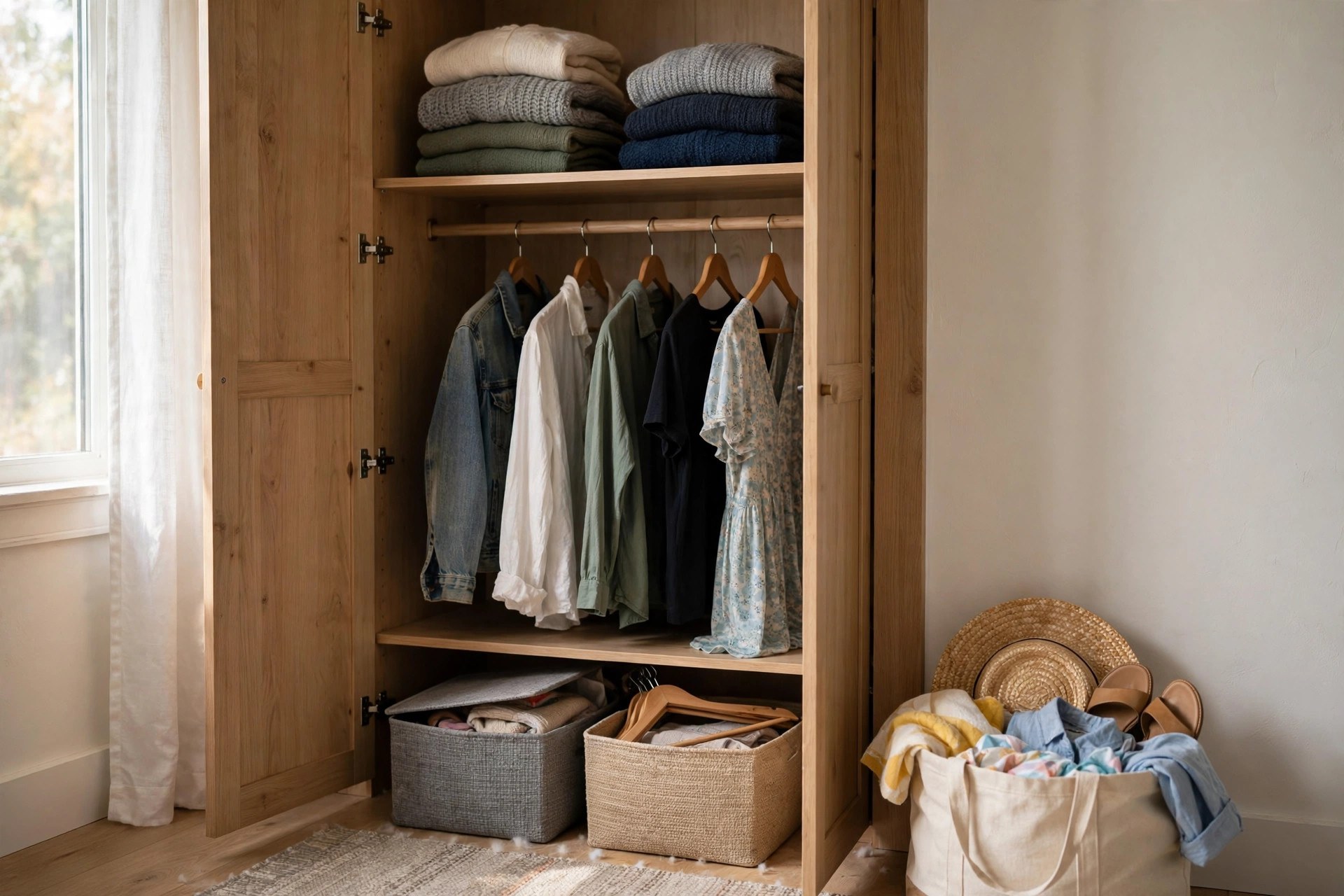
Once clean, fold summer clothes neatly rather than stuffing them. Vacuum storage bags are ideal for bulky items and for anyone short on space: they compress a whole season into a flat package that slides under the bed. For delicates, linen, and anything structured, use breathable garment bags or fabric bins instead of plastic, which traps moisture. Cedar blocks or lavender sachets in each container discourage moths without the chemical smell of mothballs.
Label every container with its contents and the season: "Summer 2026: dresses, shorts, swim." Future you, digging through storage in April, will be grateful. Slide bins under the bed, onto a high closet shelf, or into the back of a deep closet. If under-bed space is your plan, these under-bed storage ideas show how to make the most of every inch.
Set aside a small "shoulder season" capsule too: a light jacket, a few long-sleeve tees, and one pair of closed-toe shoes that bridge the gap between summer heat and real cold. These stay in the closet, not in storage, so the first chilly morning doesn't send you digging through sealed bags.

Step 3: Reset the Closet for Cold Weather
Before anything goes back in, clean the empty closet. Wipe down shelves, vacuum the floor, and check for any dampness or musty smells. An empty closet is also the perfect moment to tighten loose rods and replace any broken hangers.
Now rebuild the closet around how you actually dress in cold weather:
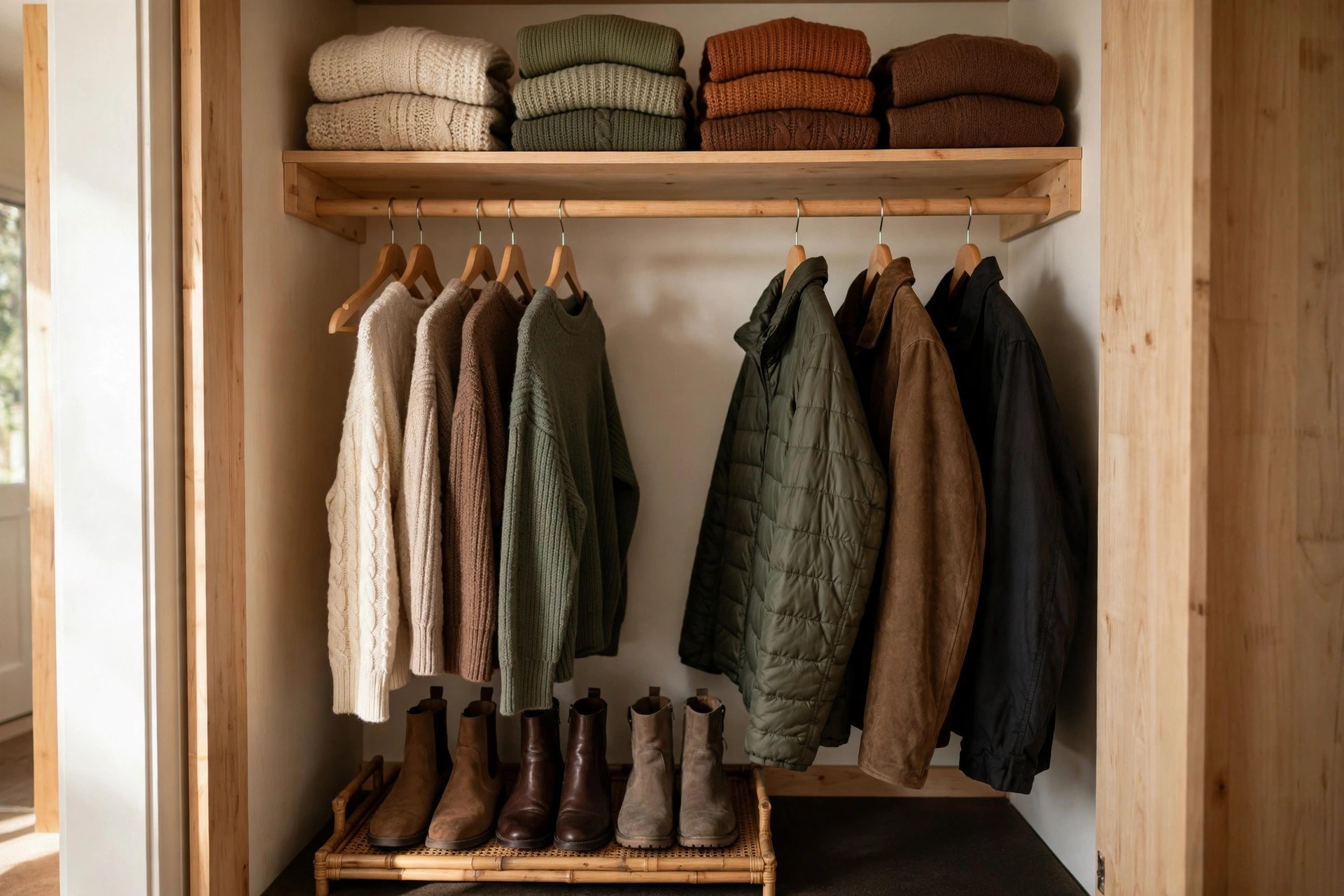
- Group by category, then by warmth. Hang coats and blazers together, then sweaters, then long-sleeve shirts. Within each group, arrange light to dark if you like the visual calm, but category order matters more than color order.
- Give boots and shoes a real home. Wet-weather footwear needs a tray or mat by the door or at the closet base, not piled on top of each other. Stuff tall boots with rolled towels or boot shapers so they keep their shape.
- Keep layers accessible. Cardigans, scarves, and the "it's colder than I thought" extras should live at the front, not behind the formal wear.
- Use the top shelf for the deep-winter gear. Heavy coats, ski gear, and holiday outfits can wait until December. Keep October-through-November clothes at eye level.
The Cold-Weather Extras People Forget
A fall changeover isn't just a clothing swap; it's a small seasonal reset. While you're in the closet, check that you have a working lint roller, restock cedar blocks, and make sure your winter coat's zipper still works before the first freeze. Pull out one set of warm bedding if your linen storage is nearby, since cold snaps rarely wait for a convenient weekend.
This is also the moment to note what you're missing. One warm layer too few? Write it on a running shopping list instead of panic-buying three sweaters in November. A changeover done well actually saves money, because you rediscover what you already own before the seasonal sales tempt you.
Keeping It Calm Until Spring
The changeover sticks when the closet has breathing room. Leave a few empty hangers and a little shelf space; a packed closet is a closet you'll dread opening, and dread leads straight back to the chair covered in clothes.
If you share the closet, do the swap together and agree on the shared zones first: one shelf each for off-season overflow, plus a donation bag that lives in the closet year-round. When one of you spots something the other never wears, it goes straight in the bag, no debate required.
Do a five-minute reset each Sunday evening: rehang anything draped over furniture, toss worn-but-clean items in the right spot, and pull out the week's outfits if you're a planner. When spring arrives, you'll run this whole process in reverse, and because everything was washed, labeled, and stored properly, the spring swap will take half the time.