The 5/7 Decluttering Method: What It Is and How to Try It

Every decluttering trend promises the same thing: a calmer home with less stuff fighting for your attention. Most of them fail for the same reason, too. They ask you to judge your possessions by feelings, memories, or vague ideas of minimalism, and your brain quietly opts out around item number forty.
The 5/7 decluttering method, which started making the rounds online in September 2026, takes a different approach. Instead of asking how you feel about an item, it asks a math question: do you use this thing at least five days out of seven? If yes, it earns a visible, easy-access home. If not, it moves to storage, moves to another room, or moves out entirely. No mood required, just counting.
Here's what you'll learn in this guide to the 5/7 decluttering method: the exact rules and how they differ from other popular methods, why this one spread so fast, who it suits and who should skip it, a step-by-step trial you can run in one room this weekend, and the mistakes that trip people up on their first attempt.
What the 5/7 Decluttering Method Actually Is
The rule is simple enough to fit on a sticky note. Walk through a room and sort every item by one question: have I used this at least five of the last seven days?
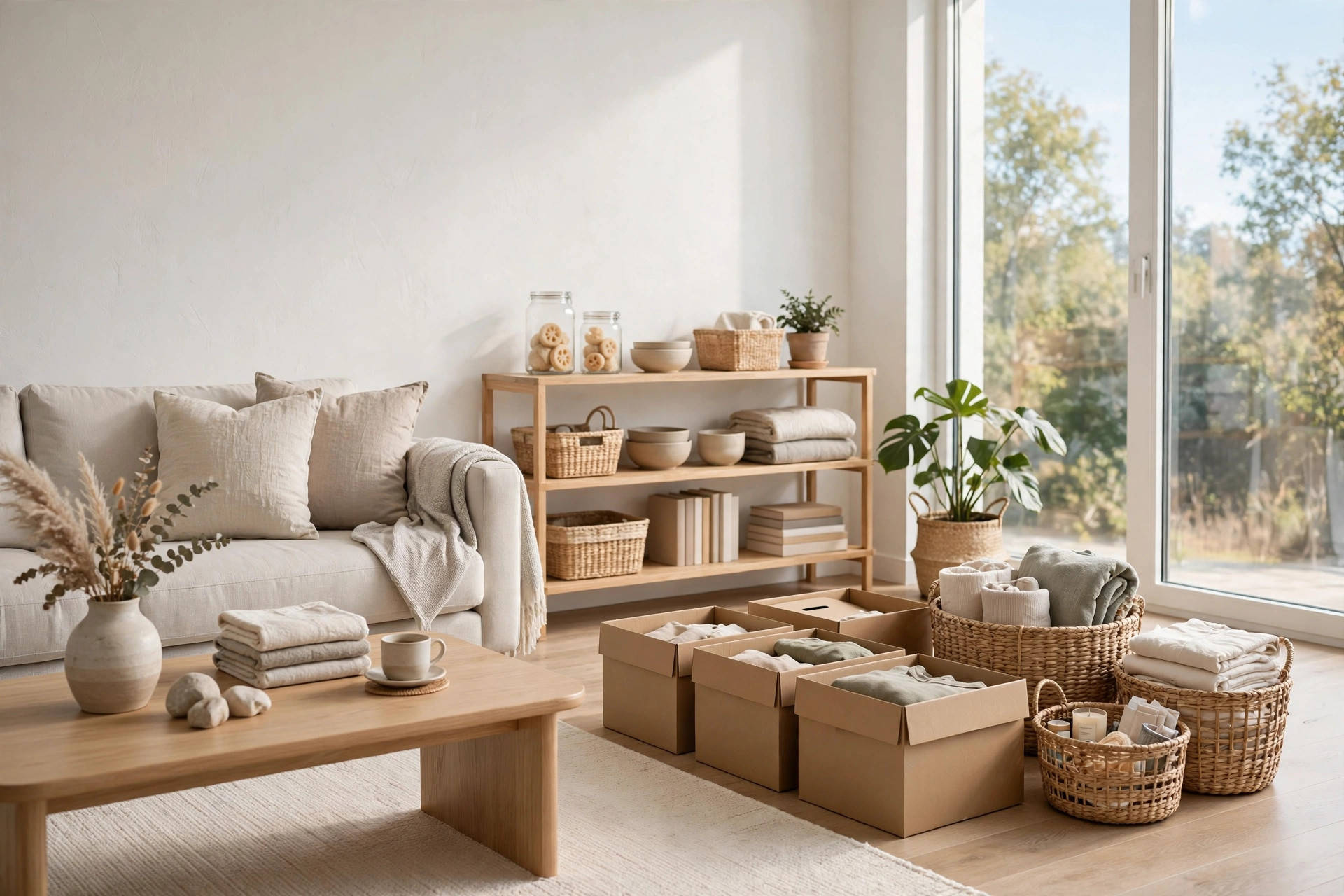
Items that pass earn what the method calls "prime real estate": countertops, the front of closets, the top drawer, the hook by the door. These are the visible, easy-grab spots in your home, and they are reserved for daily-use items only.
Items that fail the test go into one of three destinations: stored (seasonal or occasional items put away properly), relocated (things that belong in another room), or let go (donated, sold, or tossed). The key insight is that most of our homes are organized backward. Prime real estate is crammed with things we rarely touch, while the stuff we use every day is buried behind them.
The Three Outcomes, Explained
Prime spots (used 5 days out of 7 or more): Your phone charger, your coffee setup, your work bag, the three outfits on heavy rotation. These live out in the open, within arm's reach of where you use them.
Stored or relocated (used less than 5 days out of 7): The bread maker you use on Sundays, the guest towels, the fancy dishes. These get proper homes in cabinets, bins, closets, or other rooms, but not in your way.
Let go: The things that fail the 5/7 test and that you also don't miss when they're put away. If you store something for a month and never go looking for it, you have your answer.
How 5/7 Differs From Other Methods
Unlike the 5-4-3-2-1 decluttering method, which is a one-session sorting game with fixed quotas, the 5/7 method is an ongoing organizing principle you can keep using for years. And unlike a full room-by-room decluttering guide, it doesn't ask you to purge everything at once. You can test it in a single room this weekend and let the rest of the house wait.
The other big difference is emotional temperature. Most methods ask "do I love this?" or "would I buy this again?" The 5/7 test asks "did I touch this this week?" That makes it much easier to run on a tired weeknight.
Why the 5/7 Method Went Viral
September 2026 was a perfect moment for this idea. Summer clutter was everywhere, people were staring down fall routines, and every feed was full of before-and-after reels. The 5/7 method hit because it was filmable, debatable, and genuinely different.
It was filmable because the transformation is visual. Pulling everything off a counter and putting back only the daily items makes a dramatic fifteen-second video. It was debatable because people immediately started arguing about edge cases: what about the first-aid kit you use once a year? What about kids' toys? Arguments drive comments, and comments drive the algorithm.
But the real reason it stuck is that the rule removes guilt from the equation. You are not deciding whether an item sparks joy or whether you're a bad minimalist for owning a waffle maker. You are counting days. Counting is boring, and boring is exactly what a tired brain needs at 8 p.m. on a Tuesday.
Who the 5/7 Method Suits (and Who Should Skip It)
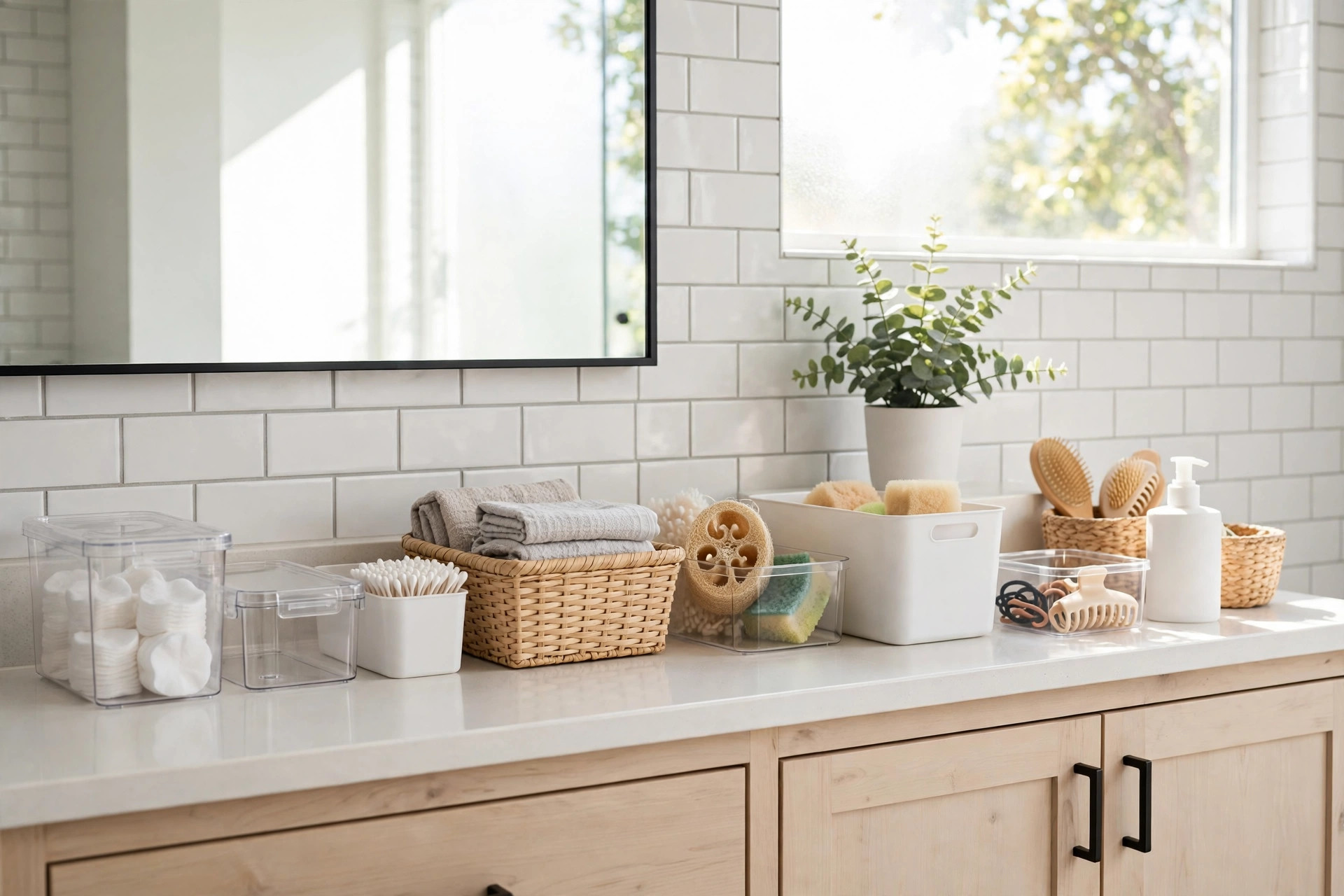
It suits you if: your surfaces are crowded but your drawers are half empty, you keep "losing" things you use daily, you hate decision-heavy decluttering systems, or you want to test a method without committing to a whole-house purge. It is especially good for kitchens, bathrooms, entryways, and desks: the high-traffic zones where daily-use clutter causes the most friction.
Skip it (for now) if: you are drowning in one specific category, like clothes or paperwork, where a dedicated system works better. If you want a structured whole-house reset instead, our 30-day decluttering challenge is a better fit. Also skip the strict version for sentimental items, kids' rooms, and shared spaces where someone else's 5/7 list will look different from yours. And if you work from home with project gear that cycles in waves, a strict daily-use test will misfire; adapt it to a weekly or monthly rhythm instead.
How to Try the 5/7 Method in One Room: A Step-by-Step Guide
Pick one room, ideally a kitchen, bathroom, or entryway, and block out two hours. Here is the process.
Step 1: Photograph and Clear the Prime Spots
Take a "before" photo of your counters, shelves, and other visible surfaces. Then take everything off them. Every item lands on a table or the floor, sorted loosely into "I definitely use this daily" and "not sure." Do not organize yet; the whole point is to start from an empty stage so you can see what the room looks like with breathing room.
Step 2: Run the 5/7 Test on Each Item
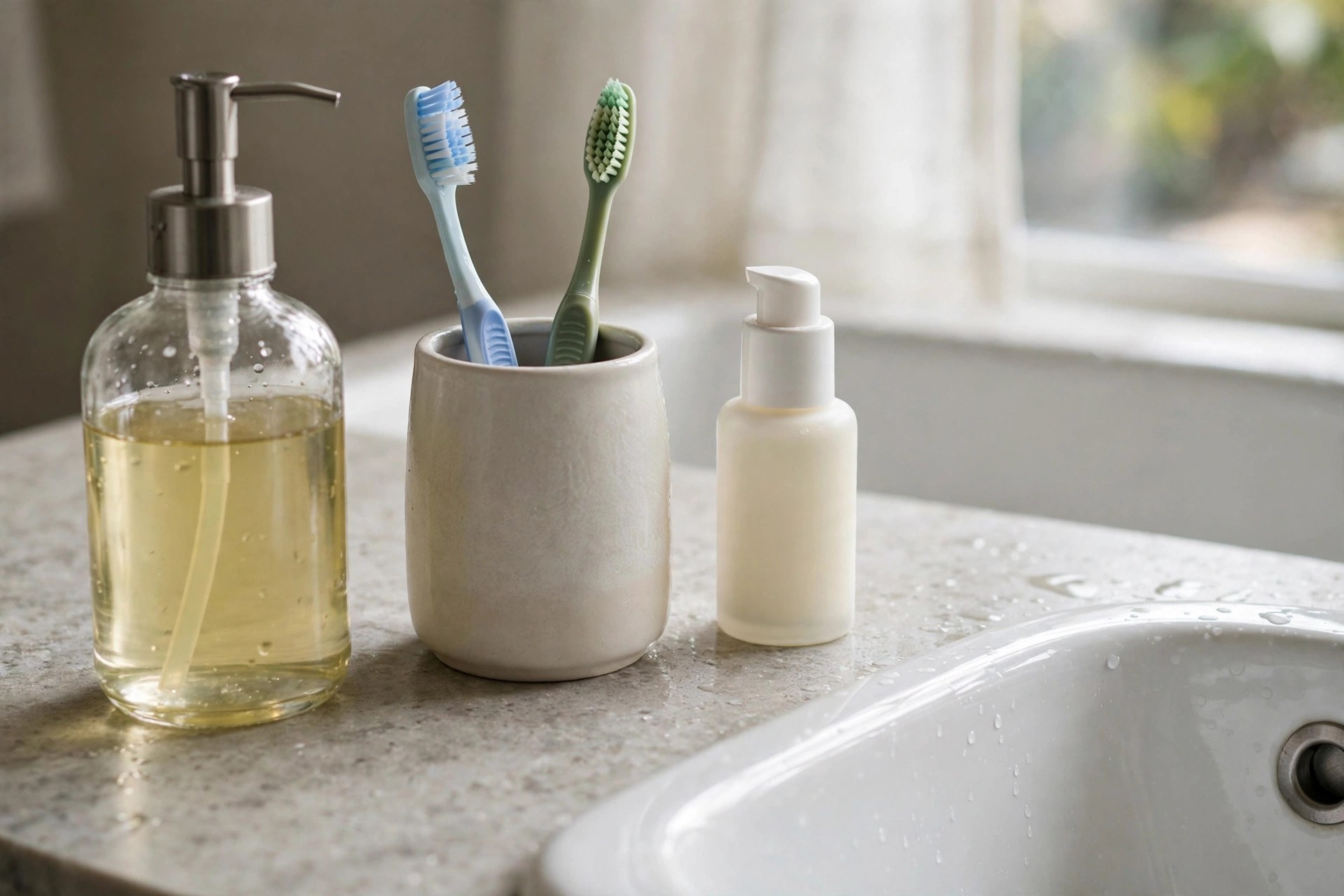
Pick up each item and ask: have I used this five of the last seven days? Be honest about "used." The soap dispenser you touch every morning counts. The fancy candle you light twice a year does not. If you're unsure, put the item in the "not sure" group and move on; you'll resolve those in Step 5.
Step 3: Put Back Only the Daily Winners
Return the 5/7 items to the prime spots, and give each one a deliberate home. The coffee setup goes nearest the outlet you actually use. The keys go on the hook by the door you actually exit through. This is the step where the method pays off: daily items should now be reachable without moving anything else out of the way.
Step 4: Assign Proper Homes to the Rest
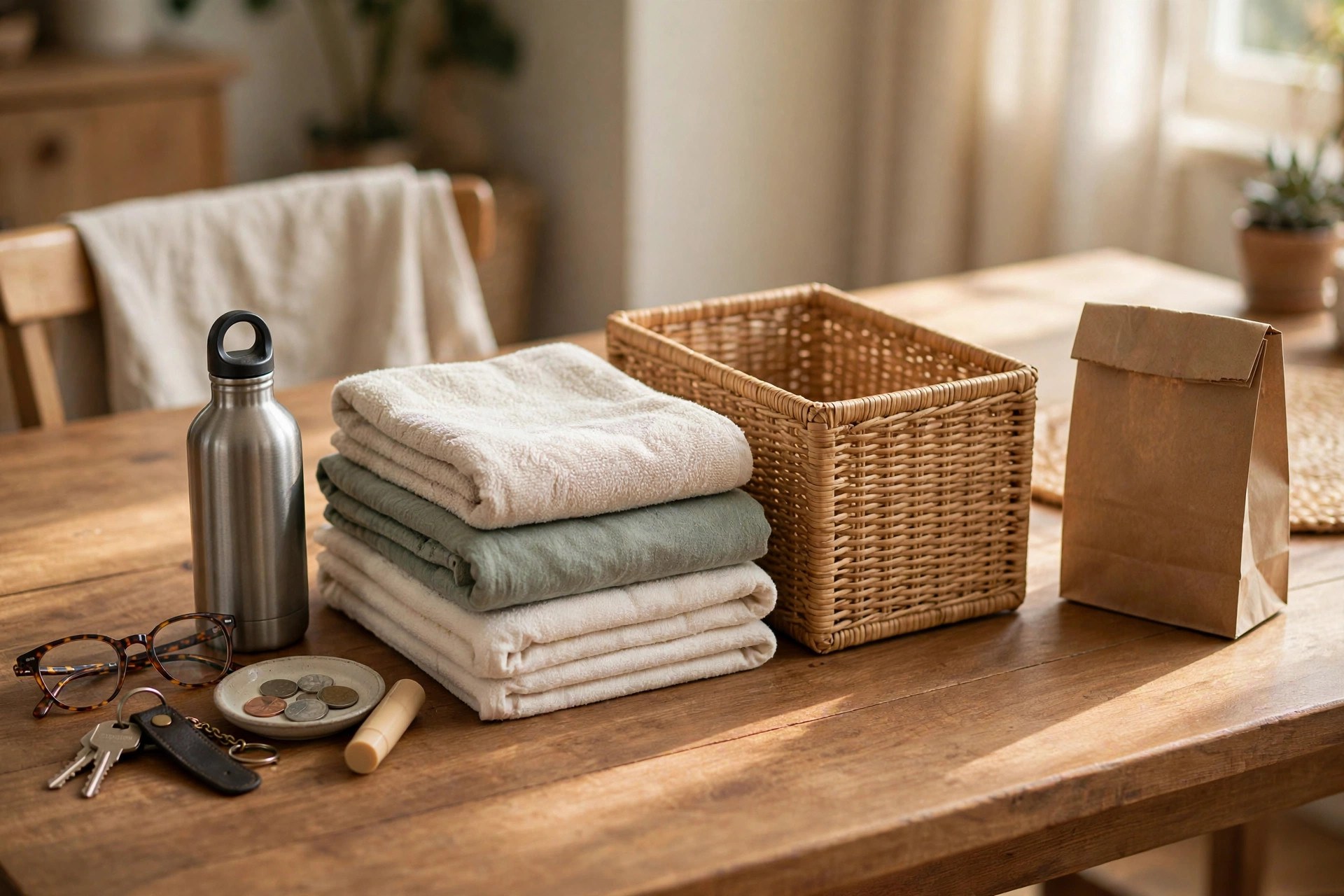
The non-daily items get sorted into stored, relocated, or let go. Seasonal and occasional items go into labeled bins, higher shelves, or under-bed storage, with a review date three months out. Things that belong elsewhere get carried to their rooms in one trip. And the items you realize you don't miss? Bag them for donation the same day, before they migrate back onto the counter.
Step 5: Live With It for One Week
Do not tweak the system for seven days. Notice what you reach for that isn't there, and notice what you don't miss at all. At the end of the week, promote anything you kept retrieving from storage back to a prime spot, and release anything you never thought about. That one-week review is what turns a fun experiment into a system you trust.
Common 5/7 Mistakes to Avoid
- Testing the whole house at once. One room. The method is a trial, not a lifestyle overhaul, and whole-house attempts end in half-sorted chaos.
- Counting "might use" as "use." The rule is five of the last seven days, not five of an imaginary future week.
- Storing instead of deciding. A labeled bin of "maybe" items in the closet is just clutter with better PR. Give stored items a three-month review date and honor it.
- Applying it to other people's stuff. Your partner's 5/7 list is theirs. Negotiate shared spaces together, or skip them for now.
- Forgetting the edge cases. First-aid kits, fire extinguishers, and seasonal gear fail the 5/7 test by design. They still earn accessible spots, because safety and seasonality outrank frequency.

Keeping the 5/7 Habit Going
If the trial room feels better after a week, extend the method one room at a time, starting with the next highest-traffic space. Many people end up running a monthly 5/7 check: fifteen minutes per room, demoting anything that slipped back into prime spots without earning it.
Pair it with a seasonal review, because what earns prime real estate changes with the seasons, and that is fine. The method is not about owning less. It is about your most-used things being the easiest to reach, every single day.