Death Cleaning and Downsizing Before the Holidays

Today is Wednesday, November 18, 2026. Thanksgiving falls on Thursday, November 26, 2026, which is 8 days away. Christmas falls on Friday, December 25, 2026, which is 37 days away. Guests, gifts, food, and decorations are all arriving in that window, so this week is a good moment to start death cleaning and downsizing.
Death cleaning is clearing a home with the end in mind: sorting what you own, deciding what stays, what goes to family now, and what leaves the house, while the owner can still choose who gets what. Downsizing is its close companion, moving to a smaller space, or simply living with less where you are. Done in short sessions, the work also clears the rooms guests will see.
Why so many homes hold so much
The Guardian reported in a feature by Petra Stock, published Sat 29 Aug 2026, that about one in three Australians cannot stand the amount of stuff in their home, according to a survey commissioned by insurer Choosi. The same feature reports that about 84 percent of Australians owned garments not worn in the past year, according to a separate study cited in the piece. Both figures come from the Guardian's reporting of surveys it cites, not from any NestOrderly research.
The piece asks whether consumption habits can change, and whether there is a more sustainable way to declutter. For a wider plan, our pre-holiday decluttering checklist covers the season room by room, and our No-Clutter November plan works backward from Thanksgiving in short daily steps.
Why decluttering is hard, and how to start
Decluttering is hard because it needs many decisions at once, plus logistics and emotion. That is how Julie Whiting of The Decluttering Co puts it in the Guardian feature. The way through is to shrink the decision load: start with the most annoying area and sort into four piles, keep, donate, recycle, and discard.
Aim to rehome what you can, then recycle and appropriately dispose of the rest, in the order Jennifer Macklin of Monash BehaviourWorks suggests. People hold on to things because they value them, while others may not want them. An item can matter deeply to you and still be right to let go.
Whiting notes that charity shops are not always the best destination. Resale platforms and buy-nothing groups can match items to someone who actually wants them, and council recycling options are often free. That last point is Australian: council recycling is Australian local government, and US readers should use the equivalent, municipal or county recycling and disposal services.
Dr Melissa Norberg of Macquarie University adds a reason to watch the buying side too. Acquiring things gives a short-lived good feeling, she says, so we buy more, and the difficulty of getting rid of something can teach us not to bring similar things home. For items that need a harder goodbye, our guide to decluttering sentimental items takes the emotional side slowly, one decision at a time.
The hard categories: clothes, books, and furniture
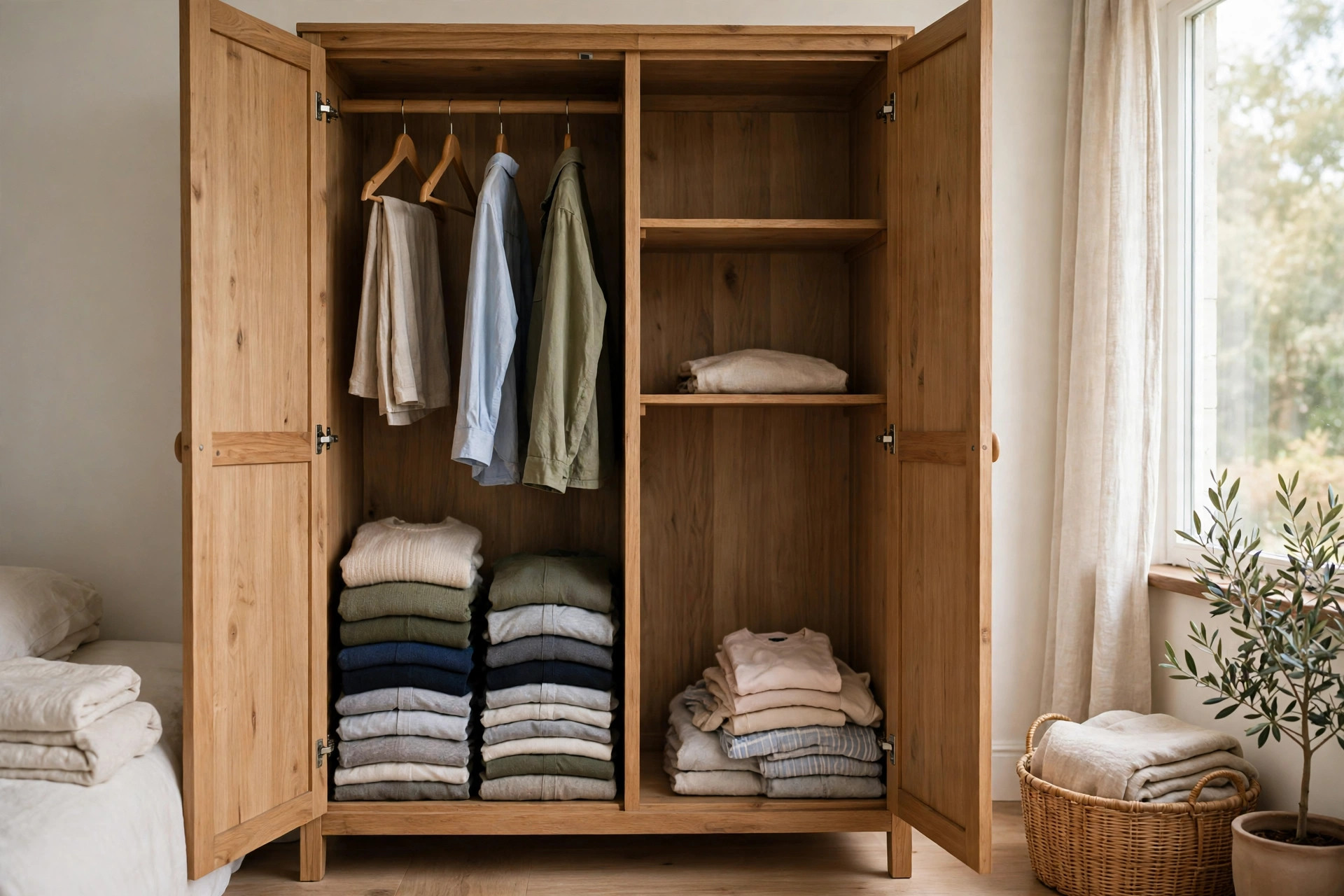
Some categories are harder than others, and the Guardian feature names three. Clothes come first. Susanne Thiebe of Less Mess advises starting with clothing, and says being organised means being able to find things. Her rule: clothing must be quality and in good condition to give away or sell. Anything worn out or stained is not a donation, it is rubbish.
Remember the study the Guardian cites: about 84 percent of Australians owned garments not worn in the past year. Pull out everything you have not worn in a year and ask whether it is quality and in good condition. If it is, it can go to someone who will wear it.
Books are the second hard category. Thiebe says books are among the hardest items to donate, because many charity stores do not accept them. The fix she offers is simple: books can be recycled if their covers are removed. Check your local recycling rules first, since services differ.
Furniture is the hardest of all. Ashley Eriksmoen, a Canberra designer and woodworker quoted in the Guardian feature, says there is more unwanted furniture than charity stores, reuse hubs, or buy-nothing groups can accept. Her answer: the most sustainable choice is the piece that already exists, so modify, repair, or repaint where possible, and repair cafes or tool libraries may help.
If bulky items do need to leave the house, our guide to junk removal costs explains the options, and our storage unit cost guide covers what is worth storing while you sort through a lifetime of things.
Sorting the bins: what goes where
Thiebe gives a simple rule for the sorting itself, drawn from the Australian bin system in the Guardian piece. In Australia, if in doubt, put an item in the red rubbish bin rather than contaminating the yellow recycling bin. The colours are Australian kerbside bins, and US readers should not look for red and yellow bins at home. Follow your own local bin and recycling rules instead, and when you are unsure whether something is recyclable, keep it out of the recycling. One wrong item can contaminate a whole load.
Twelve things the experts say to clear before the holidays
A Veranda report by Arricca Elin Sansone, published Nov 12, 2026, offers a guest-facing companion to the same work. Its headline reads "12 Things Organization Experts and Designers Want You to Get Rid of Before the Holiday Season", and the list is expert recommendations, not a survey, a study, or a measured result. The experts quoted are Ann Lightfoot, Amelia Meena, Kerrie Kelly, and Laura Kinsella.
Clear out now because guests, gifts, food, and decorations are arriving. Meena advises giving it one or two goes before the holidays and not worrying about the rest. Kelly advises editing with a purpose and focusing on the spaces guests will actually experience: the entry, living room, dining room, kitchen, powder room, and guest bedroom. She suggests 20 or 30 minutes per space, and to donate, discard, or relocate what does not belong there.
Kelly also draws a line that matters for death cleaning. Do not remove meaningful objects simply because they are old or do not match. Family china, inherited linens, collected ornaments, and meaningful objects make a holiday home special, so the advice is to remove clutter, not character.
Here are the 12 items, condensed from the Veranda piece in its own order, each one an expert recommendation: excess decorative accessories; piles of old magazines and books; coats and boots nobody wears, which for US readers can go to a local coat drive or donation center; winter accessories that have seen better days; gift wrap supplies you will not use; worn-out towels and sheets; whatever is living in the guest room; old food storage containers; old candles and overpowering home fragrances; toys and games kids have outgrown; entryway clutter; and broken or tangled holiday decor.
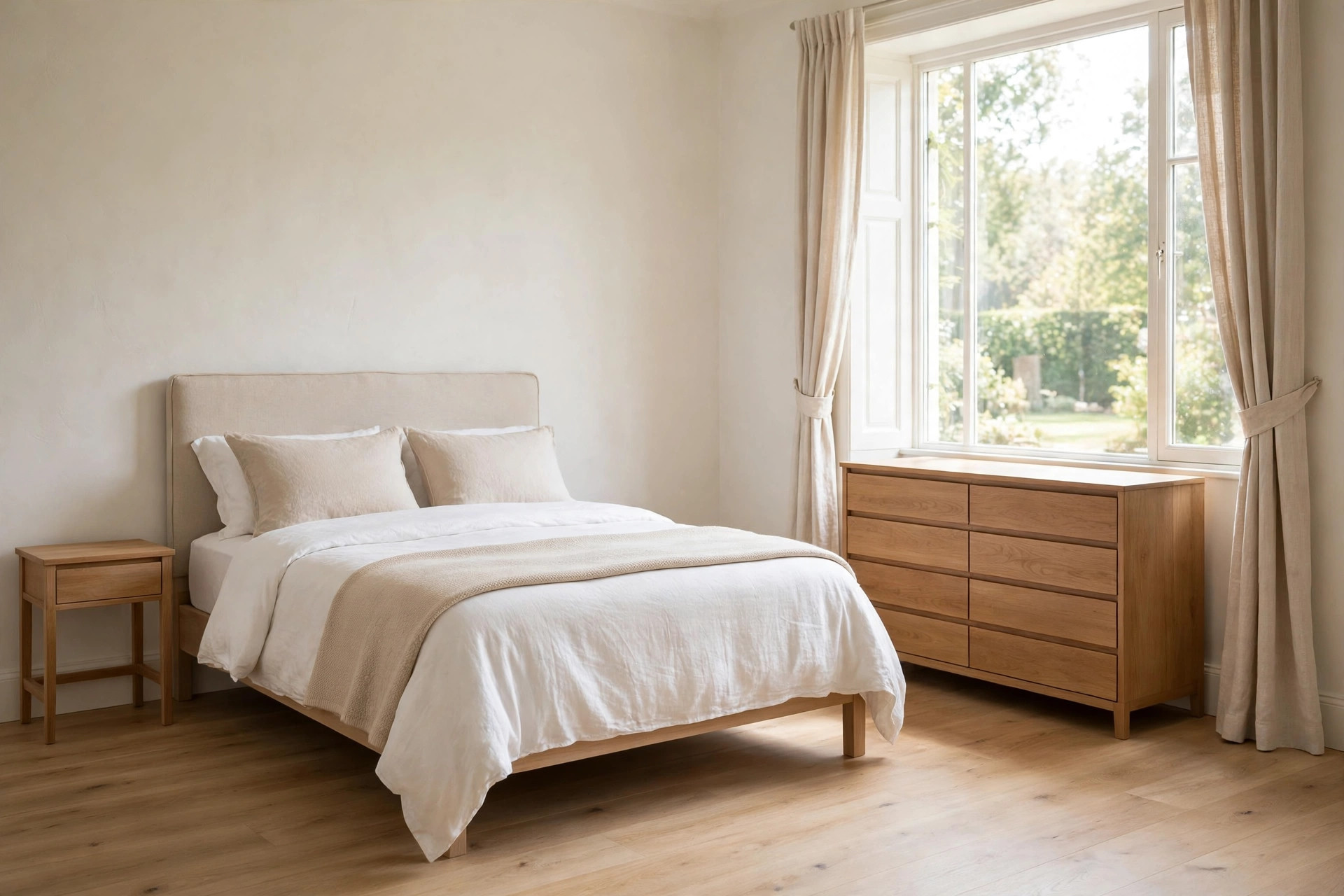
If the guest room needs the most work, our holiday hosting guest room guide covers clearing it for visitors, and our guest room prep guide covers the finishing touches.
Decide now, so loved ones do not have to later
Overconsumption, not decluttering, causes waste, and everything in a house will need a decision by someone at some stage, so it is better if the owner makes that decision. Making those decisions yourself, while you can still choose who gets what, is a kindness to the people who will one day sort through your things.
Start this week, while Thanksgiving is 8 days away and Christmas is 37 days away. Pick the most annoying area, set a timer for 20 or 30 minutes, and sort into keep, donate, recycle, and discard. Pass the meaningful pieces to the people who will treasure them, with a note about why they matter. Then, when you are tempted to bring something new home, remember what Norberg says: if it was hard to get rid of the last one, that is your cue not to bring a similar thing home. Buy less going forward, and the home you have cleared stays clear.
FAQ
What is death cleaning?
Clearing a home with the end in mind: sorting what you own, deciding what stays, what goes to family now, and what leaves the house, so loved ones do not have to make those decisions later.
When should I start death cleaning before the holidays?
Start now, while there are still 8 days to Thanksgiving and 37 days to Christmas. Sessions of 20 or 30 minutes per space are enough to clear the rooms guests will see.
Why is decluttering so hard?
It needs many decisions at once, plus logistics and emotion, according to Julie Whiting of The Decluttering Co. Shrink the load: start with the most annoying area and sort into keep, donate, recycle, and discard.
What should I do with clothes I have not worn in a year?
Check whether each item is quality and in good condition, and give it away or sell it if it is. The Guardian reports that about 84 percent of Australians owned garments not worn in the past year, according to a study it cites.
What is the hardest thing to get rid of when downsizing?
Furniture, according to Ashley Eriksmoen, a Canberra designer and woodworker. There is more unwanted furniture than charity stores, reuse hubs, or buy-nothing groups can accept, so modify, repair, or repaint the piece that already exists where possible.
How do I declutter without throwing away family history?
Remove clutter, not character. Kerrie Kelly advises keeping meaningful objects such as family china, inherited linens, and collected ornaments, and passing them on to the people who will treasure them.