Viral Cleaning Hacks That Can Damage Your Home: What the Experts Actually Say
Cleaning hacks spread fast on social media because they look easy, cheap and clever. A splash of vinegar here, a sprinkle of baking soda there, a dishwasher pod dissolved in a bowl, and the grime is gone. The problem is that some of these tricks trade a quick result for slow damage to the surfaces underneath.
This guide to viral cleaning hacks damage home surfaces covers the five hacks that carry a verified risk, according to the authorities that set the care standards for stone, tile, grout, wood floors and carpet. It also corrects one of the most repeated claims in the viral versions of this story, because the truth about granite is not the same as the truth about marble.
The granite correction: marble etches, granite mostly does not
Start here, because this is where the viral version of the story gets it wrong. Vinegar, lemon juice and other acids can dull or etch calcareous stone, which is stone made mainly of calcium carbonate. The Natural Stone Institute says products containing lemon, vinegar or other acids may dull or etch calcareous stones, and it recommends mild, non-acidic cleaners instead. Marble, travertine and limestone are the stones at risk.
Granite is a different story. Granite is a siliceous stone, and the Natural Stone Institute says siliceous stone is generally resistant to most acids found in kitchen settings. Vinegar does not eat the shine off granite the way it etches marble. Acidic cleaners are still not recommended on granite, because granite can contain trace levels of minerals that are sensitive to acid. The honest version of the advice is simple: keep vinegar and lemon away from marble, travertine and limestone, and do not make a habit of acidic cleaners on granite either, even though granite is far more forgiving.
A neutral cleaner works on both kinds of stone, so there is no reason to gamble on a bottle of vinegar to find out which one you have.
Bleach on grout: occasional disinfecting is fine, routine use is not
Bleach is the second hack that gets overstated in both directions. The viral version claims more damage than the evidence supports. The verified version is narrower, and it comes from MAPEI. MAPEI says grout should withstand the occasional use of diluted bleach, one cup of bleach mixed with one gallon of clean water, for disinfecting. Regular use can discolor and weaken grout over time. Bleach should only be used when absolutely necessary, and it should never be used for routine maintenance of stone, tile and grout.
Note what that does not say. No authoritative source found for this story states that bleach damages the tiles themselves. The verified risk is to the grout, and it is a risk of regular use, not of a single careful disinfecting session. Keep bleach for the rare occasions when you genuinely need to disinfect, dilute it as directed, and do not make it part of your weekly routine.
Vinegar on grout: occasional use is fine, frequent use weakens it
Vinegar shows up twice in this story, once for stone and once for grout, and the grout guidance is more forgiving than most people expect. MAPEI says vinegar is acidic and can etch certain natural stone, such as marble, travertine and limestone. The occasional use of vinegar on porcelain or ceramic tile with cement-based grout should not cause damage. However, frequent or regular use can discolor and weaken grout, and it should not be used for routine maintenance.
That distinction between occasional and frequent is the whole point. A one-off vinegar rinse on a ceramic tiled floor is not the same as a weekly vinegar mop. The damage builds up with repetition, so if vinegar has become your default floor cleaner, switch the routine to a cleaner made for tile and grout.
Vinegar and baking soda on wood floors: they can strip the finish
Wood floors are the third surface where the two most popular DIY ingredients do real harm. Bona says acidic or alkaline DIY cleaning solutions, such as vinegar or bicarbonate of soda, can affect some wood floor finishes over time. Vinegar or bicarbonate of soda can strip away the protective finish, causing discoloration or a dull look. Bona recommends a pH-neutral cleaner formulated specifically for wood floors instead.
This is the hack that hurts precisely because it feels gentle. Vinegar and baking soda are kitchen staples, so they read as safe, but on a finished wood floor they are working on the finish, not just on the dirt. Bona says the result can be discoloration or a dull look, which is why a pH-neutral cleaner made for wood floors is the safer choice.
Scrubbing carpet stains: blotting is safer than scrubbing
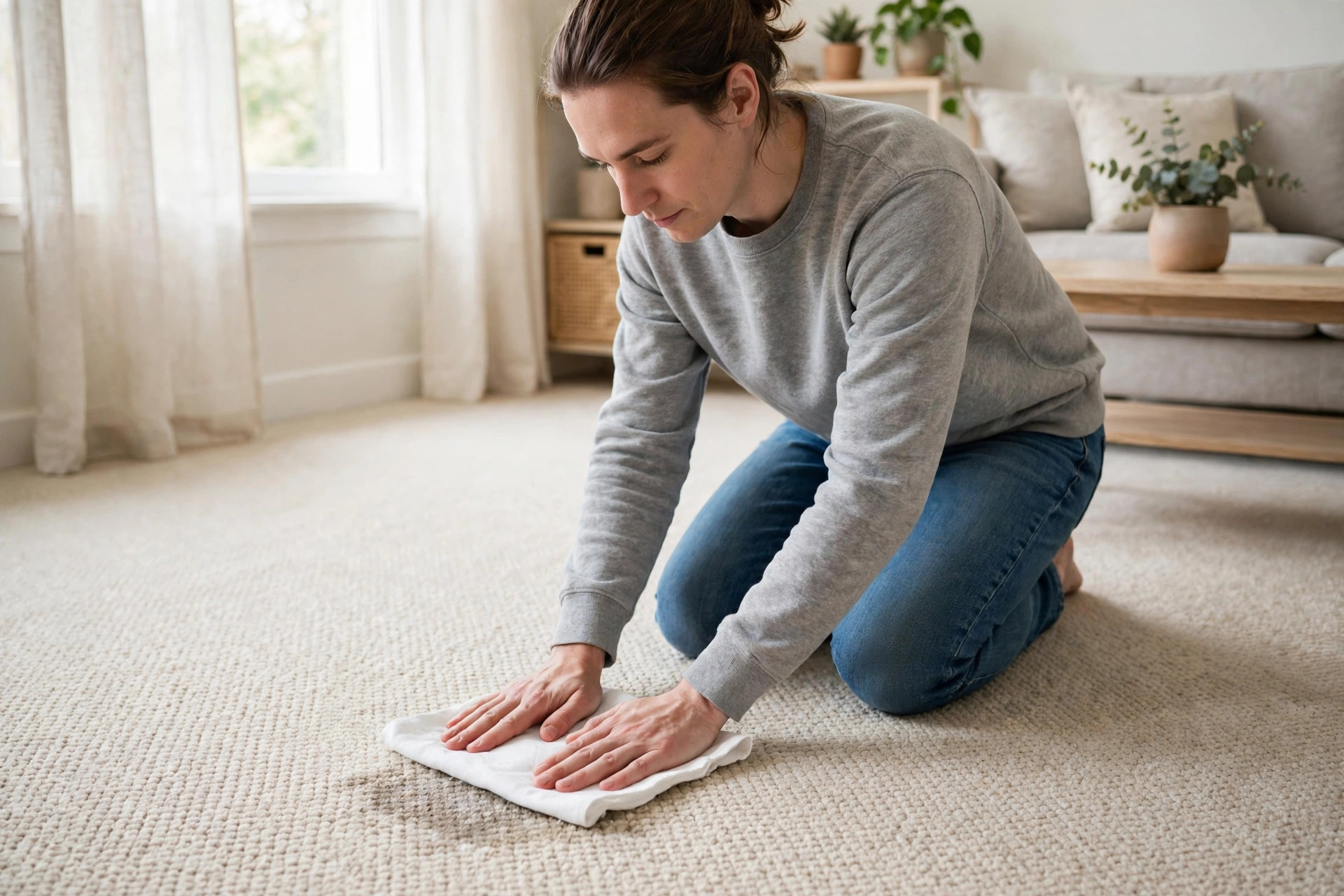
The carpet hack is not about a product at all. It is about technique, and it is the one most people get wrong in the moment, when a spill is spreading and the instinct is to scrub hard. The Institute of Inspection, Cleaning and Restoration Certification says vigorously scrubbing a carpet stain will damage carpet fibers. Scrubbing damages the fibers by untwisting them and causing them to fray, and it can push the stain deeper into the carpet. It is much safer to use a blotting action.
Blotting feels slower, and that is the point. Pressing a clean cloth onto the stain lifts the liquid out, while scrubbing grinds it in and frays the fibers at the same time. The fix costs nothing: blot, lift, repeat, and let the cloth do the work.
Dishwasher pods on the sofa: off label, and that is all we can verify
One hack in the viral versions of this story involves dissolving a dishwasher pod in a bowl of water and scrubbing a fabric sofa with it. What cannot be verified is the damage claim that usually travels with it, that the pods fade or damage sofa fabric. No dishwasher tablet manufacturer or upholstery authority source confirms fabric fading or damage from this use.
What can be verified is narrower, and it is still worth knowing. The manufacturer directions for Cascade Platinum Plus dishwasher pods are: load the dishwasher, place the detergent in the dispenser, and run the cycle. That is the product's directed use. Dissolving the pods in a bowl to scrub a sofa is not the product's directed use, so sofa use is off label.
Off label is not the same as proven damage, and this article will not claim damage that no authority has confirmed. But off label is a real signal on its own: the product was formulated, dosed and tested for a dishwasher, not for upholstery. If your sofa needs cleaning, use a cleaner made for upholstery, and check the sofa manufacturer's care label first. See also our toilet tank foil ball hack debunked guide for another viral hack checked against the evidence.
The safe routine the authorities actually recommend
After five warnings, here is the replacement routine, built only from what the authorities say. For natural stone, the Natural Stone Institute says to clean with a neutral cleaner, stone soap, or a mild liquid dishwashing detergent and warm water, and to rinse with clean water. For tile and grout, MAPEI recommends its named UltraCare Everyday cleaners for routine maintenance. For wood floors, Bona recommends a pH-neutral cleaner formulated specifically for wood floors. For carpet stains, blot rather than scrub.
None of this is exotic. It is the unglamorous version of cleaning: the right product for the surface, used as directed, on a regular schedule. The viral hacks promise a shortcut around that. The shortcut is real in the short term, and the cost arrives later, in etched marble, weakened grout, dulled wood and frayed carpet. See also our cleaning supplies organization guide and our October deep clean checklist for keeping the right products on hand.
Before you copy the next hack you see, ask two questions. First, what surface am I cleaning, and does the hack's ingredient belong on it? Second, is this a one-off or a routine, because frequency is what turns an occasional use into damage.
Frequently Asked Questions
Does vinegar damage granite?
Not the way it damages marble. Granite is a siliceous stone, and the Natural Stone Institute says siliceous stone is generally resistant to most acids found in kitchen settings. Acidic cleaners are still not recommended on granite, because granite can contain trace levels of minerals that are sensitive to acid. Use a neutral cleaner instead.
Does vinegar damage marble?
Yes. Marble is a calcareous stone, made mainly of calcium carbonate, which is sensitive to acidic solutions. The Natural Stone Institute says products containing lemon, vinegar or other acids may dull or etch calcareous stones, including marble, travertine and limestone. Use mild, non-acidic cleaners on marble.
Can I use bleach on grout?
Only occasionally, and only diluted. MAPEI says grout should withstand the occasional use of diluted bleach, one cup of bleach mixed with one gallon of clean water, for disinfecting. Regular use can discolor and weaken grout over time, and bleach should never be used for routine maintenance of stone, tile and grout.
Can I use vinegar to clean grout?
Occasionally, on porcelain or ceramic tile with cement-based grout, it should not cause damage. But frequent or regular use can discolor and weaken grout, according to MAPEI, and vinegar should not be used for routine grout maintenance. It can also etch marble, travertine and limestone.
Can I clean wood floors with vinegar or baking soda?
It is not recommended. Bona says acidic or alkaline DIY cleaning solutions, such as vinegar or bicarbonate of soda, can affect some wood floor finishes over time, and can strip away the protective finish, causing discoloration or a dull look. Use a pH-neutral cleaner formulated specifically for wood floors instead.
Should I scrub or blot a carpet stain?
Blot. The Institute of Inspection, Cleaning and Restoration Certification says vigorously scrubbing a carpet stain will damage carpet fibers by untwisting them and causing them to fray, and it can push the stain deeper into the carpet. Blotting is much safer.
Can I clean my sofa with dishwasher pods?
That use is off label. The manufacturer directions for Cascade Platinum Plus dishwasher pods are to load the dishwasher, place the detergent in the dispenser, and run the cycle. Scrubbing a sofa with dissolved pods is not the product's directed use. No manufacturer or upholstery authority source confirms that the pods fade or damage sofa fabric, so this article makes no damage claim about it. Use a cleaner made for upholstery instead.
Sources: Natural Stone Institute, "Learn About Cleaning Products for Natural Stone"; MAPEI, FAQ, "UltraCare stone, tile and grout care and maintenance solutions"; Bona, "Water vs Cleaner"; Institute of Inspection, Cleaning and Restoration Certification, as reported by CleanLink, "Eight Cleaning Mistakes that Can Kill the Life of Carpets"; Cascade (P and G) manufacturer directions for Cascade Platinum Plus dishwasher pods. Checked against the cited sources on 9 November 2026. The Cascade directions were read on the product page listing, not on a Cascade or P and G page.