What Is Reverse Decluttering? An Organizer's Take on the Viral Trend
For a decade, the message was simple: own less, purge more, and happiness will follow. Millions of us bagged up half our belongings and felt a brief, bright relief. Then the relief wore off, and the empty shelves started to feel less like freedom and more like a waiting room.
Enter reverse decluttering, the viral trend of 2026 that flips the script. Instead of asking what you can get rid of, it asks what deserves to come back. People are rescuing the ceramics, framed photos, and collections they boxed up during their minimalist phase and displaying them with intention. It is anti-minimalism with a brain.
Here is the organizer's honest verdict: reverse decluttering is wonderful, and it is also a trap. Done well, it creates homes that are warm, personal, and easy to live in. Done carelessly, it becomes a permission slip to keep everything. This guide shows how to do it right: display rules, rotation systems, and guardrails that keep curation from sliding back into chaos.
Here's what you'll learn in this guide to reverse decluttering: what the trend is and why minimalism lost the room, the difference between curated and chaotic, display rules for shelves and surfaces, a simple rotation system, a one-in-one-out rule for decor, and the warning signs that clutter is creeping back.
What Reverse Decluttering Actually Is
Strip away the social media gloss and the idea is straightforward. Reverse decluttering means deliberately bringing meaningful possessions back into your living space and arranging them with care, instead of continuing to purge toward ever-emptier rooms.
The trend in one sentence
If traditional decluttering asks "what can I remove?", reverse decluttering asks "what do I actually love enough to display?" The focus moves from subtraction to selection. Items that survived the great purges of the 2010s and 2020s, the quirky lamp, the travel souvenirs, the grandmother's mixing bowl, get promoted from storage boxes to shelves, mantels, and walls.
Why minimalism lost the room
Minimalism worked as a corrective. Many of us genuinely owned too much, and the early purges felt amazing. But the aesthetic hardened into a rule, and the rule became a personality test. Homes started to look identical: white walls, empty counters, one sad plant. The trend resonated because people realized that joy does not come from owning nothing. It comes from owning the right things and seeing them every day. Reverse decluttering is the pendulum swinging back to the middle, where most of us actually want to live.
Why the Trend Resonates
The joy backlash
The first wave of minimalism promised that less stuff equals less stress. That turned out to be only half true. An empty room is easy to clean, but it is also easy to feel nothing in. A space stripped of every personal marker can feel anonymous. Reverse decluttering gives people permission to admit that the vase makes them happy, actually, and the happiness is the point.
Homes that feel like people
The viral interiors share a pattern. They are not maximalist chaos; they are edited collections: a shelf of travel ceramics, a gallery wall of family photos, a reading nook with the good blankets on display. These rooms feel like someone specific lives there. That specificity is what people crave after years of beige sameness, and it is the best part of the trend.
The Organizer's Take: Curated, Not Chaotic
Here is where I put on my organizer hat and draw the line that matters. There is a real, visible difference between a curated home and a cluttered one, and it has nothing to do with how many objects you own. Curation is a decision. Clutter is a default.
A curated home has a reason for every visible object and breathing room around the things that matter. A cluttered home has objects that arrived by inertia: the gadget with no home, the decor bought on impulse and never really loved. Reverse decluttering only works if you hold that line. The trend is not "keep everything." It is "keep the right things, on purpose."
Display Rules That Keep It Tidy
Curation is a skill, and like any skill it has rules. These are the ones I give clients who want collections visible without the home looking like a gift shop.
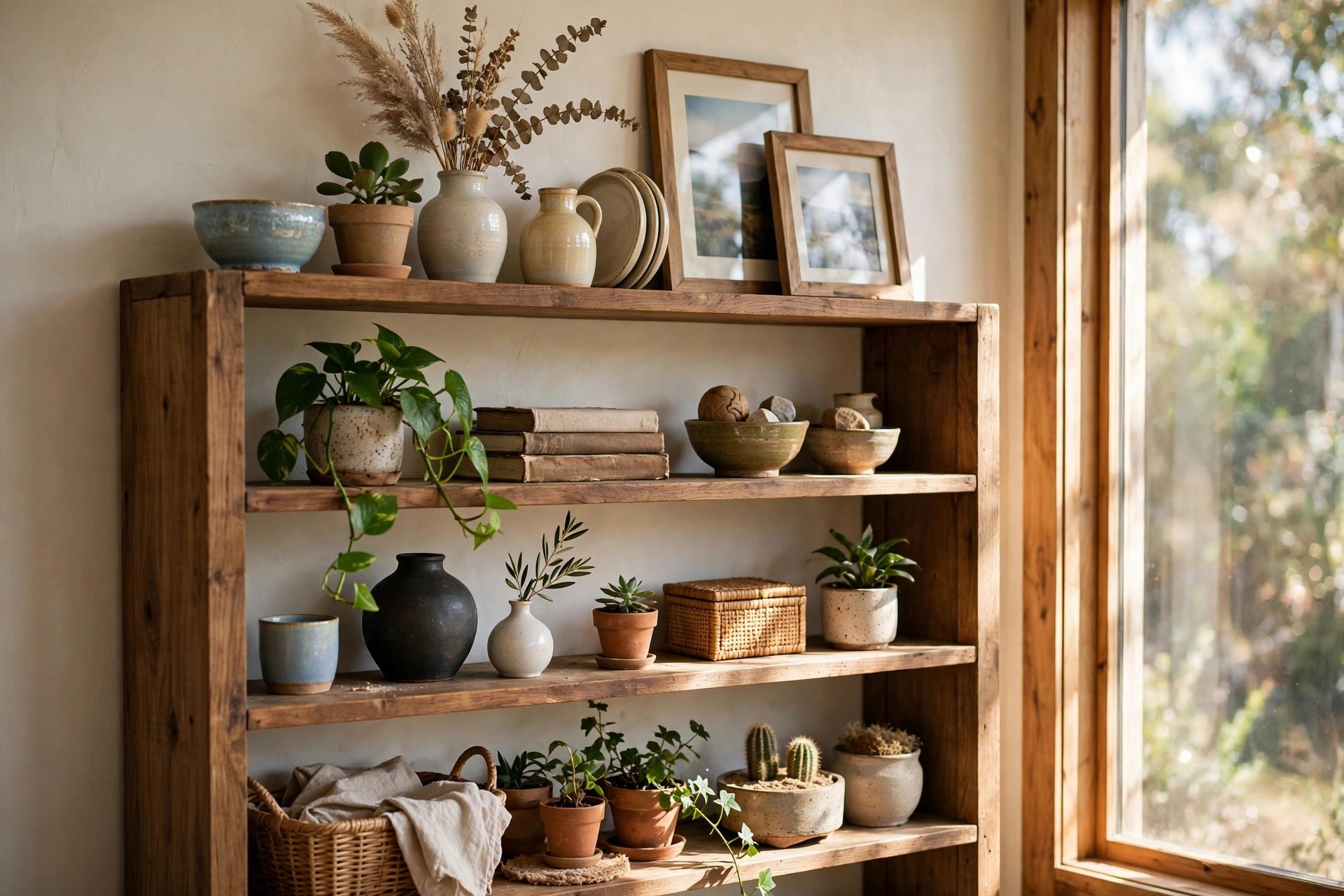
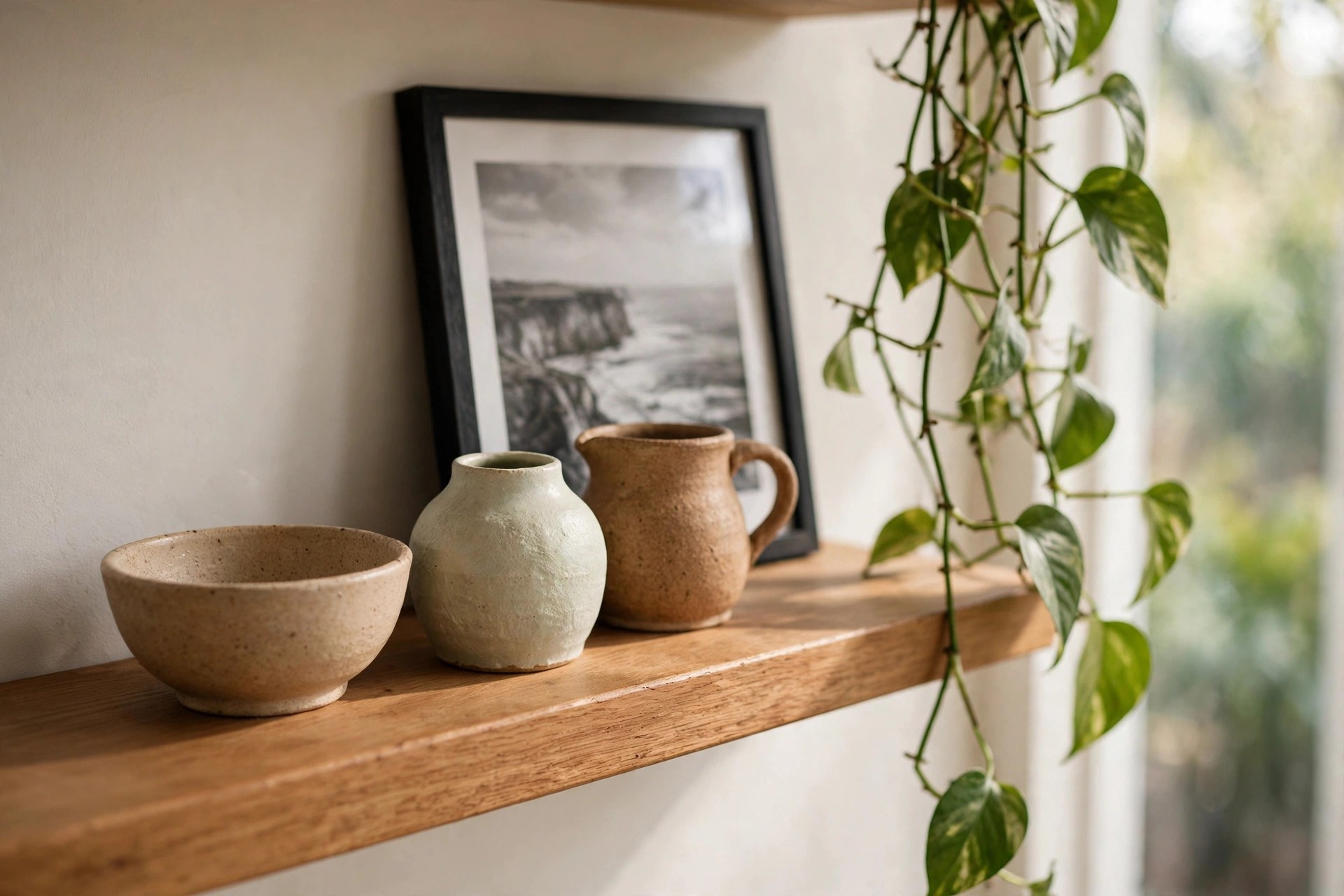
Give everything breathing room. The single biggest difference between a styled shelf and a cluttered one is negative space. Leave a few inches between groupings. If every surface is edge to edge, the eye reads it as clutter no matter how lovely the objects are.
Group in odd numbers. Three or five objects read as intentional; two or four read as accidental. This is the oldest styling trick there is.
Build small themed zones. A travel shelf, a plant corner, a photo ledge. Themes tell the eye where to stop, which keeps a display from becoming visual noise.
Vary height and texture. Mix a tall vase with a low bowl, a framed photo with a stack of books, ceramic with wood with glass. Variety makes a shelf look collected over time rather than bought in one afternoon.
Keep the displays dusted. A curated collection covered in dust reads as neglected, and neglected is one step from clutter. Ten minutes with a microfiber cloth each month keeps everything feeling loved.
If your whole house needs this kind of reset, work through it systematically with our room-by-room decluttering guide before you start styling.
The Rotation System: Enjoy Everything Without Displaying Everything
Here is the practical secret of every curator, from museums to good closets: you do not have to display everything at once. A rotation system lets you own a generous collection while keeping your home feeling calm.
How rotation works
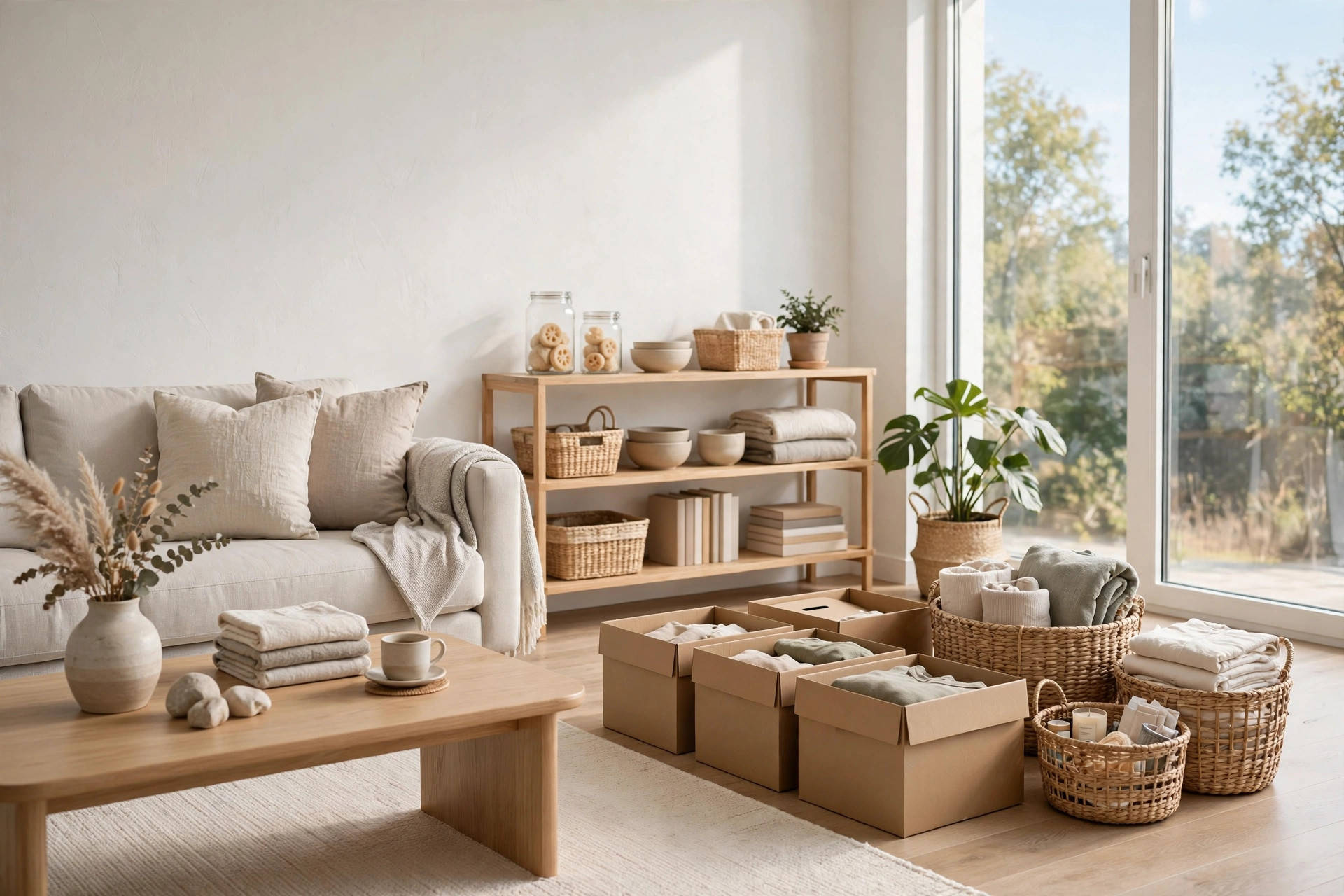
Pick your display zones: the mantel, two shelves, the entryway table. Whatever fits comfortably in those zones is your current exhibition. Everything else lives in labeled storage boxes, one box per category. Every season, or whenever the mood strikes, swap a few pieces. The winter ceramics come out in December; the travel souvenirs rotate in for summer.
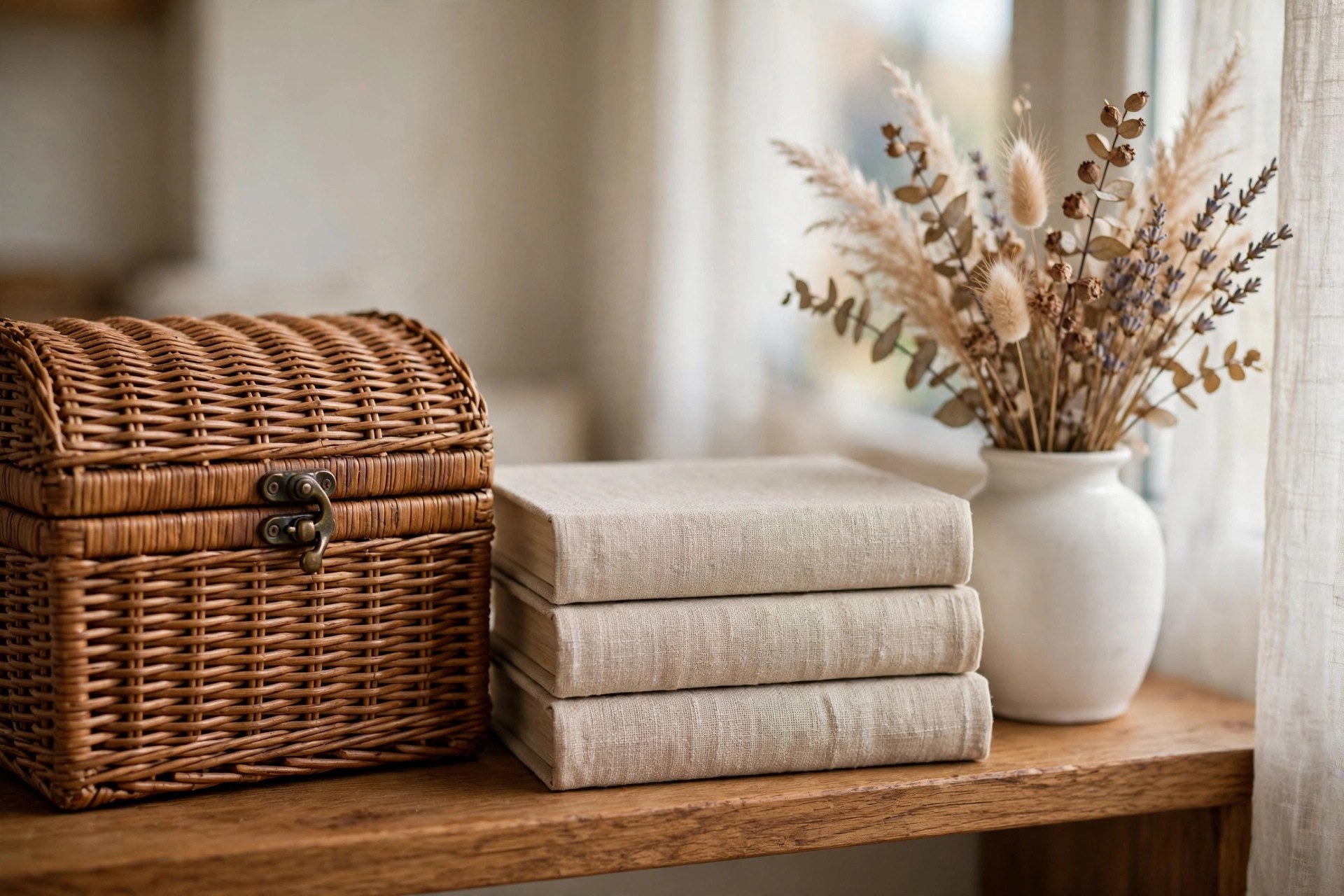
This does three things at once. It keeps surfaces from overcrowding, it makes your belongings feel fresh again, and it gives every object a home, which is the definition of organized. A simple lidded box on the shelf can even be part of the display: the box itself is decor, and inside it waits next season's lineup.
One-In-One-Out for Decor
The rule that keeps reverse decluttering from becoming regular clutter is simple: every new decor item that enters the home means one leaves. Buy the new vase, and an old one gets donated, gifted, or stored in the rotation box. This is the same discipline as the 54321 decluttering method, applied in reverse, and it is non-negotiable. If you are still working through sentimental pieces you have been avoiding, our guide to decluttering sentimental items pairs well with this one.
Be honest about the loopholes your brain will offer. "This one is small" does not count. "It was on sale" does not count. "I will find a place for it" is the sentence that built every cluttered home in history. The rule works because it forces the real question: do I love this more than something I already have? If yes, the swap is a genuine upgrade. If no, you just saved money and shelf space.

Guardrails: How Not to Slide Back Into Clutter
Reverse decluttering has a failure mode: the displays slowly expand, the rotation boxes never get rotated, the donation bag sits by the door for three months, and one day the house is full again. Watch for these warning signs:
- Surfaces are filling in: the breathing room around your displays is disappearing.
- The rotation boxes are growing: you keep adding to storage but never swap anything out.
- You are buying decor faster than the one-in-one-out rule allows.
- Cleaning the displays feels like a chore you dread, because there are too many of them.
- Guests say "wow, you have a lot of stuff" and you feel defensive instead of proud.
The quarterly check-in
Four times a year, spend 30 minutes walking your displays with fresh eyes. Ask of each zone: does this still make me happy, or am I just used to it? Anything that gets a shrug goes to the rotation box or the donation bag. This is not a purge. It is maintenance, the same as servicing anything you value.
Curate Like a Museum, Live Like a Person
Reverse decluttering is, at its heart, permission to love your things. Take it. Fill the shelf with the ceramics, hang the photos, put the weird little sculpture where you can see it. Just do it with a curator's discipline: breathing room, rotation, one-in-one-out, and a quarterly check-in. That is the difference between a home full of meaning and a home full of stuff.