Porch Pirates Package Theft Prevention: Holiday 2026 Guide
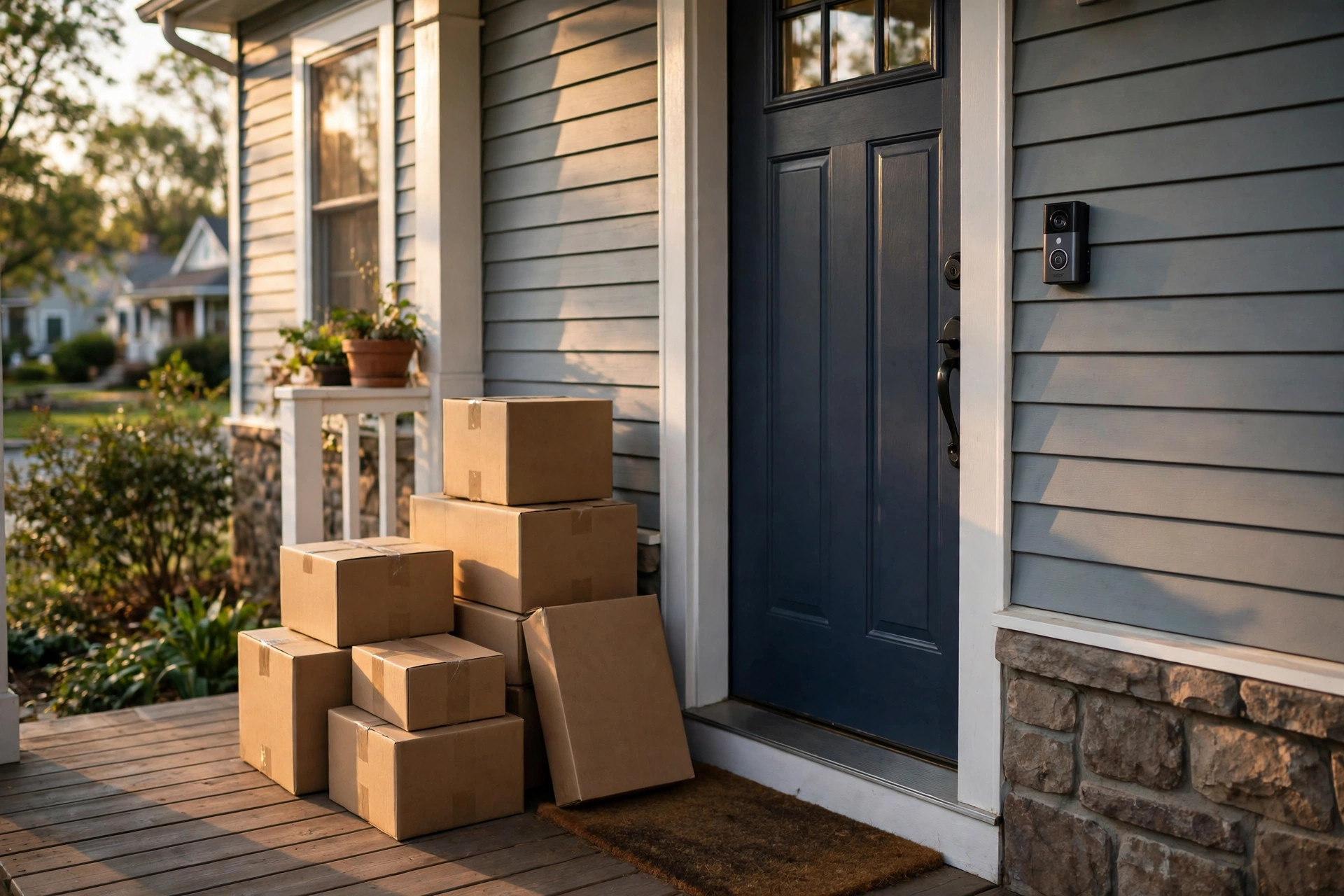
An estimated 47.7 million Americans experienced package theft in the previous year, and their stolen packages were worth $7.7 billion, according to Security.org's 2026 Package Theft Report. Those figures extrapolate a three-month survey window, not a direct count of thefts over a full year. The report surveyed 3,494 American adults in September 2026.
Nearly half of Americans, 49 percent, worry more about package theft during the holidays, and adults expect to receive an average of 28 packages between October and December. Black Friday falls on Friday 27 November 2026, and Cyber Monday on Monday 30 November 2026.
The strongest approach is layers: keep the package off the porch, add a camera and lights, and schedule deliveries.
The scale of the problem
Three in 10 American adults, about 80 million people, have had a package stolen at some point, up from 24 percent in the 2025 survey, and 4 percent had one stolen in just the last three months. The average adult receives 74 shipments a year, more than 19 billion deliveries a year.
The average value of the most recently stolen package was $161, down from $222 in 2025. For 2025, its Prime Day page states more than 37 million packages were stolen, totaling about $8 billion.
Apartment residents face higher risk: 45 percent have ever had a package stolen, against 25 percent in single-family homes.
What the newest surveys add
Two surveys published in November 2026 add fresh detail, and both need their limits stated plainly.
Vivint surveyed 1,000 Americans in October 2026. Fifteen percent said they had a package stolen in the past year, and 49 percent of those victims said it happened during the holiday season. Seventeen percent of victims said it happened around Black Friday. More than half of victims, 54 percent, lost a package meant as a gift, and 24 percent of those who lost a gift said they could not afford a replacement.
Vivint also ranks 92 US cities, and St. Louis tops the list. That ranking is not a count of actual package thefts. It blends two measures, each weighted 50 percent: police-reported property crime in November and December, and Google searches for terms like "stolen package" and "porch pirate" in the same months. Property crime covers all property crime, not package theft, and search volume measures interest, not victimization, as Vivint states in its own limitations. Memphis had the highest holiday property crime rate in the ranking, at 1,057 per 100,000 residents, followed by St. Louis at 1,018 and Oakland at 1,008. Those figures add the November and December average rates for 2020 to 2025.
CNET's 2026 survey, run by YouGov with 2,016 US adults from 23 to 27 October 2026, estimates $75 billion worth of holiday packages could be vulnerable to porch pirates this season. That is the total expected delivery value across US adults, based on an average of $276.24 per adult, not a prediction of losses. Twenty-eight percent of US adults had a package taken, caught an attempted theft, or know someone who has in the past year; 11 percent personally had a package stolen. Among victims, nearly half, 46 percent, lost tech products or accessories.
CNET also reports three newer tactics, with no figures for how common they are: thieves using Wi-Fi jamming to disable live camera footage, spy cameras in high-value neighborhoods to learn a home's layout and habits, and tracking shipping labels for high-value tech to steal a package within minutes of arrival. A wireless doorbell that loses its connection cannot record, so pair it with a camera that keeps recording if Wi-Fi drops, such as a wired camera or one with local storage.
Remove the target first
Gene Petrino, a former SWAT commander and police sergeant, gives this tip in the report: "My number one package theft tip is to eliminate opportunity. Thieves can't steal what they can't see. Have packages delivered to a secure location, like an Amazon Locker, UPS Access Point, or your workplace, or schedule deliveries for times when someone is home. Visible security cameras and motion lighting help, but the most effective deterrent is removing the target altogether."
Amazon Hub Lockers are self-service kiosks: select one at checkout, and Amazon emails a 6-digit pickup code and barcode after delivery. Enter the code or scan the barcode, and the slot opens. An uncollected package is returned to Amazon. Amazon Hub Counter, at Staples and CVS, is the staffed alternative, with pickup within 14 days.
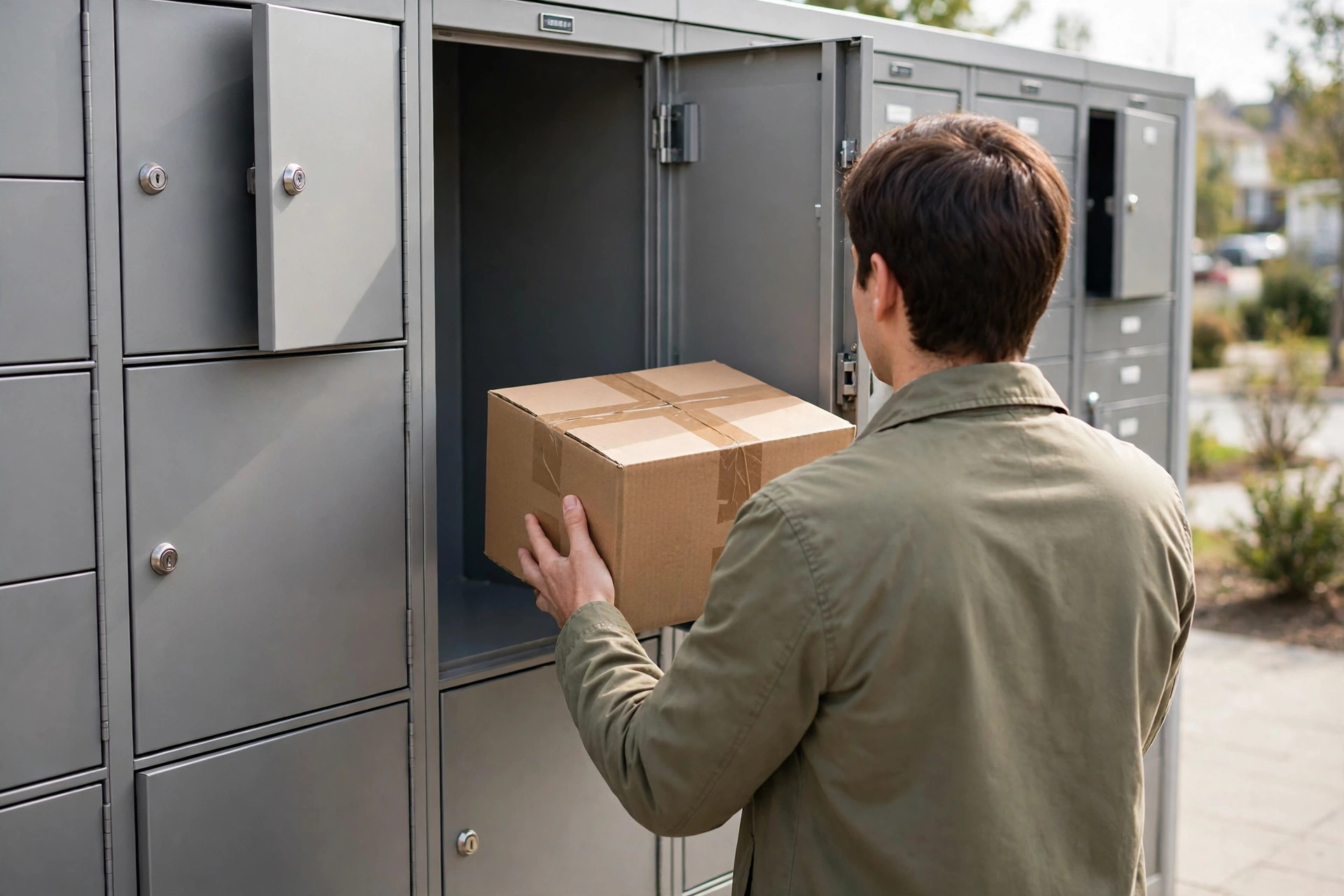
UPS Access Point locations hold packages up to seven calendar days at no extra charge, and UPS My Choice, free Basic or Premium at $19.99 a year, lets members change the delivery date or location, or deliver to a UPS Access Point.
FedEx Delivery Manager, a free signup, includes Hold for Pickup, a vacation hold of up to 14 days, and delivery instructions, and packages can be redirected free of charge to retail pickup locations including Walgreens and FedEx Office. FedEx's own pages give different hold lengths for different pickup situations, so check at the point of use. USPS Hold Mail is free, pauses all mail delivery for 3 to 30 days, and cannot hold a single package.
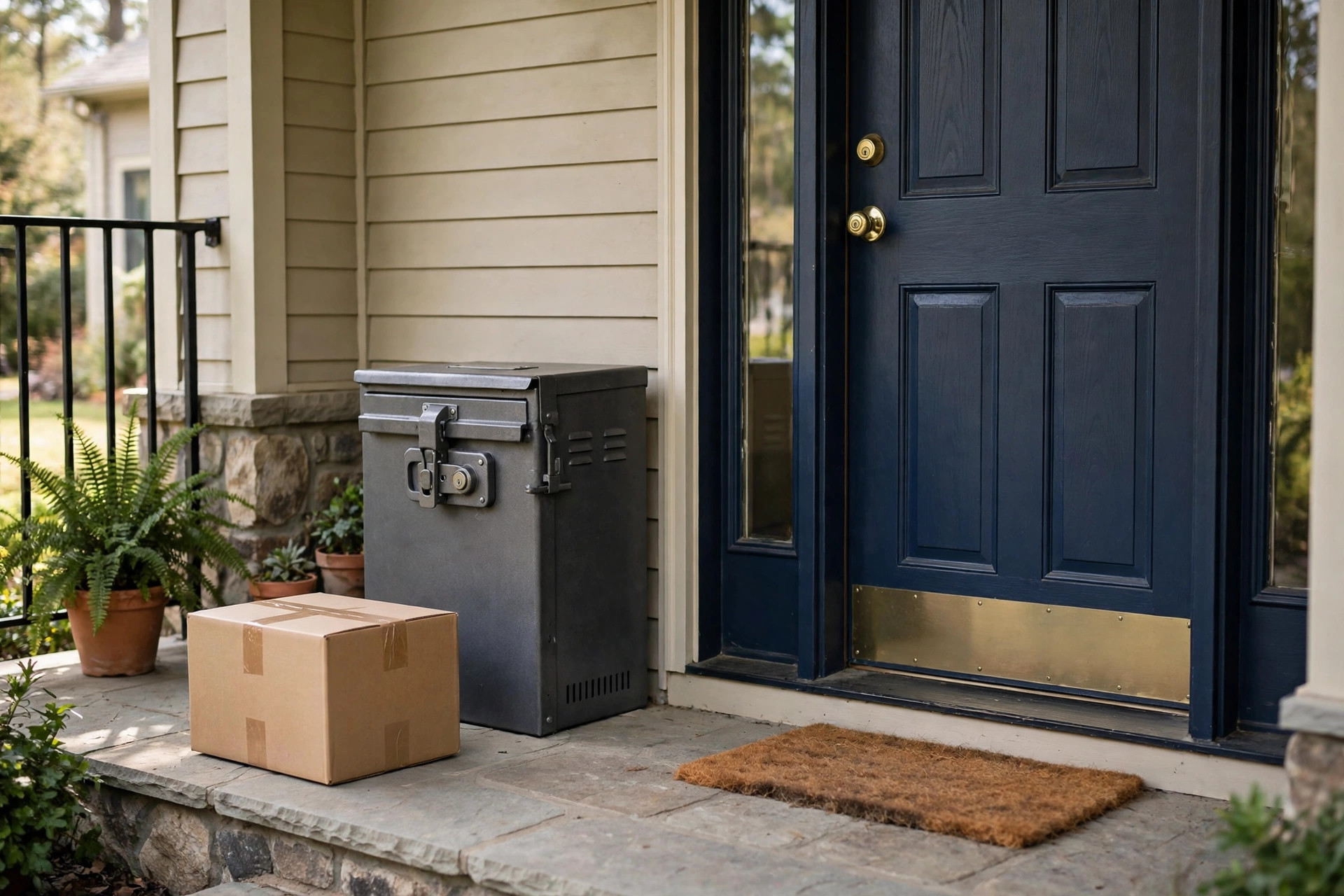
A lockbox is the home version of the same idea. Adoorn's Package Box Large costs $349.99, fits packages up to 17 by 15 by 7.5 inches, and has an anti-pry lock with two keys. Packages drop through a top door into a locked compartment, with an anti-theft panel stopping anything being fished back out.
Adoorn puts the limit plainly: "Door cameras show who stole your package. They don't prevent it. A Package Delivery Box keeps your deliveries out of sight and behind a lock until you can retrieve them." Security.org calls prioritizing a lockbox or delivery locker its top recommendation.
That assumes the driver uses the box: Adoorn states most drivers do on the first delivery, and if one does not, it is usually visibility, so put the box where it can be seen and add one line to your delivery instructions. Adoorn advises bolting it down.
Add a camera and lights, knowing what they can and cannot do
A video doorbell may deter theft and gives evidence, but it does not physically stop a theft. Ring states on its own blog: "A video doorbell can help deter package theft through delivery alerts, Two-Way Talk to communicate with drivers, and recorded video evidence if something goes wrong." Ring's wording is "help deter", not "prevent".
Security.org states that "cameras alone cannot guarantee that a delivery will be safe." In a September 2026 example from Woolwich, Maine, a doorbell camera recorded a canvasser allegedly taking a package, looking directly at the camera. The report states: "The camera helped document what happened and catch the thief, even though it did not prevent the package from being taken."
Doorbell cameras are already common: 36 percent use one with AI alerts, and 29 percent use an outdoor security camera. Pair a camera with the rest of your smart home security setup rather than treating it as a standalone fix, since connected cameras are part of your home's attack surface, as covered in our look at the smart home attack surface.
Motion lighting is the other visible layer: 18 percent use it, and Security.org states it "can help deter trespassers", though no effectiveness percentage was verified.
Schedule deliveries and use your neighbors
Scheduling costs nothing: 43 percent schedule shipments for when they are home, 38 percent use delivery notifications or tracking apps, 27 percent use in-store pickup, and 17 percent have neighbors bring packages inside.
UPS My Choice members can pick a confirmed two-hour delivery window, and FedEx Delivery Manager lets recipients save delivery instructions and sign for a package in advance. USPS, UPS, and FedEx all offer signature services, including adult signature options for recipients at least 21 years old.
For trips away, use the carriers' hold options: FedEx holds all deliveries for up to 14 days, for no extra charge, and USPS Hold Mail pauses all mail for 3 to 30 days. A trusted neighbor who brings packages inside is the low-tech version of the same plan; agree it before you travel, and add it to your November home maintenance and winter prep checklist.
Frequently Asked Questions
How many packages are stolen each year in the US?
Security.org's 2026 report estimates 47.7 million Americans experienced package theft in the previous year, worth $7.7 billion. Those figures extrapolate a three-month survey window, not a direct count over a full year. For 2025, its Prime Day page states more than 37 million packages were stolen, totaling about $8 billion.
Do video doorbells stop porch pirates?
No. A video doorbell may deter theft and gives evidence, but it does not physically stop a theft. Ring states its doorbell can "help deter" theft, and Security.org states that "cameras alone cannot guarantee that a delivery will be safe", citing a September 2026 case in Woolwich, Maine, where a camera recorded a theft without preventing it.
What is the most effective way to prevent package theft?
Removing the target. Gene Petrino, Security.org's expert, says the number one tip is to eliminate opportunity: deliver to a secure location, like an Amazon Locker, UPS Access Point, or workplace, or schedule deliveries for when someone is home. A lockbox works the same way at home, as long as the driver uses it.
How long will a UPS Access Point hold my package?
UPS Access Point locations hold packages for up to seven calendar days at no extra charge. Amazon Hub Counter locations require pickup within 14 days of delivery.
Can I have USPS hold my mail while I am away?
Yes. USPS Hold Mail is free and pauses all mail delivery to an address for 3 to 30 days. It cannot hold a single package. Request it online with a USPS.com account, or in person at a Post Office with PS Form 8076.
What should I do first if a package is stolen?
Verify it is missing by checking tracking, delivery notes, and security footage, and asking family, neighbors, or a doorman. Then tell the seller, with your order number, tracking information, delivery date, and photos or footage ready. Report the crime to police, and look into insurance through home insurance, credit card purchase protection, or disputing the charge.
Sources: Security.org, "2026 Package Theft Report: Statistics and Trends", Paul Frew and Gene Petrino, last updated 28 October 2026; Security.org, "Prime Day 2026 May Drive Package Theft Spikes", last updated 29 May 2026; USPS Hold Mail page; UPS My Choice and Shipping Services pages; FedEx Delivery Manager FAQ and signature services page; Amazon, "Collect a Package at an Amazon Locker"; Ring blog, "Best Video Doorbells for Home Security: 2026 Buyer's Guide"; Adoorn, "Package Delivery Box, Large". Checked 2026-11-16. New material: Vivint, "The Worst Cities for Porch Pirates During Black Friday and Christmas", published and updated 16 November 2026; CNET, "CNET Survey: $75 Billion in Holiday Packages Could Be Vulnerable to Lurking Porch Pirates", Dashia Milden, published 17 November 2026, YouGov survey of 2,016 US adults, fieldwork 23 to 27 October 2026. New material checked 2026-11-21.