Holiday Kitchen Reset Before Thanksgiving: Fridge Room, Turkey Thawing, and Leftovers That Stay Safe
Thanksgiving Day 2026 is Thursday, 26 November. That date is fixed by law: Thanksgiving is the fourth Thursday in November, and the fourth Thursday of November 2026 is 26 November. The kitchen work that makes the day run well is not cooking. It is the reset you do in the weeks before: clear the fridge, know your thawing plan, and know how long leftovers last.
This reset has three parts, in the order that matters. First, make room. Second, thaw safely. Third, handle leftovers by the clock, not by guesswork.
Part 1: Make room before the turkey arrives
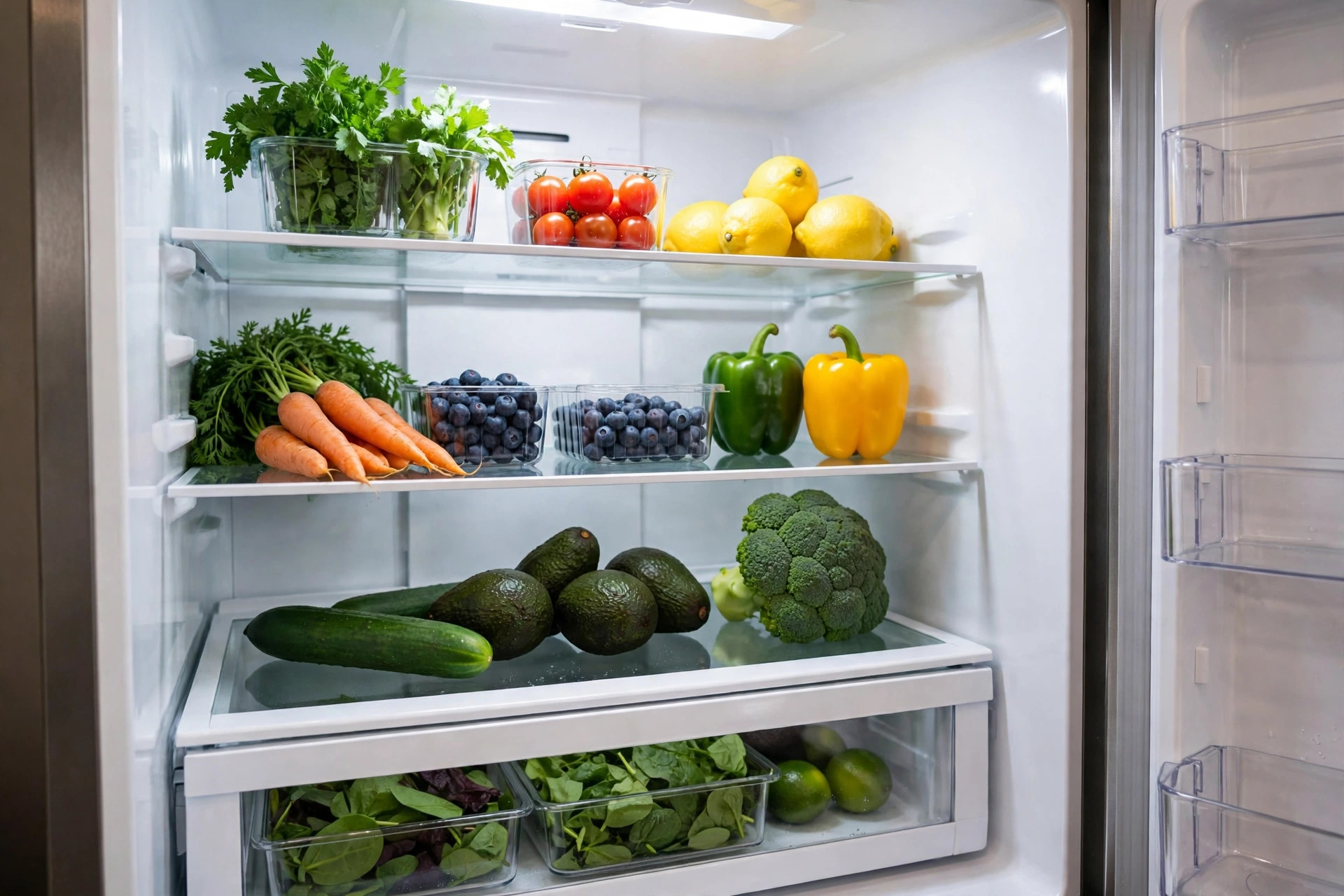
A turkey needs real fridge space, and a crowded fridge is a problem on its own. The US Food and Drug Administration advises not to crowd a refrigerator or freezer so tightly that air cannot circulate. So the first job is to take everything out, throw away anything past its date, and put back only what you will use before Thanksgiving.
Keep the refrigerator at or below 40 degrees F (4 degrees C), and the freezer at 0 degrees F (minus 18 degrees C). Appliance thermometers are the best way of knowing these temperatures, according to the FDA, so if you do not have one, this is the week to add one. A dial setting is a guess. A thermometer is a reading.
While the shelves are empty, leave a clear space for the turkey. Clear that space now, not on the day the turkey comes home.
Do the same quick pass in the pantry. Pull duplicates to the front, put the baking supplies you will actually use where you can reach them, and make a short list of what is missing before the holiday shopping starts. This is ordinary kitchen order, and it is what stops the last minute shop turning into a second full shop.
Part 2: Thaw the turkey safely, with a date on the calendar
The US Department of Agriculture gives three safe ways to defrost a turkey: in the refrigerator, in cold water, and in a microwave oven. Everything else on the not recommended list stays off the list: not on the counter, not in the garage, not on the back porch, not in a brown paper grocery bag or a plastic garbage bag, and not in the dishwasher.
Refrigerator thawing is the recommended method. Allow one day for each 4 to 5 pounds of weight. A 16 pound turkey takes about four days to thaw, and once thawed it is safe for another two days. The USDA thawing table by weight runs: 4 to 12 pounds, 1 to 3 days; 12 to 16 pounds, 3 to 4 days; 16 to 20 pounds, 4 to 5 days; 20 to 24 pounds, 5 to 6 days. A thawed turkey may be stored in the refrigerator and cooked within 1 to 2 days.
That gives you a simple way to work backwards from Thanksgiving. A 16 to 20 pound turkey moved to the fridge on Friday, 20 November will be thawed by Wednesday, 25 November, in time for Thursday, 26 November. Write the move date on the calendar when you buy the bird, because the thaw is the one job that cannot be hurried at the end.
Cold water thawing is the fallback if the fridge plan slips. Submerge the turkey in its original wrapping in cold water, change the water every 30 minutes, and allow 30 minutes of defrosting time per pound. A 16 pound turkey takes 8 hours by this method, and once thawed it must be cooked immediately. The table runs: 4 to 12 pounds, 2 to 6 hours; 12 to 16 pounds, 6 to 8 hours; 16 to 20 pounds, 8 to 10 hours; 20 to 24 pounds, 10 to 12 hours.
Microwave thawing follows a general rule of 6 minutes per pound, and the turkey must be cooked immediately once thawed. Check your microwave manual for the size it can handle, because a bird that does not fit is not a candidate for this method.
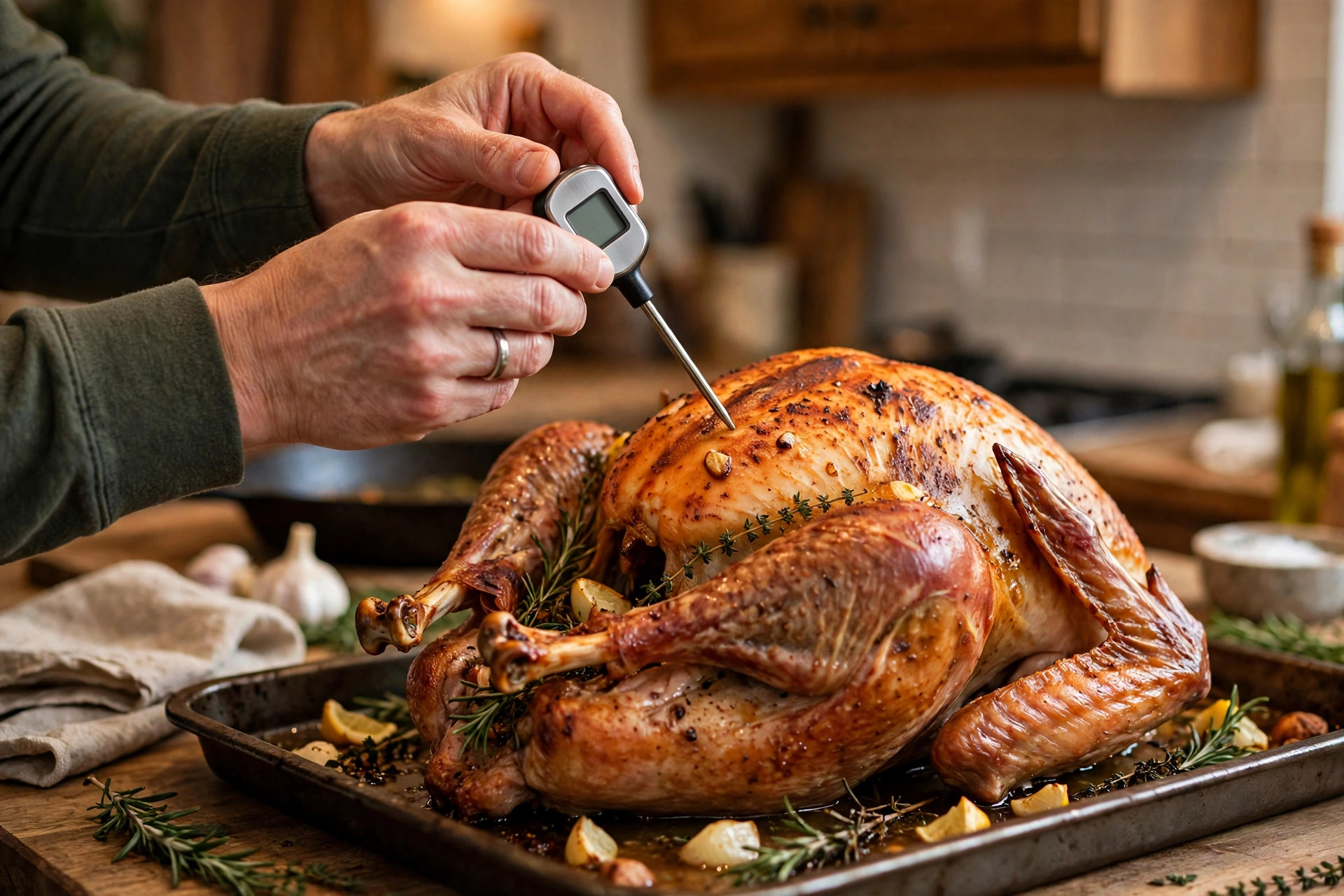
If the turkey is still frozen on the day, it is still safe to cook it from the frozen state. A solidly frozen turkey takes at least 50 percent longer to cook than a thawed turkey. The turkey is ready when it measures 165 degrees F in the innermost part of the thigh, the innermost part of the wing, and the thickest part of the breast. All three spots must reach 165 degrees F.
When buying, allow 1 to 1 and 1/2 pounds of turkey per person, according to the USDA. For 10 guests, that is 10 to 15 pounds. Buying to that range, rather than to the largest bird on display, is what keeps the thaw time and the fridge space manageable.
Part 3: Leftovers by the clock
Leftovers are where good food goes bad quietly. The USDA notes that the pathogenic bacteria that cause foodborne illness cannot be smelled or tasted, so the sniff test is not a safety test. The clock is.
Refrigerate leftovers within two hours. The FDA two hour rule covers meat, poultry, seafood, eggs, produce, and other foods that require refrigeration: never allow them to sit at room temperature for more than two hours, or one hour if the air temperature is above 90 degrees F. The same rule covers leftovers, take-out foods, and food packed to take home.
Store leftovers in shallow pans or containers to decrease cooling time, and cut leftover turkey into smaller pieces for the same reason. Stuffing cooked inside the turkey should be stored separately from the turkey, in a shallow container. Leftovers are safe for 3 to 4 days in the refrigerator, and they can be frozen during that time for longer storage. Use refrigerated turkey and stuffing within 3 to 4 days, and use gravy within 1 to 2 days. Discard any turkey, stuffing, or gravy left at room temperature longer than 2 hours.
Once frozen, all foods are safe as long as the freezer remains 0 degrees F or below. For best quality, use frozen leftovers within 2 to 6 months. The food danger zone is 40 to 140 degrees F.
Guests carrying leftovers home are safe as long as travel is not more than two hours. For longer travel, leftovers must be kept at 40 degrees F or below in a cooler with ice or frozen gel packs. Pack the cooler before the guests leave, not after they are already on the road.
The reset, in order
- Clear the fridge, check the temperature with a thermometer, and leave clear space for the turkey.
- Buy to 1 to 1 and 1/2 pounds per person, and write the fridge thaw start date on the calendar.
- Thaw in the fridge if you can, in cold water if you must, and cook immediately after cold water or microwave thawing.
- Check 165 degrees F in the thigh, the wing, and the breast.
- Refrigerate leftovers within two hours, in shallow containers, and use turkey and stuffing within 3 to 4 days and gravy within 1 to 2 days.
Sources: USDA, "How to Safely Thaw a Turkey"; USDA, "Turkey Tips Step 4: Loving Your Leftovers"; USDA National Institute of Food and Agriculture, "Serving Turkey Safely"; FDA, "Are You Storing Food Safely?"; 5 U.S.C. section 6103(a). All checked 2026-11-02.
Frequently asked questions
When is Thanksgiving 2026?
Thanksgiving Day 2026 is Thursday, 26 November 2026, the fourth Thursday in November.
How long does it take to thaw a turkey in the fridge?
Allow one day for each 4 to 5 pounds. A 16 pound turkey takes about four days, and a 16 to 20 pound turkey takes 4 to 5 days.
Can I cook a turkey from frozen?
Yes, it is safe. A solidly frozen turkey takes at least 50 percent longer to cook, and it is ready at 165 degrees F in the innermost thigh, innermost wing, and thickest breast.
How much turkey do I need per person?
Allow 1 to 1 and 1/2 pounds per person. For 10 guests, that is 10 to 15 pounds.
How long do Thanksgiving leftovers last?
Refrigerated turkey and stuffing last 3 to 4 days, and gravy lasts 1 to 2 days. Refrigerate everything within two hours of serving, and leftovers can be frozen during that 3 to 4 day window for longer storage, with best quality within 2 to 6 months at 0 degrees F or below.
What temperature should my fridge and freezer be?
The fridge should be at or below 40 degrees F, and the freezer at 0 degrees F. Use an appliance thermometer to check, and do not crowd the fridge so tightly that air cannot circulate.