SimpliSafe vs Ring for Apartments
SimpliSafe and Ring are the two names that come up in almost every conversation about DIY home security, and for good reason: both sell wireless, no-drill systems a renter can install in an afternoon. But they take different approaches to equipment, pricing, and monitoring, and those differences matter more in an apartment than in a house. In this guide, you'll get a straight comparison of how each system works for renters, what each one costs up front and monthly, where each one wins, and which one to pick for common rental situations.
How They Compare at a Glance
- Installation: Both are fully DIY and no-drill. Sensors mount with adhesive, base stations plug into an outlet. SimpliSafe setup is slightly more guided, Ring assumes a bit more comfort with the app.
- Equipment cost: Both start around $150 to $250 for a basic apartment kit (base station, keypad, a few entry sensors, one motion sensor). Ring tends to be a little cheaper at the entry level, SimpliSafe bundles feel more complete.
- Monthly monitoring: Both offer optional professional monitoring in the $10 to $30 per month range, with no long-term contract required on either side.
- Self-monitoring: Both let you monitor yourself through the app for free, with phone alerts when sensors trigger.
- Cameras and doorbells: Ring has the deeper bench here, with a wide range of doorbells and cameras that integrate into the same app. SimpliSafe offers cameras too, but its lineup is smaller.
- Contracts: Neither requires a long-term contract for monitoring. Both are month-to-month.
SimpliSafe: Strengths for Renters
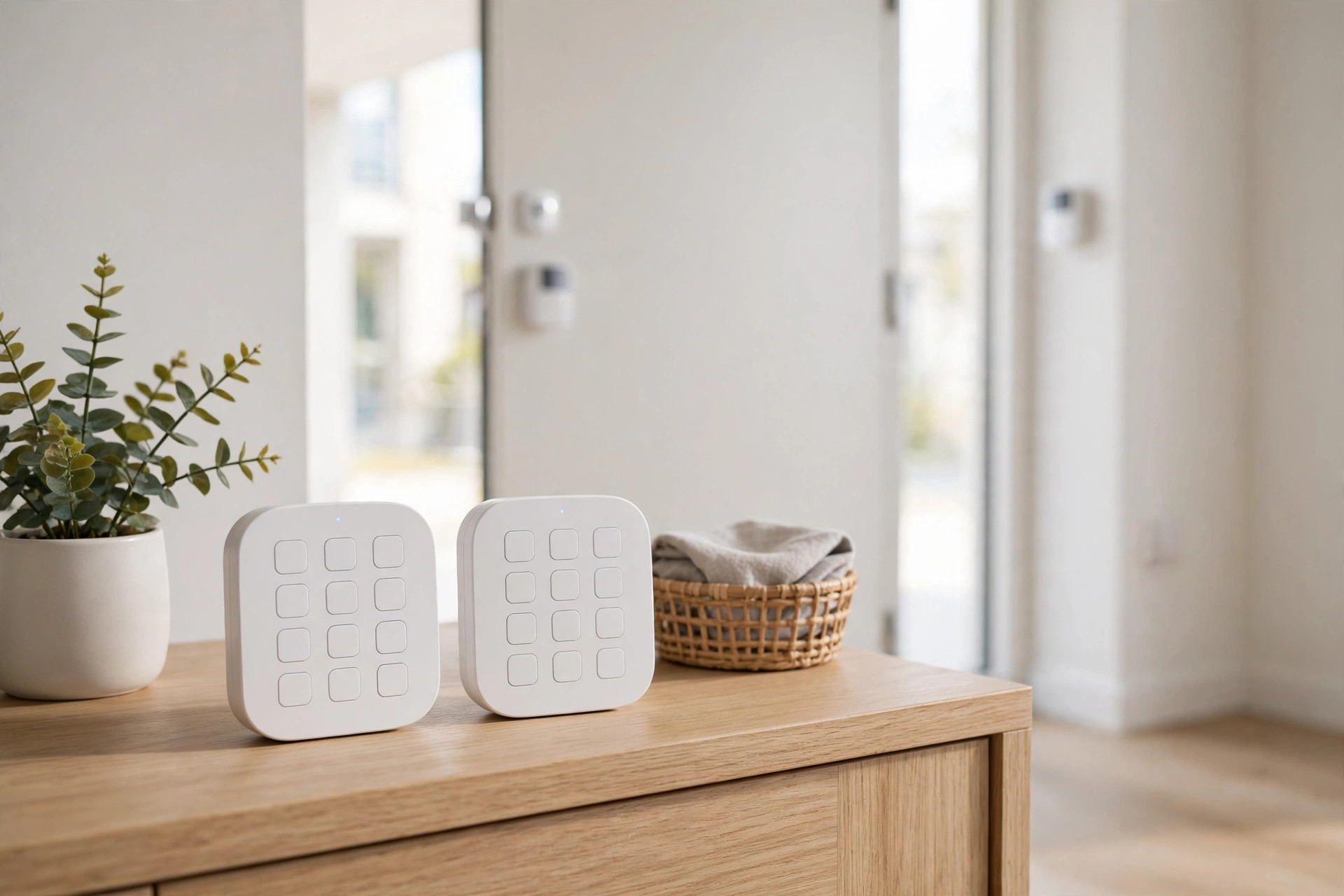
SimpliSafe built its reputation on simplicity, and that shows in the rental experience. The guided setup walks you through sensor placement room by room, which is genuinely helpful if this is your first security system. The equipment looks discreet, sensors are small and white, and the adhesive mounting is straightforward.
Monitoring plans are flexible, and SimpliSafe's professional monitoring has a strong reputation for fast response. The system works well as a pure alarm: entry sensors, motion sensors, glass-break sensors, and environmental sensors (water, freeze) that matter in rentals where a burst pipe is your problem until the landlord fixes it.
The tradeoff is the camera ecosystem. SimpliSafe's cameras work fine, but if you want a rich lineup of doorbells and outdoor cameras integrated with your alarm, Ring's catalog is deeper. SimpliSafe also tends to cost a bit more for comparable kits.
Ring: Strengths for Renters
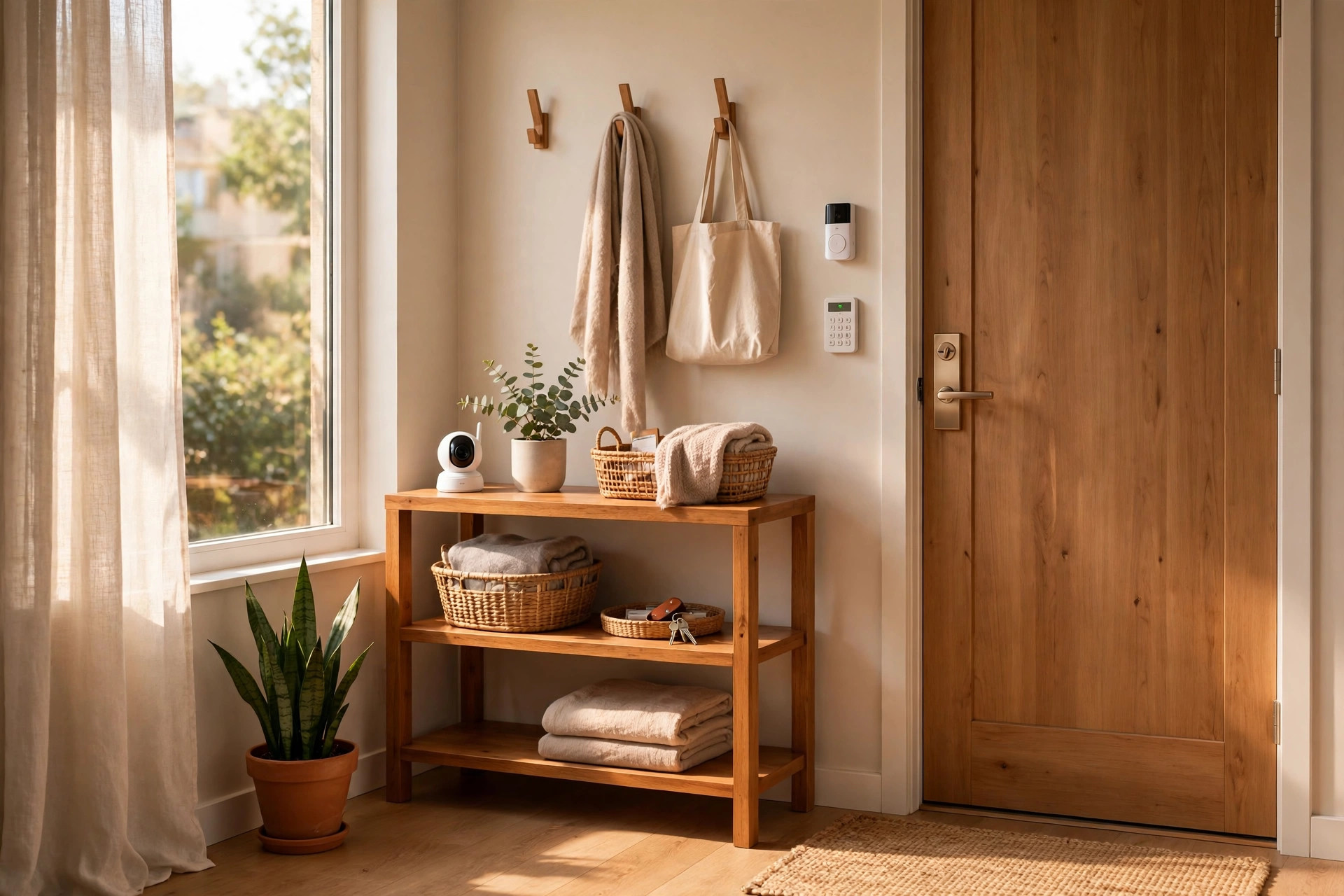
Ring's biggest advantage for renters is the ecosystem. The Ring Alarm integrates with Ring video doorbells and cameras in one app, so your doorbell, indoor camera, and alarm sensors all live in the same place. For an apartment, that combination, alarm kit plus battery video doorbell plus one indoor camera, covers nearly everything.
Ring's entry-level pricing is aggressive. Starter alarm kits often dip lower than SimpliSafe's during sales, and the sheer variety of devices means you can build exactly the setup your rental needs without paying for sensors you won't use.
The tradeoff is that Ring's system feels a bit more pieced together. The alarm, cameras, and doorbells are all good, but the experience is less unified than SimpliSafe's guided approach. Ring has also faced more public scrutiny over privacy and police partnerships, which matters to some renters more than others.
Monitoring and Monthly Costs Compared
Both companies make monitoring optional, which is exactly what renters should want.
Self-monitoring (free on both): You get phone alerts when a sensor triggers, and you decide what to do. This is enough for many renters, especially in apartment buildings where neighbors and building security add layers.
Professional monitoring ($10 to $30 per month): A monitoring center receives the alarm signal, tries to reach you, and dispatches emergency services if needed. SimpliSafe's plans and Ring's plans sit in the same price band, and both are cancelable month to month.
One practical note: some cities charge for false-alarm dispatches or require alarm permits, even for DIY systems. Check your city's rules before enabling professional monitoring, since a permit fee can add $25 to $50 per year.
Which Should You Pick?
Pick SimpliSafe if: you want the simplest possible setup, you mainly want an alarm (not a camera system), you value guided installation, or fast professional monitoring response is your priority.
Pick Ring if: you want a video doorbell and cameras in the same app as your alarm, you like building a custom kit piece by piece, or you found a better sale price on the starter kit.
Either works if: your needs are basic, a few entry sensors, one motion sensor, and phone alerts. At that level the systems are more alike than different, and the right choice is whichever kit is cheaper the week you buy.
Consider a third option if: you want no monthly fees ever and local video storage. Brands like Abode and Eufy compete here, and our guide to renter-friendly security systems covers the full landscape.
Renter-Specific Notes for Both Systems
Whichever you choose, the renter playbook is the same: mount everything with adhesive or freestanding placement, keep cameras inside your unit, notify your landlord before installing, and keep the boxes so move-out teardown is easy. Both systems peel off cleanly and reinstall in a new apartment in about an hour. Neither requires you to patch more than a possible adhesive mark, which a dab of touch-up paint handles.
Frequently Asked Questions
Do SimpliSafe or Ring require drilling in an apartment?
No. Both systems are designed for adhesive-mounted sensors and plug-in base stations. You can install a complete system without making a single hole. This is one of the main reasons both are popular with renters.
Which is cheaper overall, SimpliSafe or Ring?
Ring usually wins on equipment price, especially during sales, with starter kits often under $200. SimpliSafe kits tend to start a bit higher. Monthly monitoring costs are nearly identical between the two. Over two years with professional monitoring, the total cost difference is usually under $100 either way.
Can I use these systems without paying a monthly fee?
Yes. Both offer free self-monitoring through their apps: you get alerts on your phone and decide how to respond. Monthly fees only apply if you want professional monitoring or, in Ring's case, extended video history for cameras.
Which is better for an apartment vs a house?
Both work in either, but apartments favor smaller kits. A typical one-bedroom needs three to five entry sensors and one motion sensor, not the ten-sensor kits marketed to homeowners. Buy the smallest kit that covers your doors and main living area, then add sensors only if you find gaps.
Do these systems work if my WiFi goes down?
Both offer cellular backup options so the alarm still communicates during an internet outage. SimpliSafe includes cellular connectivity in its design, while Ring offers it through its monitoring plans. If your building's internet is unreliable, confirm cellular backup is active on your plan.