7 Hidden Storage Spaces You're Not Using (With Product Picks)
Small homes don't have a storage problem. They have a dead-space problem. Every home has square footage that isn't a room, isn't furniture, and isn't doing anything: the 6 inches beside the fridge, the inside of cabinet doors, the air above the doorframe. Reclaim enough of these hidden storage spaces and it's like gaining a closet without moving a wall.
Here are seven, with the exact products that put each one to work.
1. The Side of the Fridge
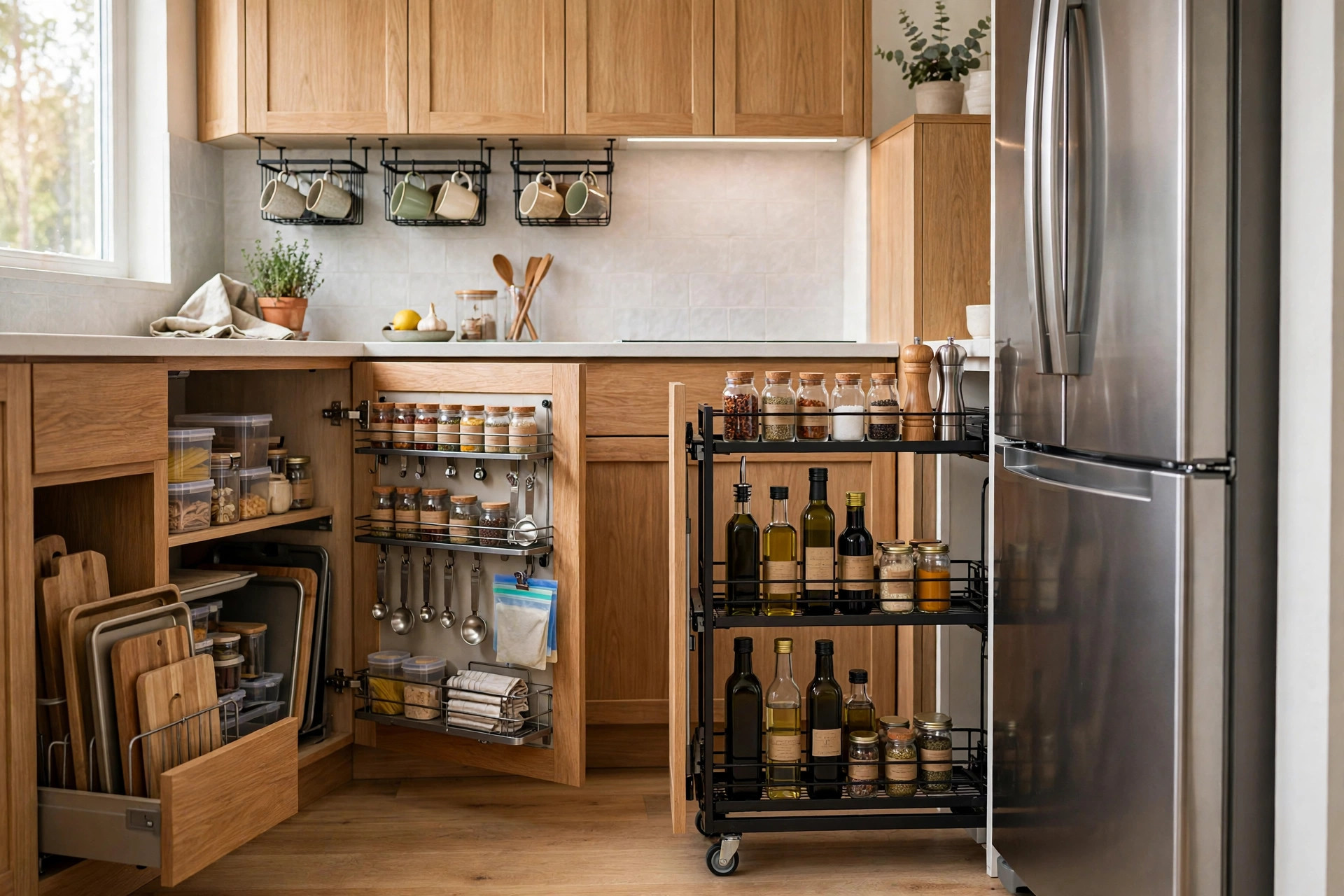
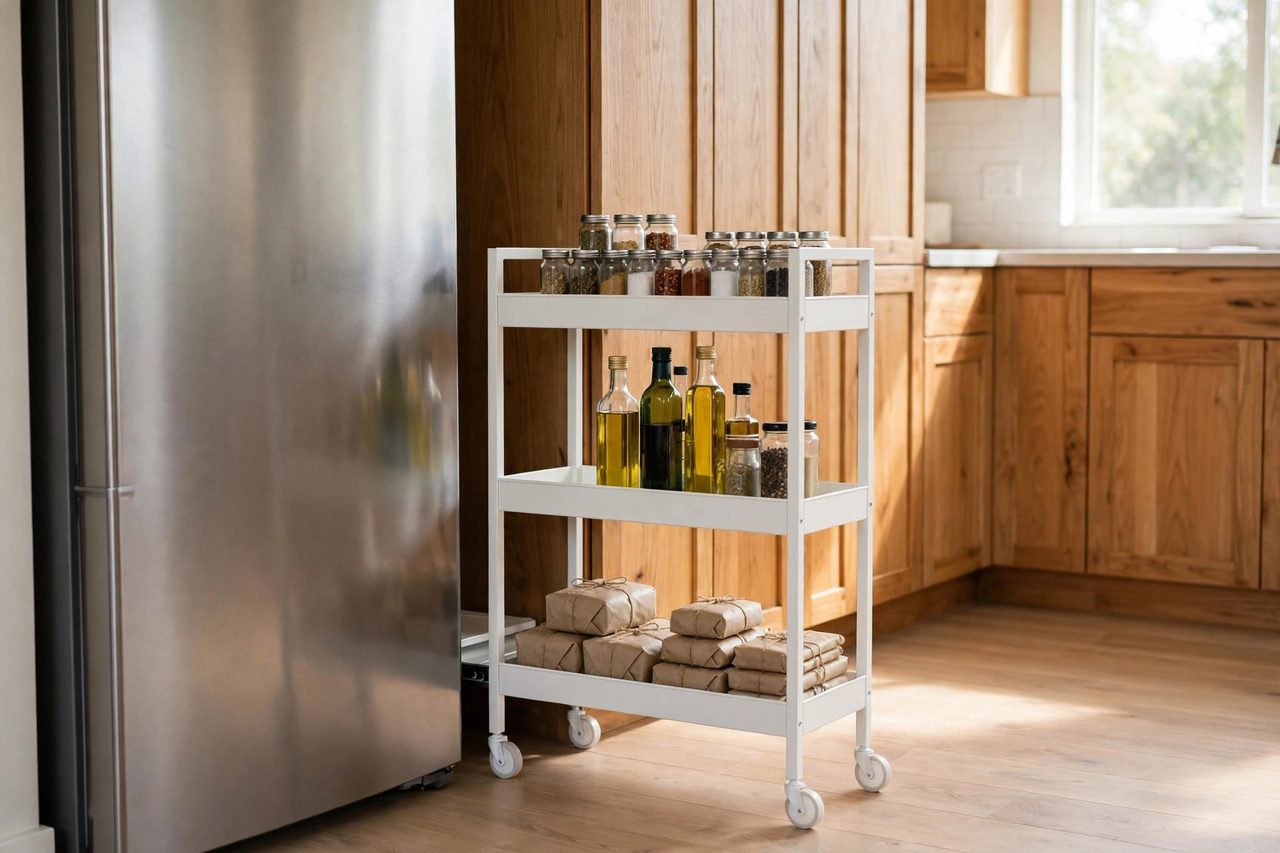
That 4-to-6-inch gap between the fridge and the wall or counter is a full spice rack waiting to happen. A slim rolling cart (about $25) slides into the gap and holds spices, oils, wraps, and condiments on tiered shelves. Pull it out like a drawer, push it back flush.
Measure the gap before ordering; carts come in 5, 6, and 8-inch widths. This one trick frees an entire kitchen cabinet shelf.
2. Inside Cabinet Doors
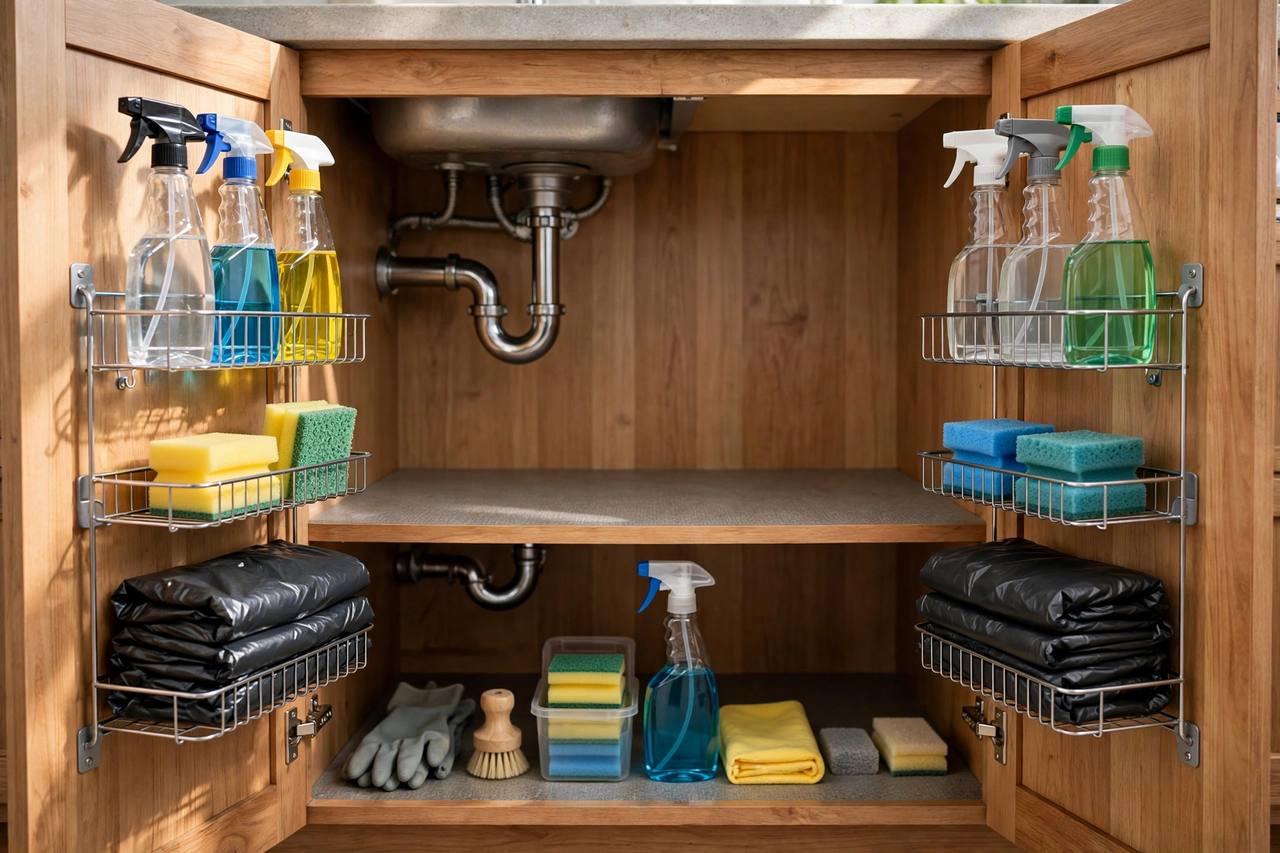
The inside of every cabinet door is a free wall. Adhesive-mounted racks on the inside of under-sink doors hold spray bottles, sponges, and trash bags. Inside pantry doors, narrow spice racks add a full row of storage. Inside bathroom vanity doors, magnetic strips or small baskets corral grooming tools.
Cost: $10 to $20 per door for adhesive racks. No drilling, no damage, which makes this one of the highest-ROI renter upgrades there is. (Renter-friendly.)
3. Under-Shelf Space
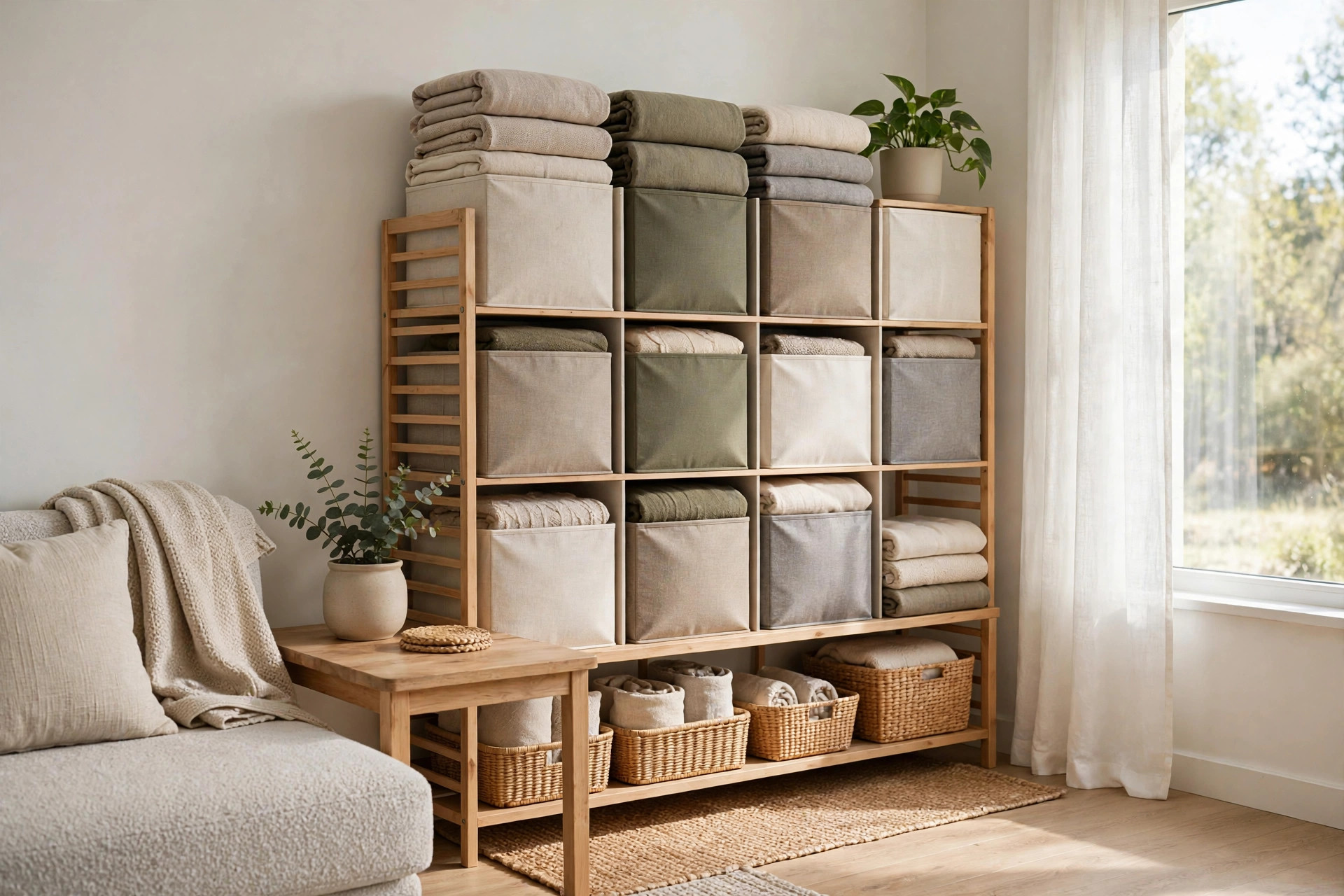
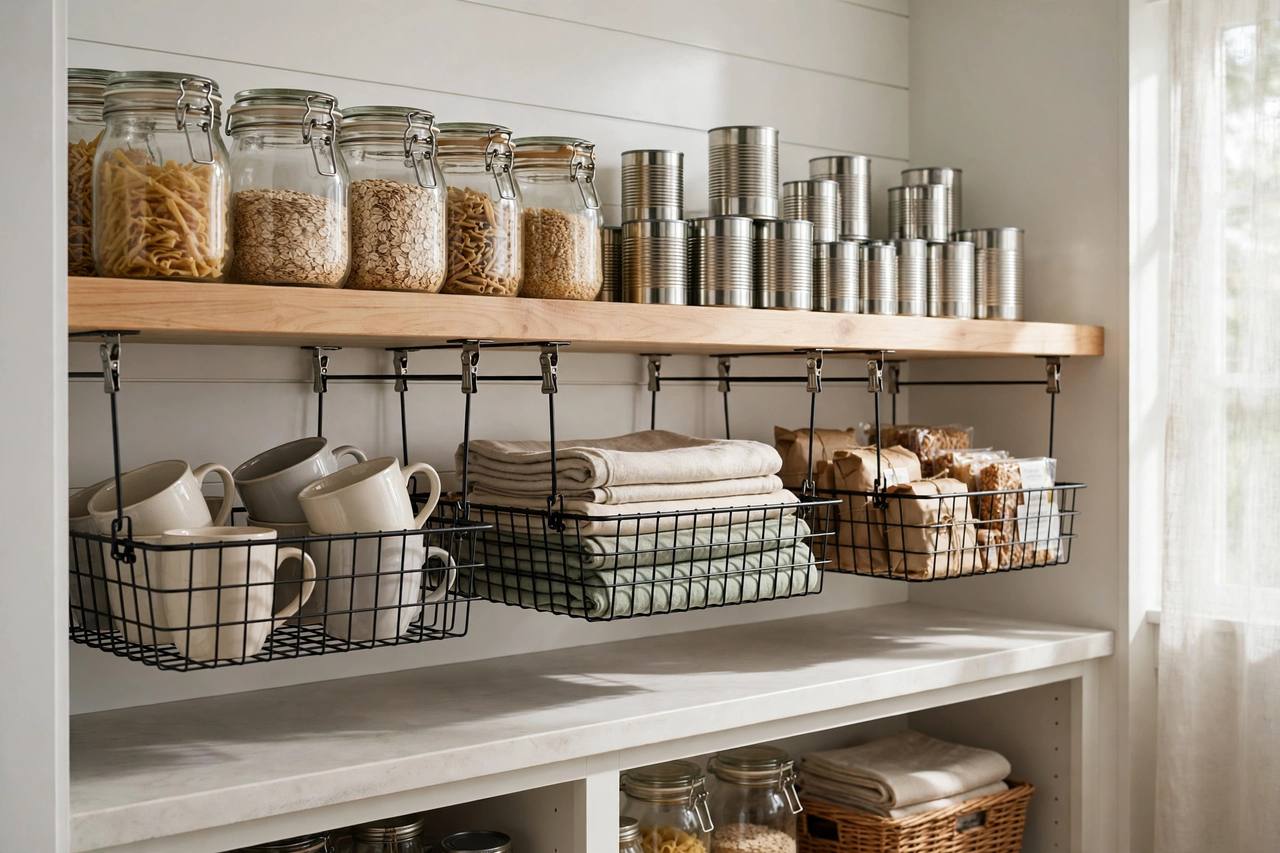
Shelves only store what's sitting on them, but the air underneath is wasted. Clip-on under-shelf baskets ($12 for a 2-pack) hang from existing pantry, cabinet, or closet shelves and create a second layer for mugs, wraps, folded linens, or desk supplies.
In closets, under-shelf baskets turn one shelf into two for folded sweaters. In the pantry, they double can storage without a single new shelf.
4. Above the Doorframe
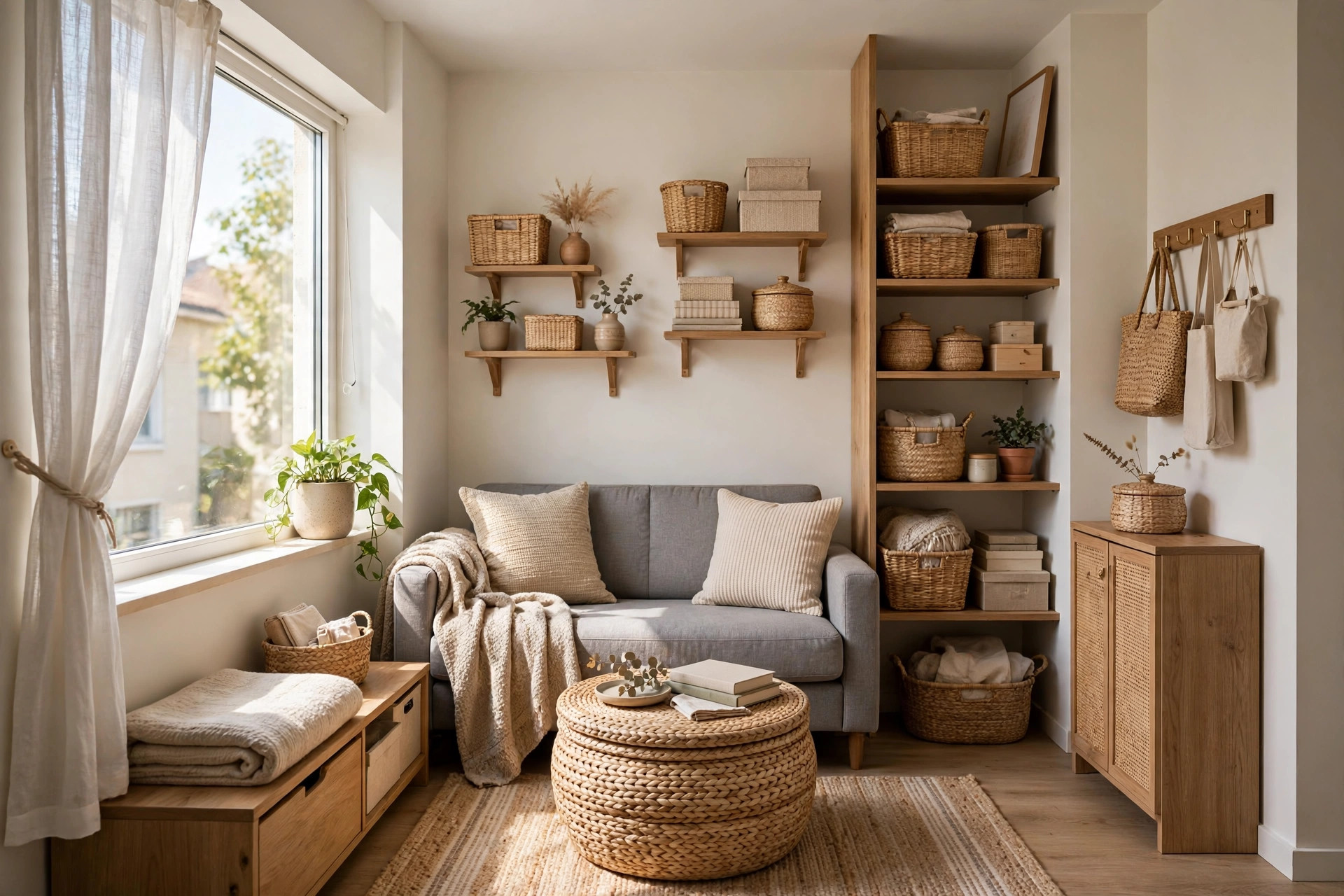
The 12 inches above every interior doorframe is dead air in almost every home. A single floating shelf mounted above a door ($15 to $25) holds books, decorative bins, or the board games that currently live on the floor of the closet.
Best rooms for this: bedrooms (books), bathrooms (towel storage in rolled baskets), and kids' rooms (the toys that are loved but not daily). Keep it to lightweight items; this is display-plus-light-storage, not a warehouse.
5. The Toe-Kick Zone
Under your kitchen and bathroom cabinets is a 3-to-4-inch recessed gap called the toe kick. It's empty by design, and shallow drawers built for it ($30 to $50 each) turn it into storage for baking sheets, placemats, cleaning supplies, or pet food.
Toe-kick drawers need basic DIY comfort (they mount to the cabinet base), so this one's for homeowners or handy renters with landlord approval. The payoff: two to four hidden drawers in a kitchen that "has no storage."
6. Behind the Bedroom Door
An over-the-door organizer with clear pockets ($15) on the bedroom side of the door holds accessories, chargers, medications, and the "don't forget" items. The clear pockets matter: opaque organizers become junk drawers you can't see into.
For a cleaner look, a row of 4 to 6 adhesive hooks holds tomorrow's outfit, the gym bag, and robes. Either way, the back of the door is a full extra wall most people never use. (Renter-friendly.)
7. Under the Bed (Done Right)
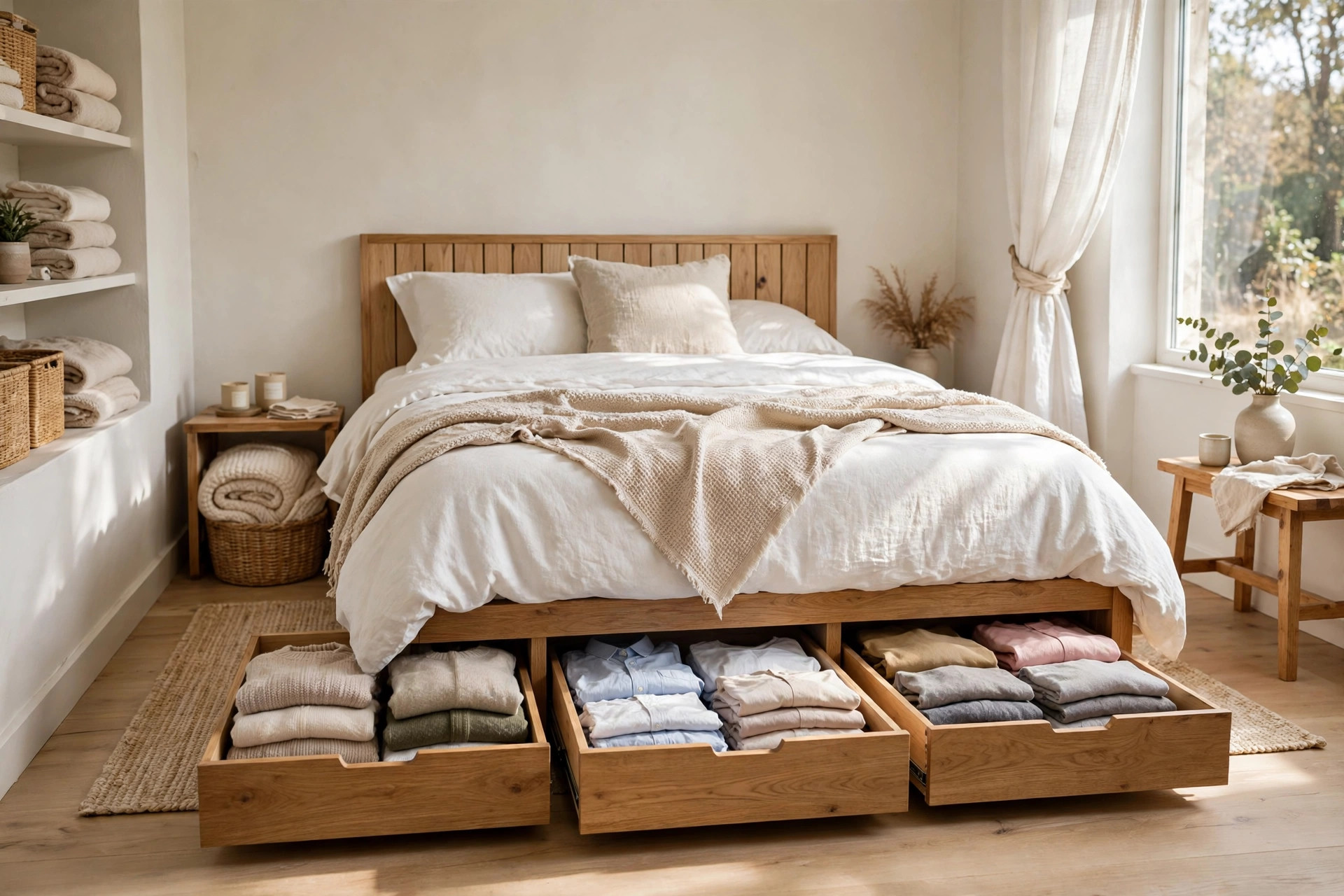
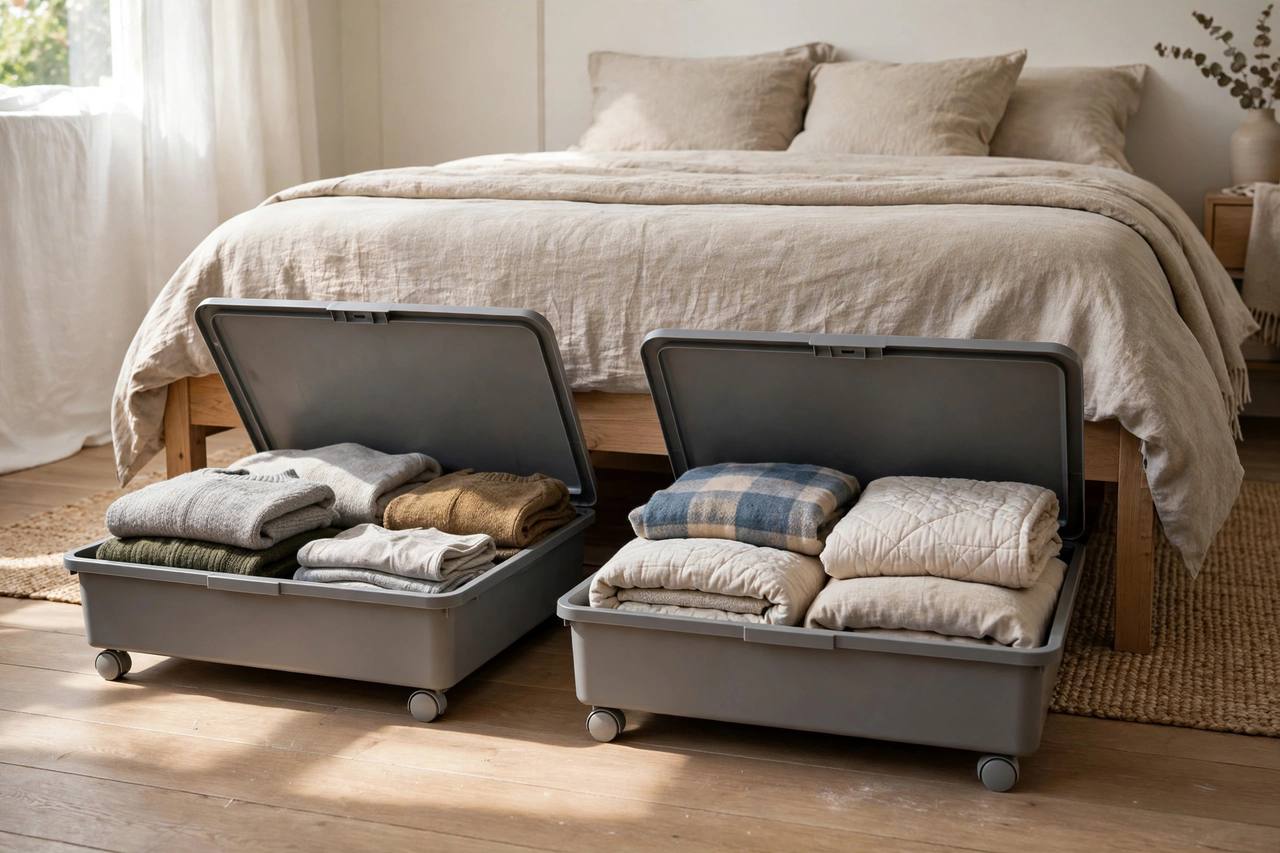
Everyone knows about under-bed storage; almost nobody does it well. The upgrade: flat bins with lids and wheels ($30 to $40 for a 2-pack), not open boxes that collect dust. Wheels matter because you'll actually pull them out to use what's inside.
Zone them: one bin for off-season clothes, one for extra bedding, one for gift wrap or hobby supplies. Label the ends facing out. If the bed is too low, risers ($15 for a set) add 3 to 5 inches of clearance and open up the whole zone.
The Weekend Plan: Tackle All Seven
Saturday morning: measure the fridge gap, the pantry shelves, and the under-bed clearance. Order the pieces (most arrive in 2 days).
Saturday afternoon: install the adhesive racks, door organizers, and hooks. These need no tools and take about an hour total.
Sunday: when the carts and bins arrive, load them zone by zone, label everything, and do the purge as you go. If something doesn't earn its spot in the new storage, it doesn't get stored.
Total spend for all seven: roughly $150 to $220. Total new storage: the equivalent of a large closet, with zero furniture added and zero floor space lost.
The Rule That Keeps Them Hidden
Hidden storage only stays useful if it's curated. Every three months, pull each zone out and remove what migrated there without earning its place. Dead spaces attract clutter the way empty counters attract mail. A 20-minute quarterly audit keeps all seven working.