Fall Garage Cleanout: The Weekend Plan Before Winter Hits
The garage is where good intentions go to hibernate. Summer gear is still piled by the door, the holiday decorations are buried somewhere in the back, and there's a lawn mower that hasn't moved since July blocking everything. Fall is the deadline: once winter hits, whatever is disorganized in there stays disorganized until spring.
This fall garage cleanout checklist is a two-day weekend plan. Saturday is the purge, Sunday is the system. By Sunday evening, your car fits, your winter gear is reachable, and the walls are doing the storage work instead of the floor.
Before the Weekend: Gather Supplies
- Heavy-duty trash bags (the thick contractor kind)
- A push broom and dustpan
- Painter's tape and a marker for labeling zones
- 4 to 6 stackable plastic bins with lids (27-gallon is the sweet spot)
- A donation pickup scheduled for Monday morning (book it now, so the piles actually leave)
Total supply cost: usually under $60 if you already own a broom.
Saturday: The Purge (Day 1)
Morning: Empty It Out
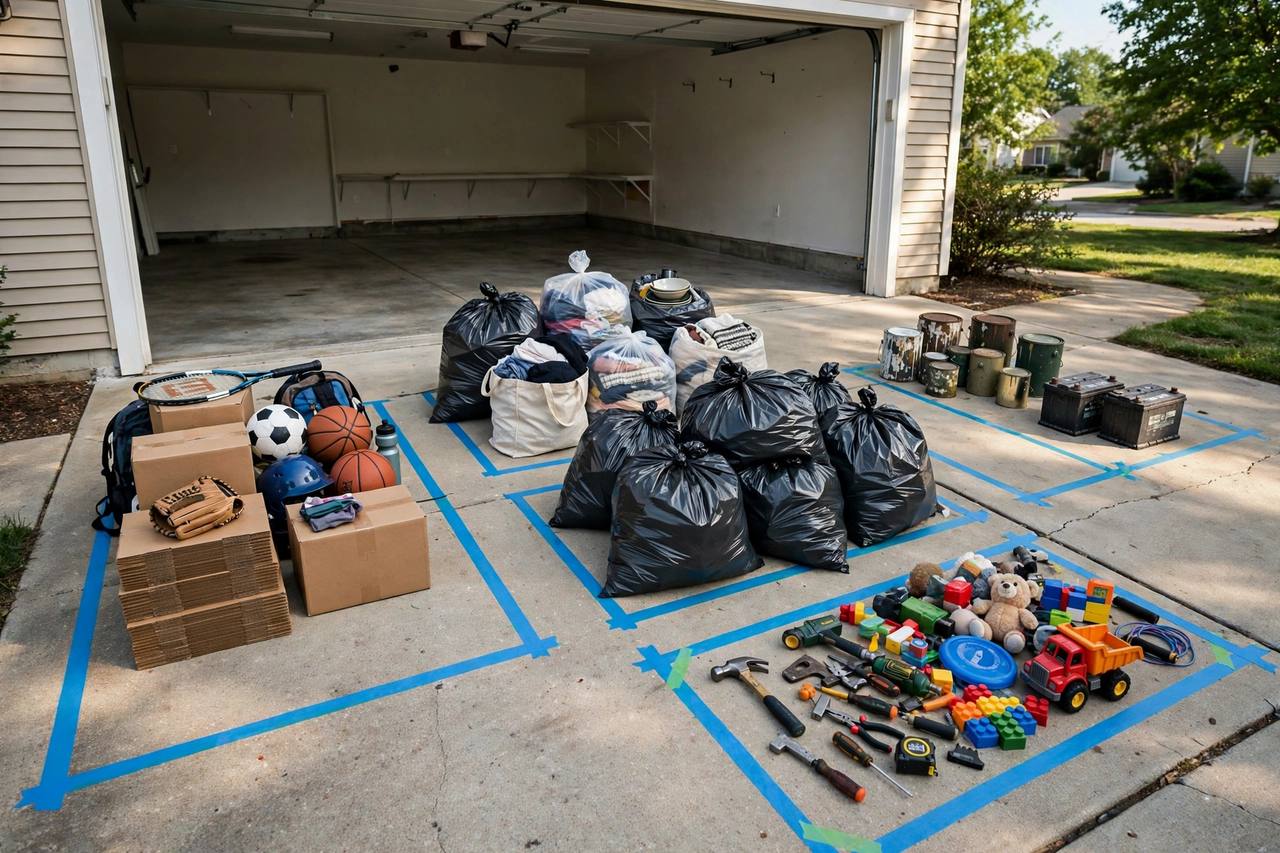
Pull everything out of the garage onto the driveway. Yes, everything. It feels dramatic because it is dramatic, and that's the point: you can't reorganize around piles, and seeing the full inventory forces honest decisions.
As you pull things out, sort into five zones marked with painter's tape on the driveway:
- Keep and zone (stays, gets a designated spot)
- Donate (goes Monday morning)
- Trash (bag it now)
- Hazardous (paint, chemicals, old batteries: these go to your town's hazardous waste day, not the curb)
- Belongs elsewhere (the kitchen gadget, the indoor toys, the toolbox that lives in the house)
The Purge Rules
Two-year rule. If you haven't used it in two years and it isn't seasonal or emergency gear, it goes. Be ruthless with duplicate tools, dried-out paint, and "project" materials for projects you'll never start.
Cardboard is the enemy. Soggy, pest-friendly, and structurally useless. Anything worth keeping graduates to a plastic bin today.
Sports gear audit. Kids outgrow gear yearly. If the bike is two sizes too small, it's a donation, not storage.
Afternoon: Clean the Shell
With the garage empty, sweep the whole floor, knock down cobwebs, and hose out oil spots with degreaser. Check for mouse droppings along the walls (fall is when they move in). If you find gaps under the door or around pipes, steel wool and caulk cost almost nothing.
Sweeping an empty garage takes 30 minutes and makes Sunday's work feel like building something new instead of shuffling junk.
Saturday done means: the driveway has five sorted zones, the garage is empty and swept, and the trash is already bagged.
Sunday: The System (Day 2)
Zone the Space
Divide the garage into four zones before anything goes back in:
- Daily zone (near the door to the house): shoes, jackets, bags, the stuff you grab every day
- Car zone (the middle): keep it clear. If both cars fit, that's the win condition.
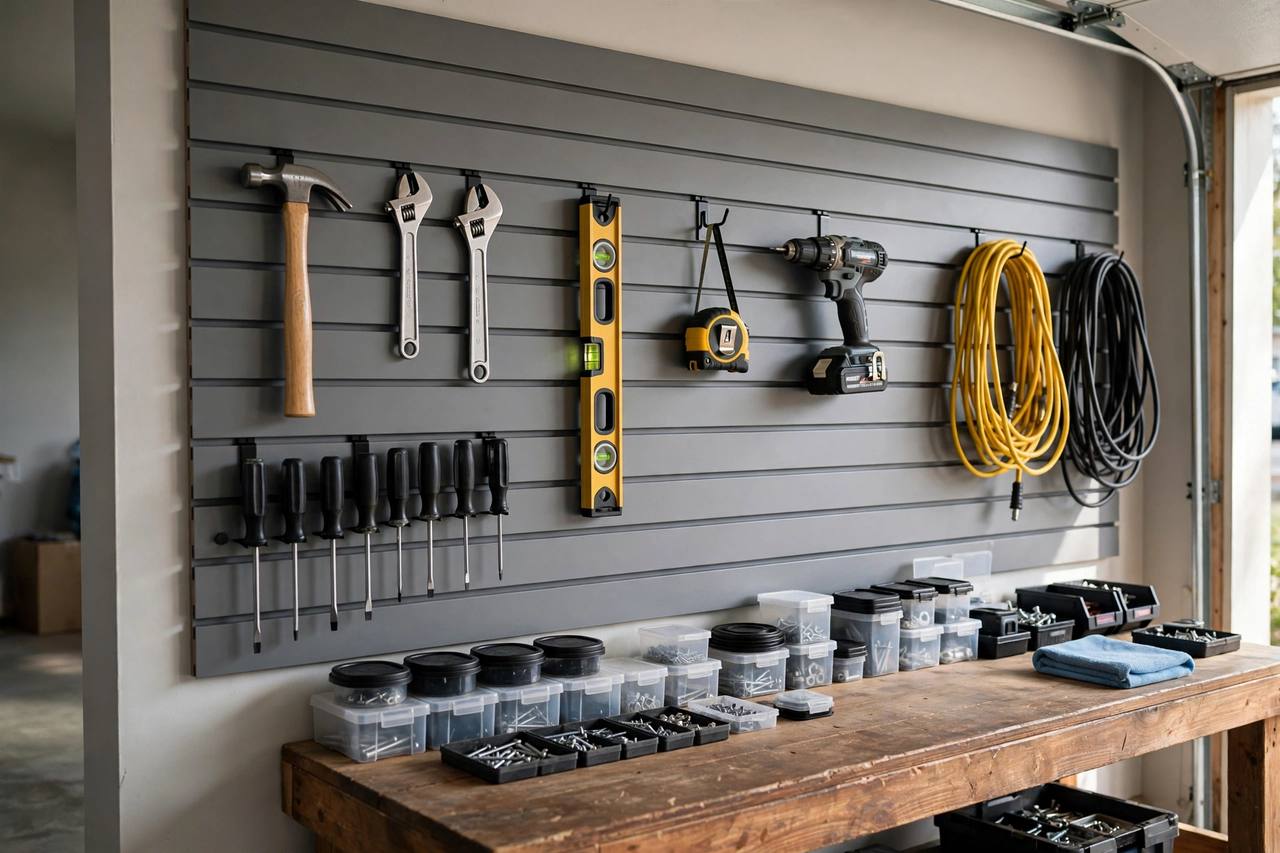
- Tool and project zone (one wall): tools, hardware, paint, the workbench if you have one
- Seasonal and bulk zone (the back or overhead): holiday decor, camping gear, bulk paper goods
Mark the zones with painter's tape on the floor. It sounds silly; it works.
Get It Off the Floor
Floor space is the scarcest resource in a garage. The priority order for vertical storage:
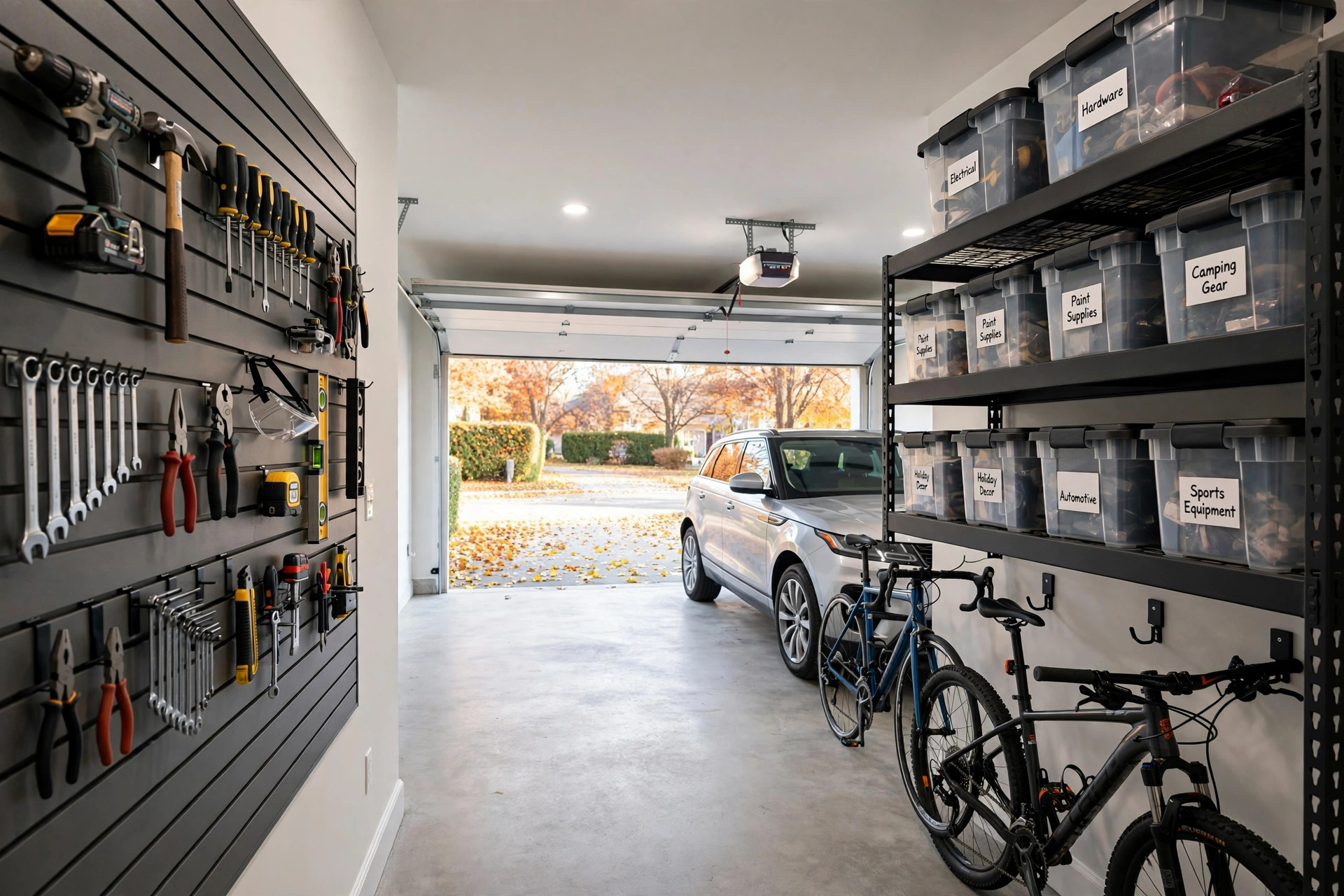
- Wall hooks for daily gear. Heavy-duty hooks hold bikes, ladders, and yard tools. A $25 pack of assorted hooks clears more floor than any shelving unit.
- Slatwall or pegboard for tools. One 4x8 panel on the tool-zone wall holds an entire workshop's worth of hand tools where you can see them.
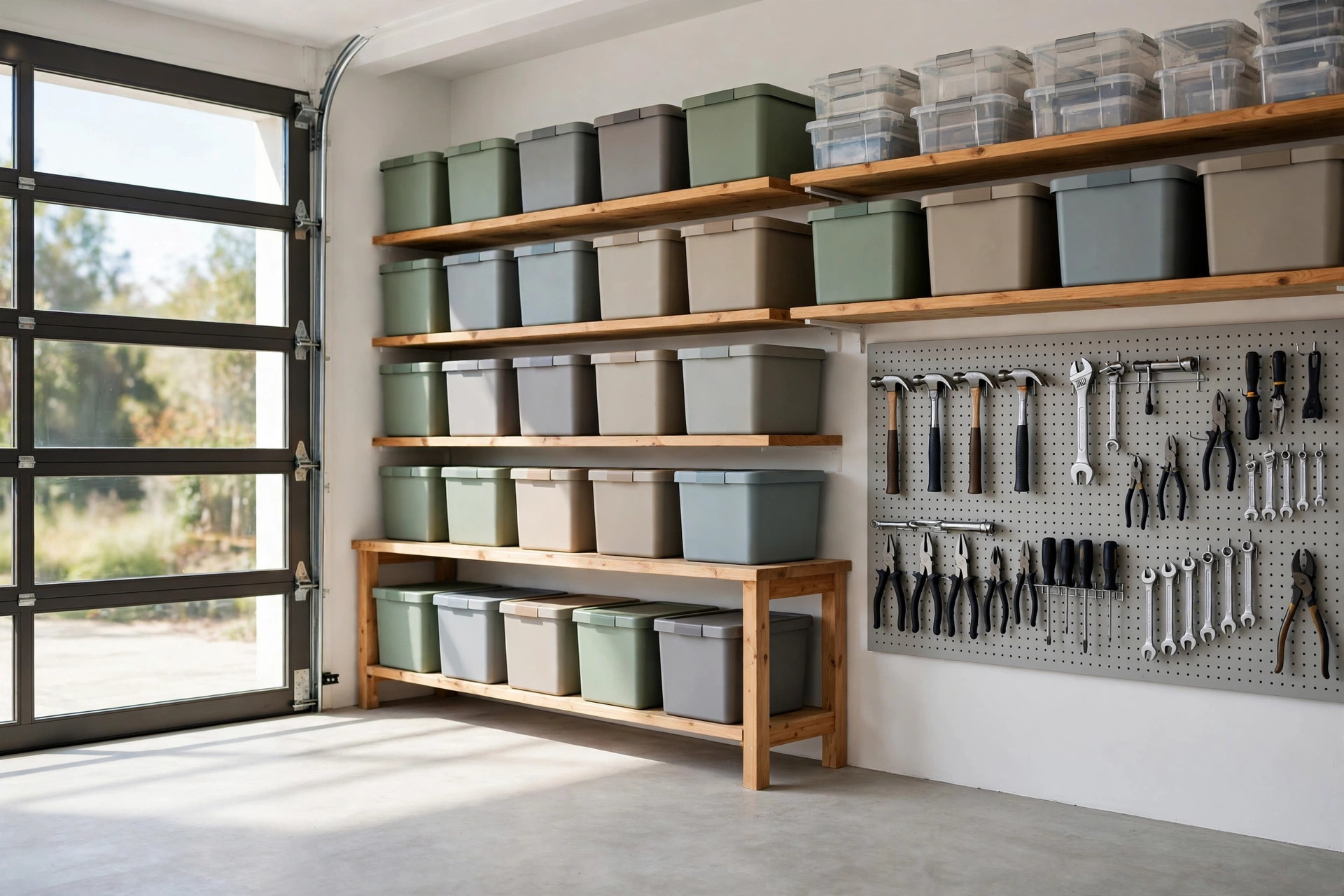
- Overhead racks for seasonal bins. Ceiling-mounted racks swallow holiday decor and camping gear, the stuff you touch twice a year. Check your ceiling height and joist spacing before buying.
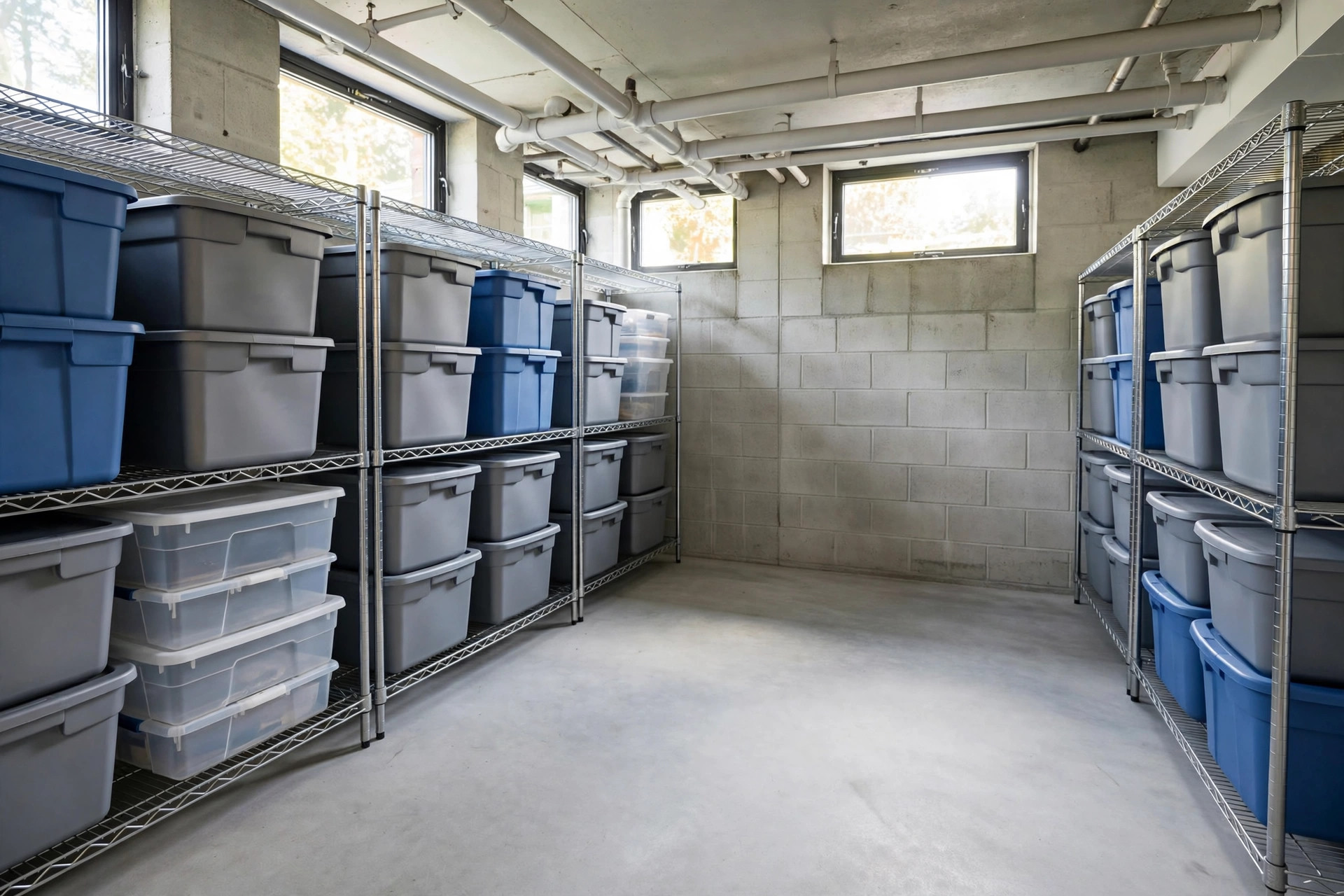
- Shelving for the rest. One or two heavy-duty freestanding shelves along the back wall for bins, paint, and car supplies.
Budget reality: hooks plus one shelving unit runs about $80 to $150 total and transforms most two-car garages.
Winterize While You're In There
Since everything's already out and you're in project mode:
- Test the garage door. Disconnect the opener and lift it manually; it should move smoothly and stay halfway. Lubricate the tracks.
- Check the weatherstripping. If daylight shows under the door, replace the bottom seal. A $15 seal keeps mice and cold air out all winter.
- Move winter gear forward. Snow shovels, ice melt, and the emergency car kit go in the daily zone now, not when the first storm hits.
- Drain and store summer equipment. Run the mower dry or add fuel stabilizer, coil the hoses, and store pool and beach gear in the seasonal zone.
Load It Back In
Work zone by zone, back to front: seasonal zone first, then tools, then daily gear last so it's nearest the door. Label every bin on two sides with the marker. Future you, digging through bins in February, will be grateful.
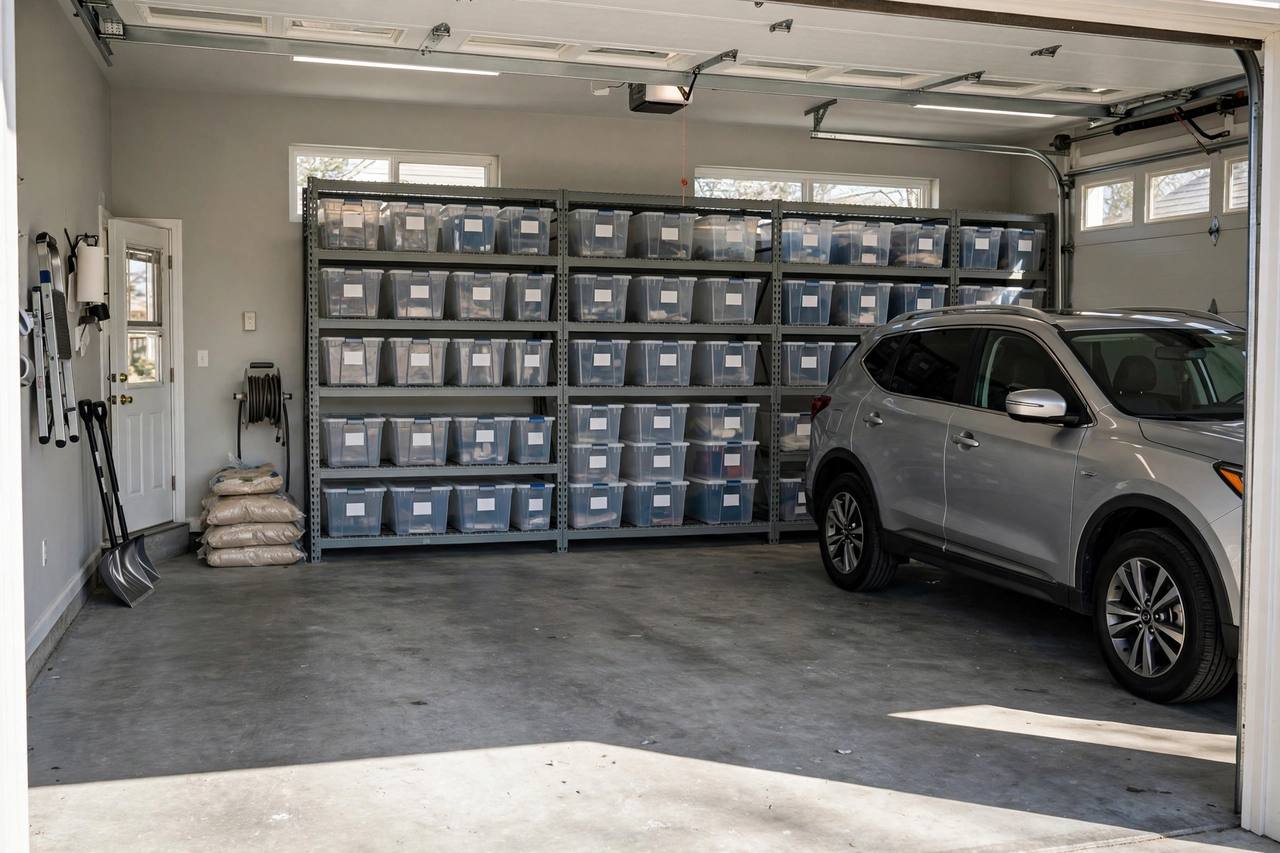
Sunday done means: both cars fit (or one car plus a clear walkway), every zone is labeled, winter gear is up front, and nothing sits directly on the floor that shouldn't.
What It Costs
| Approach | Typical spend | |---|---| | Purge-only (bags, tape, marker) | $20 to $40 | | Purge plus hooks and one shelf | $80 to $150 | | Full system (slatwall, overhead rack, bins) | $250 to $500 |
You don't need the full system to win the weekend. The purge plus hooks handles most garages.
Keep It Clean Through Winter
The door rule. Nothing new enters the garage without a zone assigned. The treadmill someone's giving away for free is not free if it eats your car space.
Monthly 15-minute sweep. First Saturday of the month, walk the zones, put strays back, and sweep. Winter salt and slush make this non-optional.
Spring preview. When you pull the mower out in spring, you'll know in 30 seconds whether the system held. Adjust the zones then; systems are allowed to evolve.
Two days, one weekend, and the garage stops being the room you avoid. Winter can come.