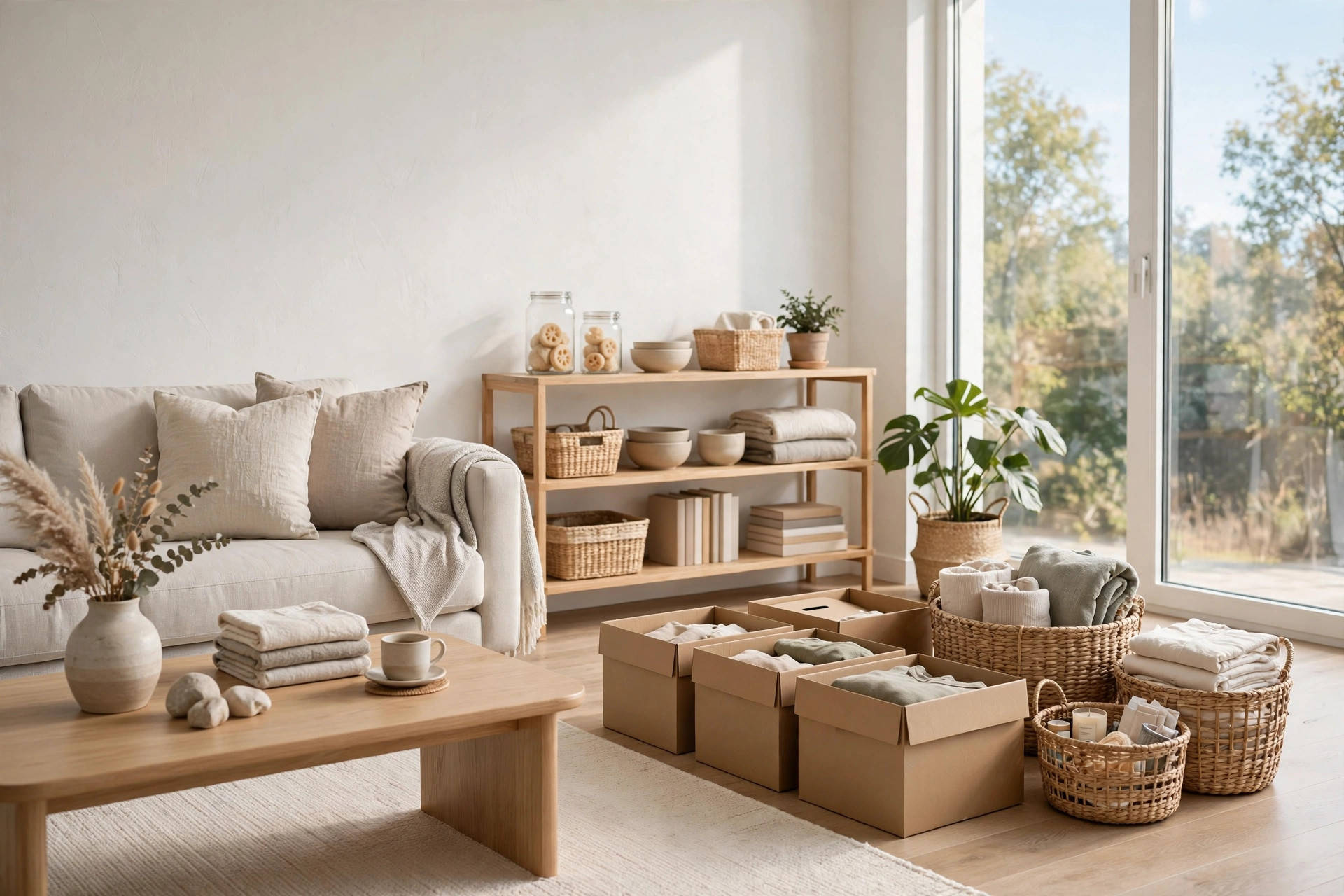
How to Declutter Sentimental Items Without the Guilt
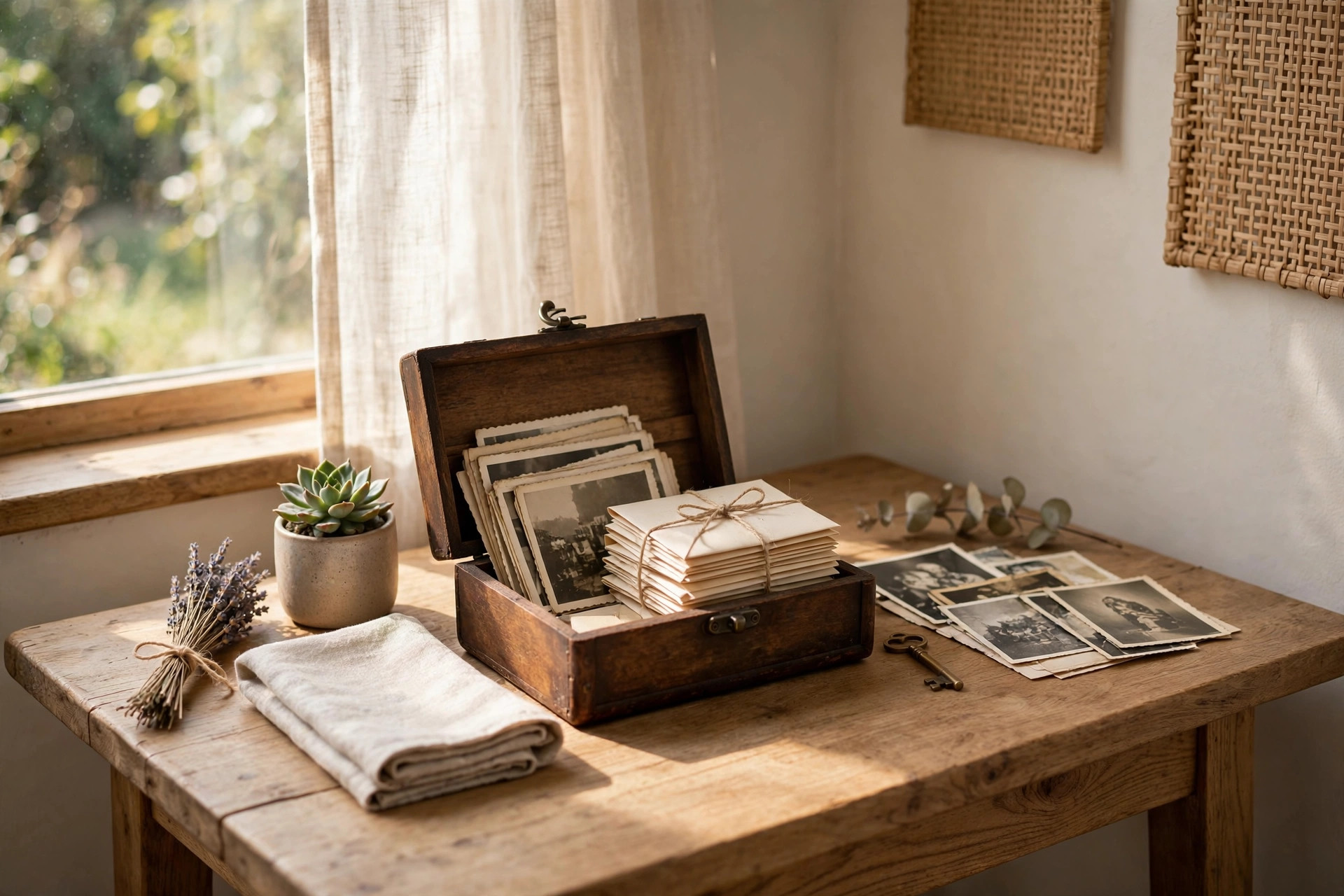
If you've ever held a chipped coffee mug for twenty minutes, unable to decide between the cabinet and the donation box, you're not alone, and you're not doing decluttering wrong. Learning how to declutter sentimental items is the hardest part of getting organized, because these were never about the thing. They're about people you love, versions of yourself you're not ready to leave behind, and the fear that letting go of an object means letting go of the memory.
This article is here to make that process gentler. You'll get a compassionate decision framework for everything from inherited china to kids' artwork, memory-box limits, the photo trick that softens letting go, and what to do when you get stuck, a plan, not pressure.
Why Sentimental Clutter Is the Hardest Clutter
It helps to name what's happening, because naming it takes away some of its power.
Guilt sounds like: "Aunt Rosa gave me this. How can I give it away?", as if the object came with a loyalty contract you never signed.
Grief sounds like: "If I get rid of Dad's jacket, it's like losing him again." The item feels like the last bridge to someone who's gone.
Identity sounds like: "But I was a dancer / a collector / the fun host." Releasing old trophies or hobby gear can feel like erasing chapters of your life.
None of these feelings mean you're doing decluttering wrong. They mean the objects did their job, they mattered. The goal isn't to feel nothing. It's to honor what mattered without turning your home into a museum.
How to Declutter Sentimental Items: The "Honor It or Release It" Framework
Here's the heart of the process. Pick up one item at a time and ask two questions, in this order:
1. "Does this earn its place in my life today?" Not five years ago. Not in some imagined future. An honored item has a job: it's displayed, used, or stored where you can actually enjoy it.
2. "Am I keeping this for the memory, or out of obligation?" To a giver, to the past, to who you should be, if the honest answer is obligation, it's a candidate for release.
An item either gets honored (given a real place of dignity in your life) or released (let go with gratitude). There's no third category of "kept out of guilt in a box under the bed."
What "honoring" actually looks like
Honoring is active, not passive: the quilt goes on your bed where it's used; love letters get read once a year from a beautiful box. An item sitting in a dark bin, making you feel heavy each time you open it, isn't being honored, it's being avoided.
The Memory Box: Your One Loving Limit
Sentimental decluttering goes sideways when there's no finish line. Give yourself one: a single memory box (or a defined shelf or drawer) that holds your most treasured keepsakes.
The rules are simple: the box is the limit, not the goal (half-empty is fine; it just can't overflow), a new treasure in means something inside gets re-evaluated, and choose a box you actually like, a pretty container signals that what's inside is special, while a cardboard moving box signals "storage problem."
The memory box turns an infinite, terrifying task ("deal with ALL my sentimental things") into a bounded, winnable one ("which of these earn a spot?"). Constraints are kindness.
Photograph It Before You Let It Go
The single most powerful trick for sentimental decluttering is almost embarrassingly simple: take a photo before you release it.
The photo does what the object was doing all along, it holds the memory, but it takes up zero shelf space. Photograph items in context (your kid's art looks sweeter on the fridge than scanned on white paper), and for bulky pieces, capture close-ups of the details you actually love: the inscription inside a book cover, the worn collar of a jacket.
Keep the photos in one dedicated album, digital or printed, a "Treasured Things" folder becomes a memory you can actually flip through. Add a caption telling the story: "The mug Grandpa used every Sunday morning. Chipped in 2019. Donated 2026." Future you will be so glad.
People are often shocked by how quickly the ache fades once the photo exists. The memory was never in the mug. It was in you the whole time.
Involving Family (Without Starting a Fight)
Sentimental items often belong to a whole family, so your project can accidentally become a negotiation. Some ground rules:
- Ask before releasing anything that holds someone else's memories. You can offer to help; you can't decide for them.
- Offer first dibs to family before donating. "I'm letting go of Grandma's extra china, would you like a piece?" This prevents more hurt feelings than any other step here.
- Let each person have their own memory box. Your partner's treasures don't have to fit in yours.
- For kids' artwork, keep the standouts and photograph the rest. Ask older kids for their top three favorites, they usually care far less about keeping everything than you do.
Handling Inherited Items With Care
Inherited clutter is its own special category because grief and guilt arrive together, sometimes before you're ready to deal with either. Permission to go slowly is built in, but "slowly" still needs a direction.
- Don't declutter in the rawest part of grief. If a loss is very recent, pack things neatly and revisit in a few months. There's no deadline.
- Keep the best, not the most. You don't need all of your father's books, keep the three with his notes in the margins. Representativeness beats completeness.
- Release the duplicates without drama. Inherited six serving bowls? Keep the best one and let the rest go to people who'll actually use them.
- Remember what the person would actually want. Would they want their things making you miserable in storage, or want you to keep what brings you joy and pass the rest along?
What to Do When You're Stuck
Some days you'll pick up an item and feel nothing but paralysis. That's normal. Here's your stuck-day toolkit:
- Use the maybe box. Put undecided items in a box, date it, and stash it out of the way. Set a reminder for three to six months. If you haven't thought about it once, you have your answer.
- Shrink the session. Fifteen minutes, or just five items. Stuck-ness usually comes from the scale of the task, not the item.
- Narrate your decision out loud. "This is the vase from our wedding. We've never liked it. I'm donating it and keeping the photo." Speaking your reasoning out loud cuts through the fog.
- Ask: "Would I buy this again today?" If you saw this exact item in a store right now, would you pay for it and carry it home? If not, you already know.
A Gentle Way to Begin Today
You don't need a whole free weekend, just one small, winnable start. Pick one category: greeting cards, old memory t-shirts, or that "junk drawer of feelings" everyone has. Run each item through the honor-it-or-release-it framework, photograph what you're releasing, and give what you're honoring a real place in your home.
One box, one category, one afternoon. This isn't about becoming a different person overnight. It's about slowly, kindly, giving your memories the dignity they deserve, and giving yourself room to live in the present.
Frequently Asked Questions
Is it okay to get rid of gifts from people I love?
Yes. A gift's job is to communicate love when it's given, not to occupy your shelf forever. If keeping it brings guilt rather than joy, letting go is kinder.
What should I do with my children's artwork and school papers?
Keep a small number of standouts in a memory box for each child, and photograph the rest. As they get older, let them help choose their favorites.
How do I declutter inherited items without disrespecting the person?
Keep a few representative pieces that genuinely remind you of them, and release the rest to people who will use them. Honoring someone's memory is about how you carry them in your life, not about storing everything they owned.
What if my family gets upset that I'm letting things go?
Offer family members first pick of anything with shared history before you donate it, and communicate early: "I'm keeping the pieces I treasure most and passing the rest along." Most conflicts come from surprise, not from the letting go itself.
I've started three times and always freeze. What now?
Make the task smaller until freezing feels impossible, five items, fifteen minutes, one drawer. A dated "maybe box" handles anything that paralyzes.