Attic and Basement Storage Organization
Your attic and basement are the two rooms in your house with the most square footage and the worst reputation. They're where good intentions go to collect dust, the boxes of holiday decorations, the bin of "I might need this someday" cables, the camping gear you swear you'll use this summer. Attic and basement storage organization isn't about buying more bins. It's about deciding what actually deserves to live in these spaces, setting them up so you can find things without a treasure hunt, and keeping moisture, pests, and clutter from ruining what's stored there.
In this guide, you'll learn which items belong in the attic and basement (and which should never go there), how to choose containers for each environment, how to map storage zones and keep a simple inventory, how to protect everything from moisture and pests, and how a seasonal rotation routine plus an annual review keeps the whole system working.
What Deserves to Live in the Attic or Basement?
Before you buy a single bin, decide what these spaces are for. Attics and basements are long-term storage, not overflow closets. If you use something weekly, it belongs in your living space, not two floors away.
Good candidates for the attic (hot, dry, hard to reach):
- Seasonal decor (holiday decorations, Halloween props)
- Luggage and travel gear
- Extra linens in sealed bags
- Keepsake boxes you rarely open
- Out-of-season clothing in sealed containers
Good candidates for the basement (cooler, easier to reach):
- Camping and outdoor gear
- Bulk household supplies (paper goods, cleaning products)
- Tools and project materials
- Seasonal sports equipment
- Emergency supplies
What should NOT go in either space:
- Important documents, heat and damp air destroy paper and make ink bleed. Keep birth certificates, deeds, and tax records in a fireproof box in a climate-controlled part of the house.
- Photographs, film negatives, and vinyl records, heat warps and moisture ruins them.
- Electronics and anything with batteries, heat degrades batteries and damp causes corrosion.
- Anything food-related, even sealed pet food invites rodents and insects.
- Candles and anything that melts, attics can soar past 100°F in summer.
If you haven't touched it in two years and it's not seasonal or sentimental, it doesn't need a storage slot at all.
Choosing the Right Bins for Each Environment
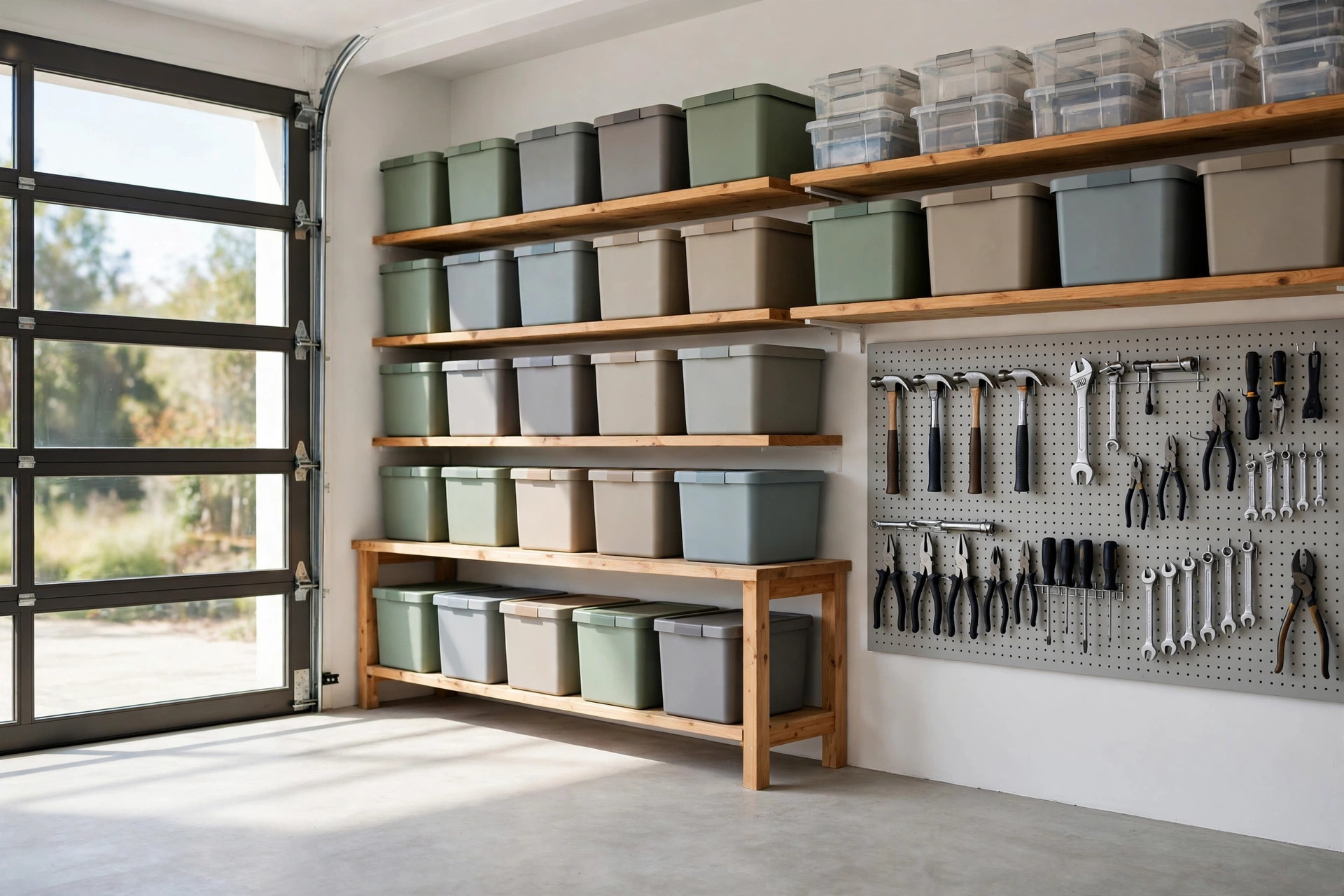
The attic and basement punish containers differently, so match the bin to the space. Two rules apply everywhere: skip cardboard boxes (they absorb moisture, collapse, and attract pests), and pick one or two uniform bin sizes so they stack safely.
For the attic: Choose sturdy plastic totes with locking lids, thin-walled bins can warp in summer heat. Clear or semi-transparent totes let you see contents without opening them.
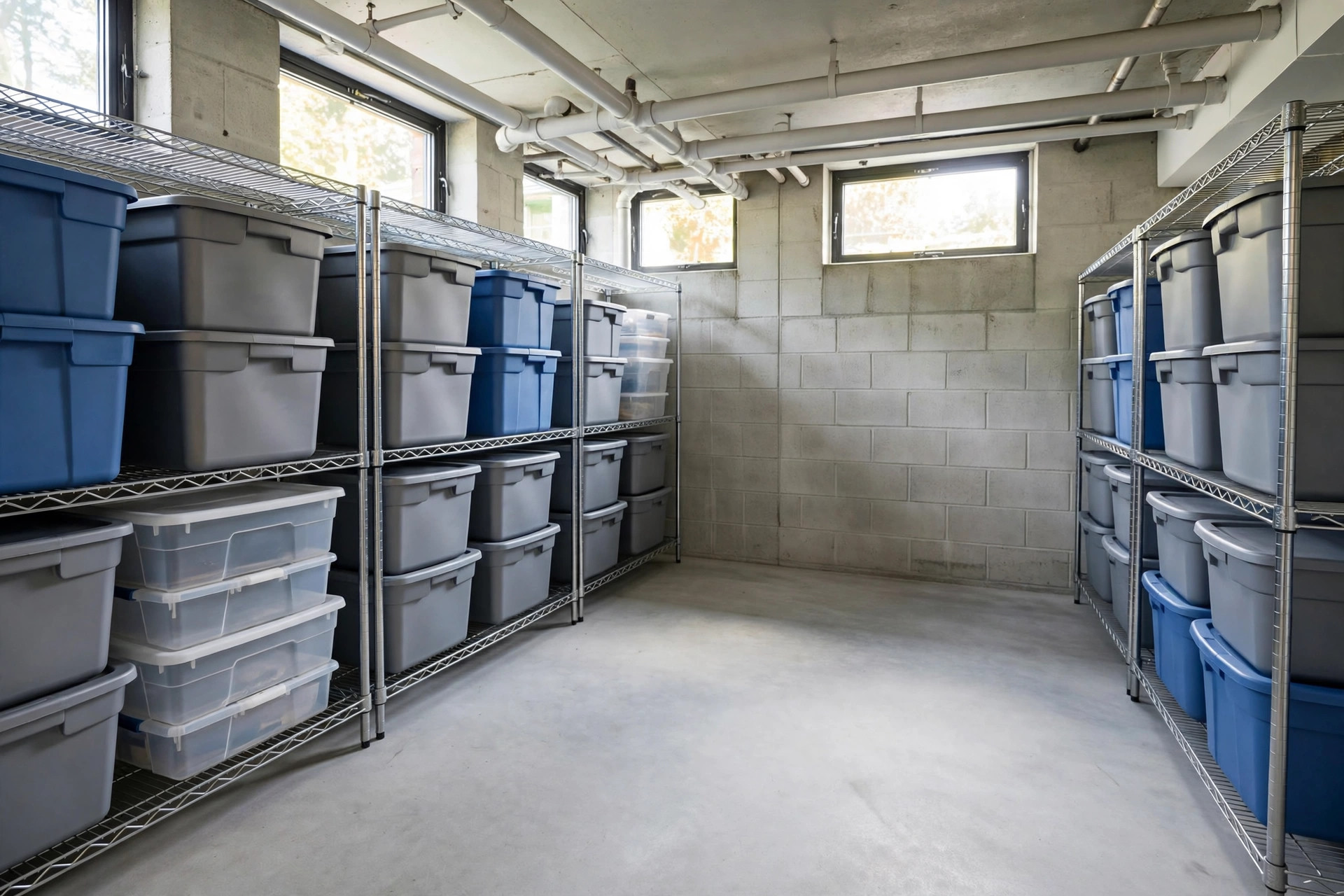
For the basement: Gasket-sealed totes are worth the extra cost, the rubber seal blocks musty air and the occasional bug. Never store bins directly on the floor; use pallets, wire shelving, or 2x4 runners, since basement floors can sweat, wick moisture upward, or surprise you with a puddle after heavy rain. For shelving, metal wire units are the default winner, they don't rot, let air circulate, and you can see through them. Avoid bare wood shelving; it can warp, grow mildew, and gives insects a home. Bolt tall units to the wall, put the heaviest bins on the bottom, and leave a small gap behind each unit for airflow.
Label Like You Mean It
Labels are the difference between an organized attic and a room full of mysteries. Every bin gets a label on at least two sides, because you will never see the "correct" side first. Write big and specific:
- Bad: "Christmas" → Good: "Christmas, tree ornaments & stockings"
- Bad: "Misc" → Good: break it into two real categories
Use a thick permanent marker on painter's tape or on label inserts in the tote's handle. Painter's tape is cheap, survives heat, and peels off cleanly when contents change. Also number each bin (A-1, A-2 for the attic; B-1, B-2 for the basement) so your inventory list can reference it.
Map Your Zones and Keep a Simple Inventory
You don't need an app or a barcode system. A single page, phone notes or paper, beats the fanciest system you'll never update.
Zone mapping: Divide the space into a few zones and give each a job, for example, Attic: A = holiday decor, B = luggage, C = keepsakes; Basement: A = tools, B = camping and sports, C = bulk supplies. Put a simple hand-drawn map near the entrance (or inside the attic hatch) so anyone in the household can find things without texting you.
The inventory list: One line per bin, using its number. For example:
- A-3: Halloween decorations, fog machine, lights, costumes
- B-7: Camping, tent, sleeping bags, camp stove
Update the list when you add or remove something. If it drifts more than a few items from reality, take ten minutes to fix it, the list is only useful if you trust it.
Protecting Against Pests and Moisture
This is the unglamorous half of attic and basement storage organization, and it's the half that saves your stuff.
Moisture: Run a dehumidifier in a damp basement during summer and empty it on a schedule (or use a hose drain if your model supports one). Leave space between bins and exterior walls so air moves and condensation doesn't get trapped. Tuck silica gel packets or desiccant tubs inside bins holding linens or clothing for cheap insurance.
Pests: Sealed bins with locking lids are your first defense, they beat traps and sprays every time. Sweep once or twice a year and check corners for droppings, chew marks, or nesting material. Trim back bushes and branches touching the house; they're highways for mice and squirrels.
Deal with active signs of pests or water intrusion before reorganizing. No labeling system survives a mouse problem.
The Seasonal Rotation Workflow
Twice a year, your attic and basement do a little dance. Build a routine around it so seasonal swaps don't turn into all-day excavations:
Spring: Pull down summer gear (camping equipment, beach supplies, summer sports) and box up winter gear. While bins are open, do a quick contents check, anything broken or unused goes straight to the donate pile.
Fall: Reverse the swap, then test what you're about to need: string lights, the snow blower, the space heater. Discovering a dead strand of lights in December is a tradition worth breaking. Restock consumables too, batteries, light bulbs, furnace filters. Do the whole swap in one session, or bins will sit in the hallway for a month.
The Annual "Does This Still Earn Its Space?" Review
Once a year, pick a month with mild weather, open every bin and ask one question per item: does this still earn its space?
This isn't a decluttering marathon; it's maintenance. Look for items that aged out (the kids' Halloween costumes from three sizes ago, the tent with the broken pole), duplicates you didn't know you had (three sets of Christmas lights when you hang one), hobby gear for hobbies you dropped, and bins that quietly turned into junk drawers.
Anything that fails the test leaves the house: donate, sell, recycle, or trash. Then update your inventory list to match. This review stops your attic and basement from slowly becoming the cluttered rooms you're trying to avoid.
Frequently Asked Questions
Can I store clothes in the attic?
Yes, but only in sealed plastic totes, never cardboard or garment bags. Add a desiccant packet per bin, and keep precious pieces in climate-controlled space instead.
How do I keep my basement storage from smelling musty?
Musty smell usually means moisture and poor airflow. Run a dehumidifier, keep bins off the floor and away from walls, and use gasket-sealed totes so damp air can't get in. If the smell persists, check for water intrusion, a possible leak.
Are cardboard boxes ever okay in the attic or basement?
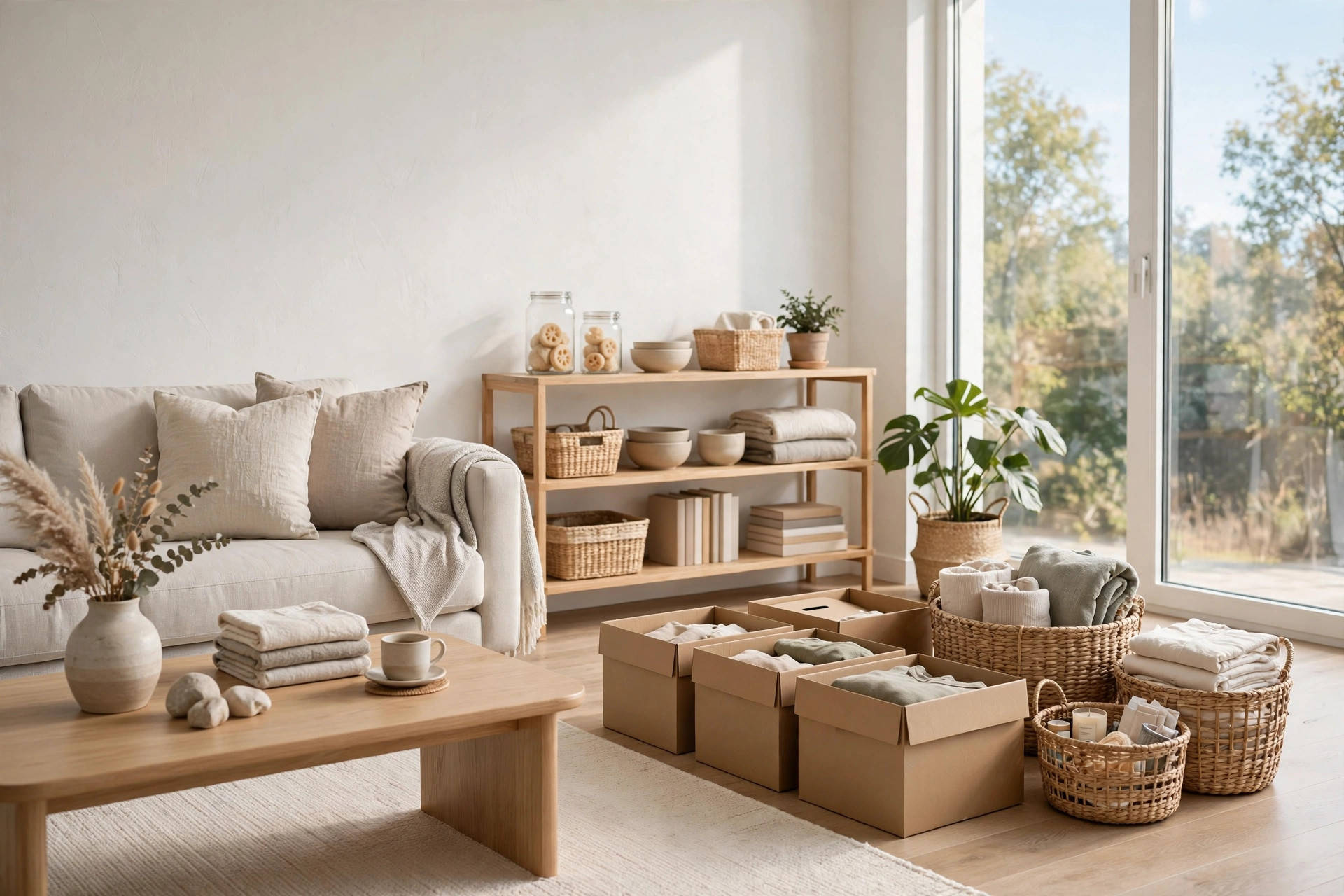
For a move, temporarily, sure. But transfer contents to plastic totes for anything staying longer than a few months. Cardboard absorbs moisture, collapses over time, and attracts pests.
How often should I reorganize my attic and basement?
You shouldn't need a full reorganization if the system works, just the twice-yearly rotation and the annual review above. If you're starting over more than every couple of years, simplify: fewer zones, clearer labels, honest inventory.
What about items too big for bins?
Bulky items like furniture, large sports equipment, or artificial Christmas trees can live outside bins if they're clean and dry. Cover them with a breathable furniture cover or a clean sheet, never plastic sheeting in a damp space, since it traps moisture underneath. Keep them in their assigned zone.