Under-Bed Storage Ideas for Small Bedrooms
The space under your bed is the largest patch of unused real estate in most small bedrooms, and reclaiming it can free up closet and floor space you'd never get back otherwise. In this guide to under bed storage ideas, you'll learn how to measure clearance so nothing gets stuck, compare the main options (rolling bins, zippered bags, built-in drawers, and DIY risers), decide what belongs under the bed and what doesn't, keep everything dust-free, tailor solutions for platform versus frame beds, and style a bed skirt, or skip one. Everything here is budget-first and renter-friendly: no new furniture required, no wall damage.
Measure Before You Buy Anything
Every under-bed plan starts with a tape measure. Clearance, the distance from the floor to the underside of your bed frame or support rails, determines which containers actually fit. Standard bed frames offer about 7 to 8 inches; platform beds may give you as little as 3 to 4 inches, or none at all. Check three spots (head, middle, foot), since frames can sag in the middle and a bin that slides in at the foot may wedge halfway. Write the number down, then subtract half an inch, that's the maximum height your container can be. Also measure the horizontal opening: many frames have a support bar or leg partway across, which limits how long a bin can be. Also check the side-rail gap, since containers have to pass through it. Get these right once and you'll never waste money on bins that don't fit.
Storage Options, Compared
Rolling Bins with Lids
Rolling bins are the workhorse of under-bed storage. Hard-sided bins with snap-on lids protect contents from dust, and casters let you pull them out without dragging. Transparent bins save you from labeling. Budget tip: flat plastic totes from a discount store usually cost less than one branded "under-bed organizer" and hold just as much.
Zippered Fabric Bags
Fabric bags are the thinnest option, making them the best pick for low-clearance platform beds. They're soft, so they squeeze past frame legs and conform to odd shapes, and most have a clear window on top. Ideal for textiles, off-season clothing, extra blankets, spare pillows. One caution: they offer almost no protection against moisture, so skip them if your bedroom floor ever feels damp, and make sure items are fully dry before you zip them in.
Built-In Drawers
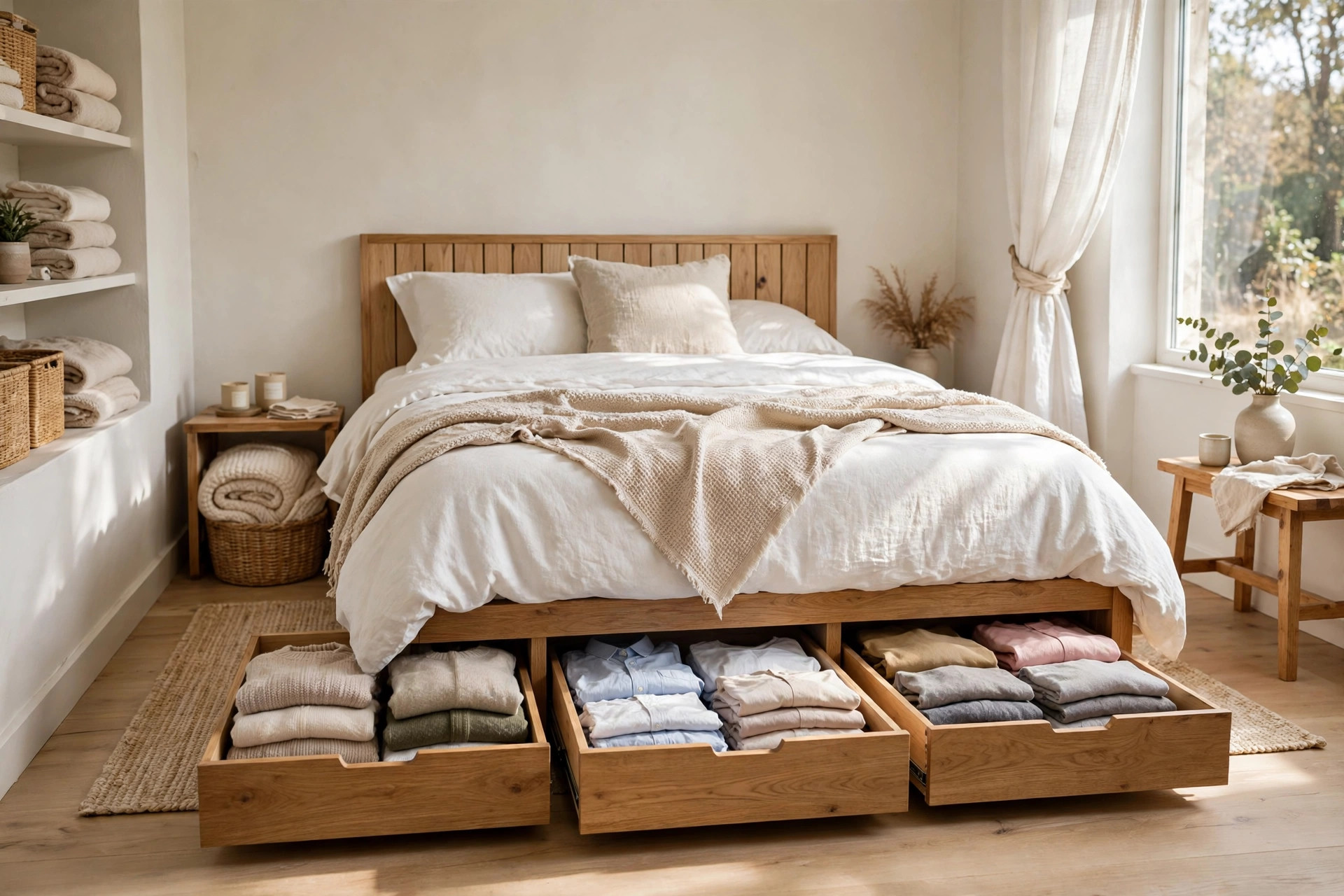
If your bed came with drawers, or you're shopping for one, they're the most convenient option because they pull out smoothly and look like furniture. Many platform beds now include deep drawers, and several big-box brands sell drawer units that slide under existing frames. They cost more than standalone bins, so think of them as a purchase for the next time you replace a bed, not a retrofit now.
DIY Bed Risers (and Safety Notes)
Bed risers are the cheapest way to create under-bed storage where none exists. But raising a bed changes its stability, so take these safety notes seriously:
- Use risers rated for your bed's weight. Add the mattress, frame, your body weight, and anything stored underneath, then stay comfortably below the rating.
- Choose wide, flat risers over stacked or improvised ones. Stacking risers or using books and bricks is asking for a collapse. One solid riser per leg, with a recessed cup the leg sits inside.
- Check every few months. Legs can shift off-center, especially after you move the bed to vacuum. Give each riser a wiggle test seasonally.
- Raise the center support too. If your bed has a middle leg, it needs a riser as well, otherwise the middle of the bed is left unsupported.
- Mind the new height. A bed raised by 6 inches is harder to climb into; measure your sitting height first.
Renters: screw-on riser blocks grip the leg without drilling and leave no marks when you move out.
What to Store Under the Bed (and What Not To)
The space under your bed is enclosed, close to the floor, and hard to see into, perfect for some things, terrible for others.
Great candidates:
- Off-season clothing and linens, sealed in bags or bins
- Extra blankets, quilts, and spare pillows
- Shoes in lidded bins (the classic under-bed item for a reason)
- Gift wrap rolls, which fit neatly along one side in a long bin
- Board games, puzzles, and hobby supplies in shallow rolling bins
- Luggage, an empty suitcase is wasted space until you fill it with out-of-season gear
What to avoid:
- Anything you need often. If you're digging under the bed weekly, it belongs in a closet.
- Paper records, photos, and important documents. Floor-level storage is the most vulnerable spot in a leak or flood.
- Food or snacks. Crumbs attract pests, and you won't notice quickly.
- Leather goods in fabric bags on damp floors. Moisture wicks up; use hard bins with lids if the floor ever feels cool and damp.
- Anything fragile without padding. Bins get shoved and dragged; wrap breakables well or store them elsewhere.
Keeping It Dust-Free
Dust settles under beds faster than anywhere else because the air barely moves down there. A twice-a-year routine keeps it under control:
- Pull everything out.
- Vacuum the floor and wipe the frame with a damp microfiber cloth.
- Wipe the outsides of bins and the windows of fabric bags.
- Audit while it's empty: if you haven't opened a bin in a year, its contents don't need prime real estate.
- Slide everything back and note the date. Pairing this with your seasonal clothing swap makes it easy to remember.
Lidded hard bins need the least maintenance; open baskets and fabric bags need the most. If you have allergies, stick with sealed hard bins and skip open weave entirely.
Platform Beds vs. Frame Beds
Frame beds (box spring on rails, legs at the corners) are the easiest: standard clearance, open sides, risers fit the legs directly. Your main decision is bins versus bags.
Platform beds come in two flavors. If yours has a solid base that reaches the floor, you have no under-bed space, look at other small-bedroom storage instead, like over-door organizers and high shelves. If your bed has a slatted base with a few inches of clearance, fabric bags are your answer: they're the only option thin enough and slide over slats without snagging. Built-in drawers, when present, are the gold standard, deep, stable, and invisible.
For either type, keep containers a couple of inches shorter than the opening so you can slide them out one-handed without lifting the mattress.
To Skirt or Not to Skirt
A bed skirt hides everything, a collection of mismatched totes, bags, and a suitcase looks instantly tidy behind one. A no-sew DIY version is just a hemmed rectangle of fabric tucked under the mattress; dark colors hide wrinkles and dust.
Leaving the space open has its own advantages: you can see what you have, airflow improves, and matching bins look intentional and clean. If you go open, use containers that look alike, uniformity is what makes exposed under-bed storage look styled, not cluttered.
A Simple Starter Plan
Measure your clearance, buy two rolling bins that fit, put off-season clothes in one and spare linens in the other, and add a bed skirt if the bins don't match. That's a small dresser's worth of storage for very little money.
Frequently Asked Questions
How much clearance do I need for under-bed storage?
You need at least 5 inches of floor-to-frame clearance for most rolling bins, and about 4 inches for flat fabric bags. Measure at three points and treat the smallest as your max container height.
Are bed risers safe for everyday use?
They're safe when rated for the total weight they carry, used one per leg without stacking, and checked periodically for shifting. Skip DIY stacks of books or bricks, manufactured risers with recessed leg cups are much more stable.
What's the best thing to store under a bed?
Off-season clothing, spare linens, shoes, and luggage top the list, things you need a few times a year, that aren't fragile, and that don't mind being near the floor. Keep important papers, food, and daily-use items elsewhere.
How do I stop things from getting dusty under the bed?
Use lidded containers, vacuum under the bed twice a year, and wipe bin exteriors during the same clean-out. Sealed hard bins need the least upkeep.
Can I add storage under a platform bed with no clearance?
Not under the bed itself, a platform that sits on the floor leaves no space to work with. Look up and behind instead: over-the-door organizers, narrow shelving beside the bed, and baskets on top of the wardrobe.