Renter-Friendly Organization Ideas (No Drilling, No Damage)
Renting doesn't have to mean chaos. You can have an organized, functional home without putting a single hole in the wall. In this guide, you'll learn how to hang things without damage (and the weight limits that actually matter), use freestanding and tension-based storage to your advantage, turn the back of every door into storage real estate, pick furniture that pulls double duty, and set up a command center without touching a drill, plus the mistakes to avoid so you get your full deposit back.
Master Damage-Free Hanging
Adhesive Hooks and Strips, Done Right
Adhesive hooks are the renter's best friend, but they only work when you respect them. Most failures come down to user error. Here's how to make them hold:
- Clean the surface first. Wipe the spot with rubbing alcohol and let it dry completely. Dust and grease are the number one reason strips peel off.
- Wait before loading. Press the strip on and wait at least an hour (ideally overnight) before hanging anything. The adhesive needs time to bond.
- Respect the weight limit. Every strip lists one on the package. A hook rated for 2 pounds will fail at 2.5 pounds, this is not the place to round up. If you're hanging a heavy coat, combine two or three hooks and drape the weight across them.
- Remove them correctly. Pull the tab straight down, slowly, parallel to the wall, never outward. Stretch the tab rather than yanking it. This is what separates renters who get deposits back from renters who don't.
Know Your Weight Limits
Not all adhesive products are equal. Small strips handle lightweight frames and keys; large strips can hold a full-length mirror if you distribute the weight across several strips. For anything genuinely heavy, a loaded backpack, a big framed mirror, freestanding or floor-leaning options are safer. When in doubt, split the load: two medium hooks beat one large hook pushed past its limit.
Alternatives When Adhesive Isn't Enough
Some walls laugh at adhesive, textured surfaces, old plaster, wallpaper. For these, lean instead of hang: a tall mirror can lean against a wall on a stable base, an easel-style coat rack takes zero wall contact, and leaning ladder shelves turn an awkward corner into vertical storage.
Use Freestanding and Tension-Based Storage
Tension Rods: The Underrated Workhorse
A tension rod wedged inside a cabinet, closet, or window frame gives you a shelf or divider with zero damage. Use them inside kitchen cabinets to corral cutting boards upright, inside closets for lightweight items like scarves or ties, or inside a deep drawer to keep things from sliding. The trick is sizing: measure the opening first and buy a rod that sits mid-range of its expansion, not at maximum stretch, which is where they slip.
Freestanding Shelving That Looks Built-In
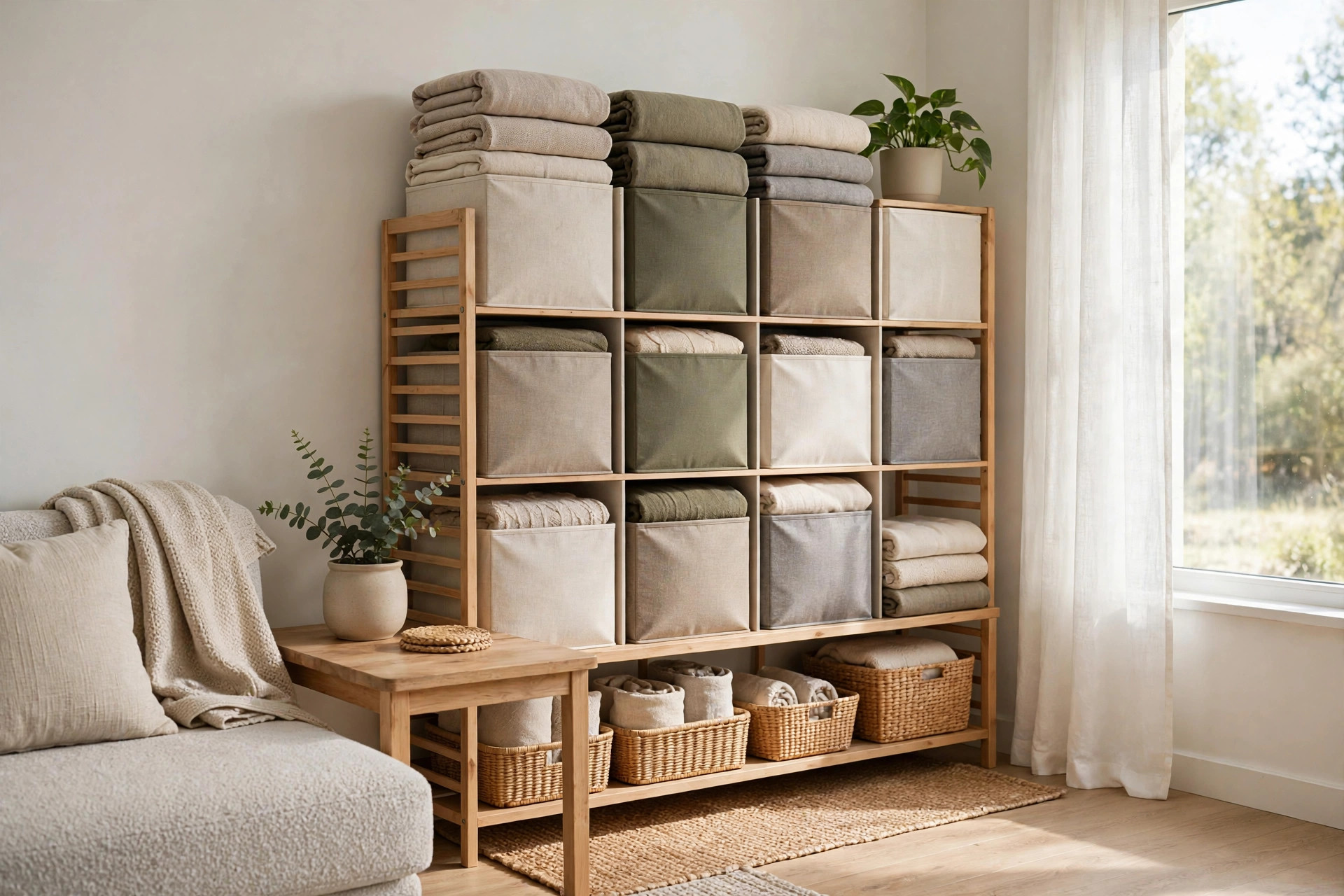
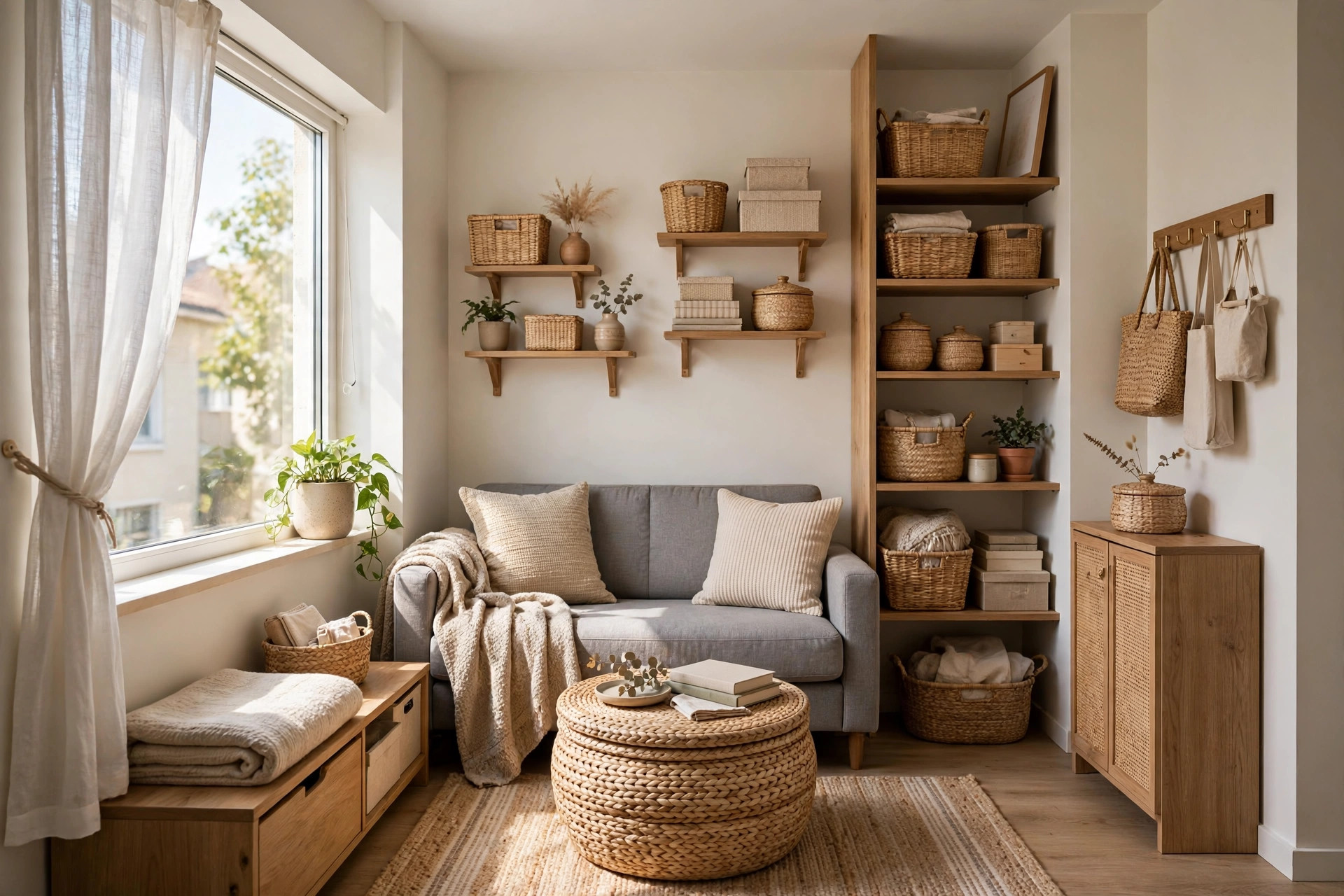
A slim bookcase, a cube storage unit, or a rolling cart adds storage anywhere without touching a wall.
- Group two matching small units side by side so they read as one piece.
- Use the top surface as a landing zone for keys, a tray, or a plant.
- Add matching baskets or bins to cube shelves so the contents look tidy from across the room.
Over-the-Door Organizers
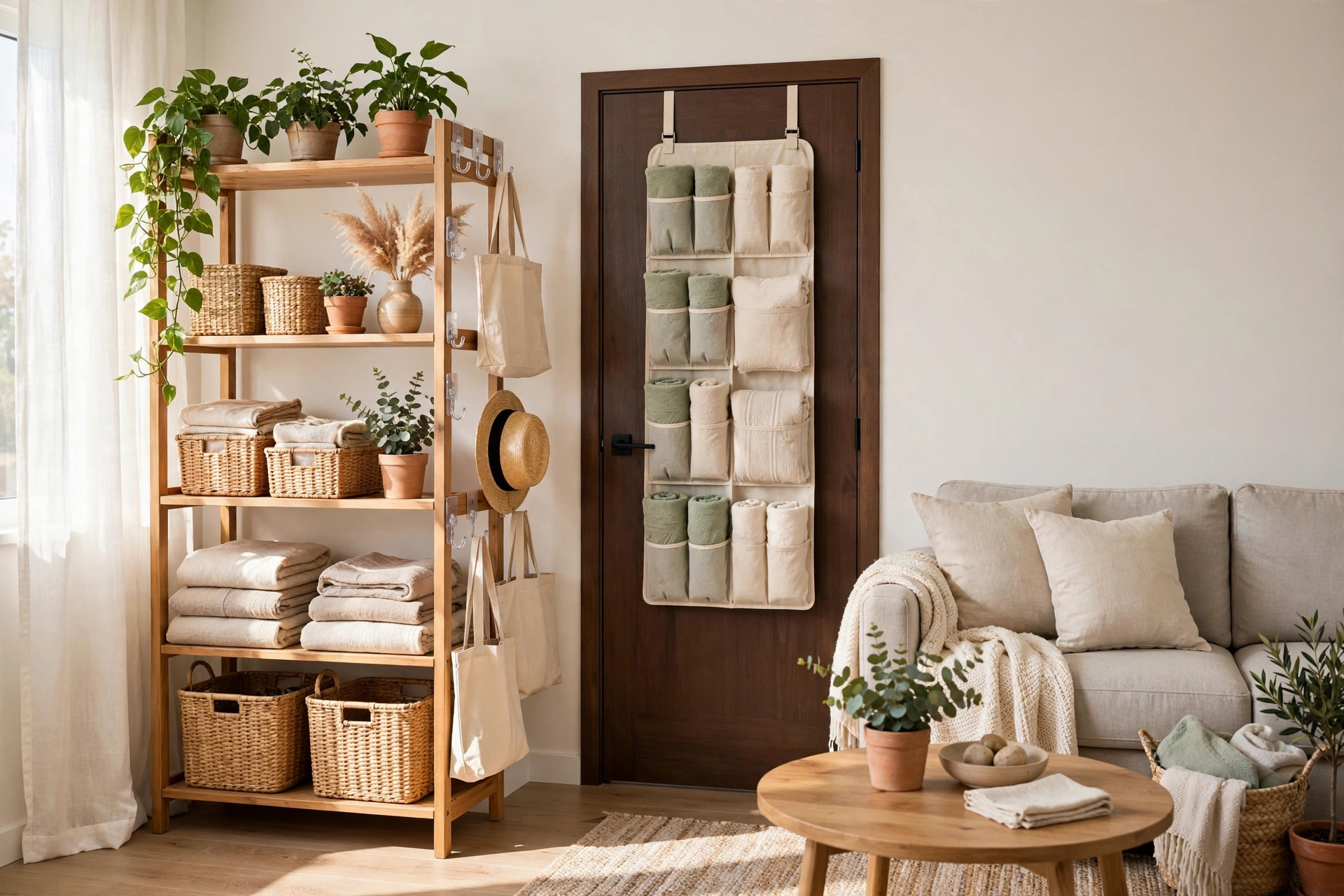
The back of every door is free square footage. Over-the-door hooks add coat and bag storage to bedrooms and entryways, wire organizers turn a pantry door into a spice rack, and shoe organizers work for cleaning supplies, toiletries, or craft materials. Check two things before buying: that your door can still close fully with the organizer on it, and that the hooks are padded or felt-lined so they don't scratch the finish, that's what you'll be inspecting at move-out.
Choose Furniture That Doubles as Storage
When you can't add built-in storage, every piece of furniture should earn its footprint twice.
- Ottomans and benches with hidden compartments swallow throws, board games, and kids' toys while serving as seating.
- A coffee table with a lower shelf or drawers replaces a separate storage unit in a small living room.
- Bed risers plus flat bins turn the space under your bed into legitimate seasonal storage, sweaters, luggage, spare linens.
- A desk with hutches or side shelves (freestanding, not wall-mounted) keeps a work-from-home corner organized without wall damage.
- Nesting side tables give you extra surface only when you need it, then tuck away.
Favor pieces that are easy to move. A heavy solid-wood armoire is great storage until you have to get it up three flights of stairs at move-out.
Set Up a Command Center Without Wall Damage
A command center, one spot for keys, mail, bags, and the week's schedule, is what keeps a rental feeling calm instead of cluttered. And it doesn't require a single nail.
Start with a freestanding entryway stand or slim console table near the door. On top, place a tray for keys and sunglasses and a small bin for incoming mail. Beside it, put an over-the-door hook or freestanding coat rack for bags and jackets. A whiteboard or calendar can lean on the console or sit on a small easel. Add a wastebasket nearby so junk mail dies immediately instead of migrating to the kitchen counter.
The whole setup moves with you and means you never waste fifteen minutes hunting for your keys again.
What to Avoid: Things That Damage Paint and Walls
Not all "removable" products live up to the label. Steer clear of:
- Foam mounting tape and double-sided foam squares. They bond aggressively and almost always pull paint on removal.
- Nails, screws, and anchors of any kind, even small ones leave holes you're expected to patch.
- Suction cups on textured or painted walls. They fail unpredictably and can take finish with them when they pop.
- Adhesive on wallpaper or fresh paint. Many leases (and common sense) treat wallpaper as a surface you don't touch; adhesive on paint less than a few weeks old can peel it cleanly off.
- Command-style strips past their expiration date. Old adhesive gets gummy and stops releasing properly. Check dates on packages that have been sitting in a drawer.
Also skip the temptation to "just fill the holes" with toothpaste before moving out. Proper spackle and a dab of matching touch-up paint is cheap, takes minutes, and doesn't crumble when the landlord presses it.
Getting Your Deposit Back
Think of move-out day from the moment you move in. Take timestamped photos of every room on day one, so pre-existing scuffs are documented as pre-existing. Every time you remove an adhesive product, inspect the spot immediately, if a strip did pull a fleck of paint, touch it up now while you still have the color handy rather than discovering it during a frantic final cleaning.
Keep your original paint color information (ask your landlord, many will share it). Keep a small stash of removal supplies: dental floss for slicing through adhesive, rubbing alcohol for residue, and a magic eraser for scuffs.
Do a walk-through a week before you leave, not the morning of. That gives you time to fix the one thing you missed, there's always one thing.
Frequently Asked Questions
Will adhesive hooks really hold up over time? Yes, if you follow the three rules: clean the surface with rubbing alcohol first, wait at least an hour before loading, and stay within the listed weight limit. Hooks that fall after a month were almost always loaded too soon or too heavily.
What can I hang on textured walls? Smooth adhesive strips struggle on texture, so pivot to freestanding options: leaning ladder shelves, easel-style racks, and over-the-door organizers. If you must use adhesive, larger strips with more surface contact work better than small ones.
How do I organize a rental kitchen with no pantry? Use tension rods inside cabinets for vertical dividers, add a freestanding shelf or rolling cart for overflow, and put an over-the-door organizer on the pantry or closet door for spices and small items. Flat bins under a raised bed or in a closet can hold bulk pantry stock.
Can I use a tension rod in the shower? Tension rods work well for a shower caddy or an extra curtain rod in most standard tub surrounds, as long as the rod is rust-resistant and sized correctly. Avoid them on heavily textured tile, and check them monthly, steam and temperature swings can loosen the grip over time.
What's the safest way to remove adhesive strips at move-out? Pull the tab slowly, straight down along the wall, stretching it as you go, never pull outward. If a tab breaks, warm the strip gently with a hair dryer on low for a few seconds and slide dental floss behind it. Finish with a dab of rubbing alcohol on any residue.