How to Organize Under the Kitchen Sink
Let's be honest: the cabinet under the kitchen sink is the worst cabinet in the house. It's dark, it's damp, there's a pipe assembly in the middle of it like a plumbing art installation, and it's where cleaning bottles go to reproduce. If you open yours and face a small avalanche of spray bottles and half-used dish soap, you're in good company.
The good news is that this awkward space is one of the most satisfying to fix, because every improvement is obvious the moment you open the door. In this article you'll learn how to empty and deep-clean the cabinet safely, deal with moisture and leaks, pick pipe-friendly storage on a budget, group supplies by task, keep products child-safe, and follow a simple routine to keep it tidy.
Start Empty: Clear It Out and Clean
You can't organize a cabinet you can't see the back of. Pull everything out, every bottle, sponge, and crumpled bag, and set it on the counter or floor. This is your only chance to deal with the actual cabinet before anything goes back in.
Once it's empty, wipe every surface with warm water and dish soap, paying special attention to the floor, which has quietly absorbed drips for years. Leave the doors open until it's fully dry. A cabinet that never gets airflow stays musty, and putting bins into a damp cabinet just traps moisture underneath them.
While everything is out, do the ruthless edit: toss anything empty, dried out, or leaking; combine duplicates (you don't need three glass cleaners); relocate anything that doesn't belong under a sink; and check dates on things like descaler packets.
Deal With Moisture and Leaks First
There's no point buying organizers for a cabinet that drips. Moisture comes from three places: slow plumbing leaks, condensation on pipes and the disposal, and spills from bottles.
First, check for leaks. With the cabinet empty and dry, lay newspaper or a dry paper towel under the pipes and faucet connections. Check it in a day, if it's damp, tighten connections by hand, since many small drips are just a loose slip nut. If the drip continues, call a plumber. A leak is a plumbing problem, not an organizing problem, and it will destroy organizers and the cabinet floor.
Second, line the floor. A waterproof under-sink mat or shallow tray is one of the best budget buys in all of home organizing, it catches drips before they reach the wood. Third, leave breathing room. Don't pack the cabinet wall to wall; airflow prevents that swampy under-sink smell, so leave a gap at the back.
If you find mold or wood that's soft, swollen, or smells strongly of mildew, get a professional to look at it before storing anything there again. A wipe-down handles surface grime; structural water damage doesn't fix itself.
How to Organize Under the Kitchen Sink When Pipes Get in the Way
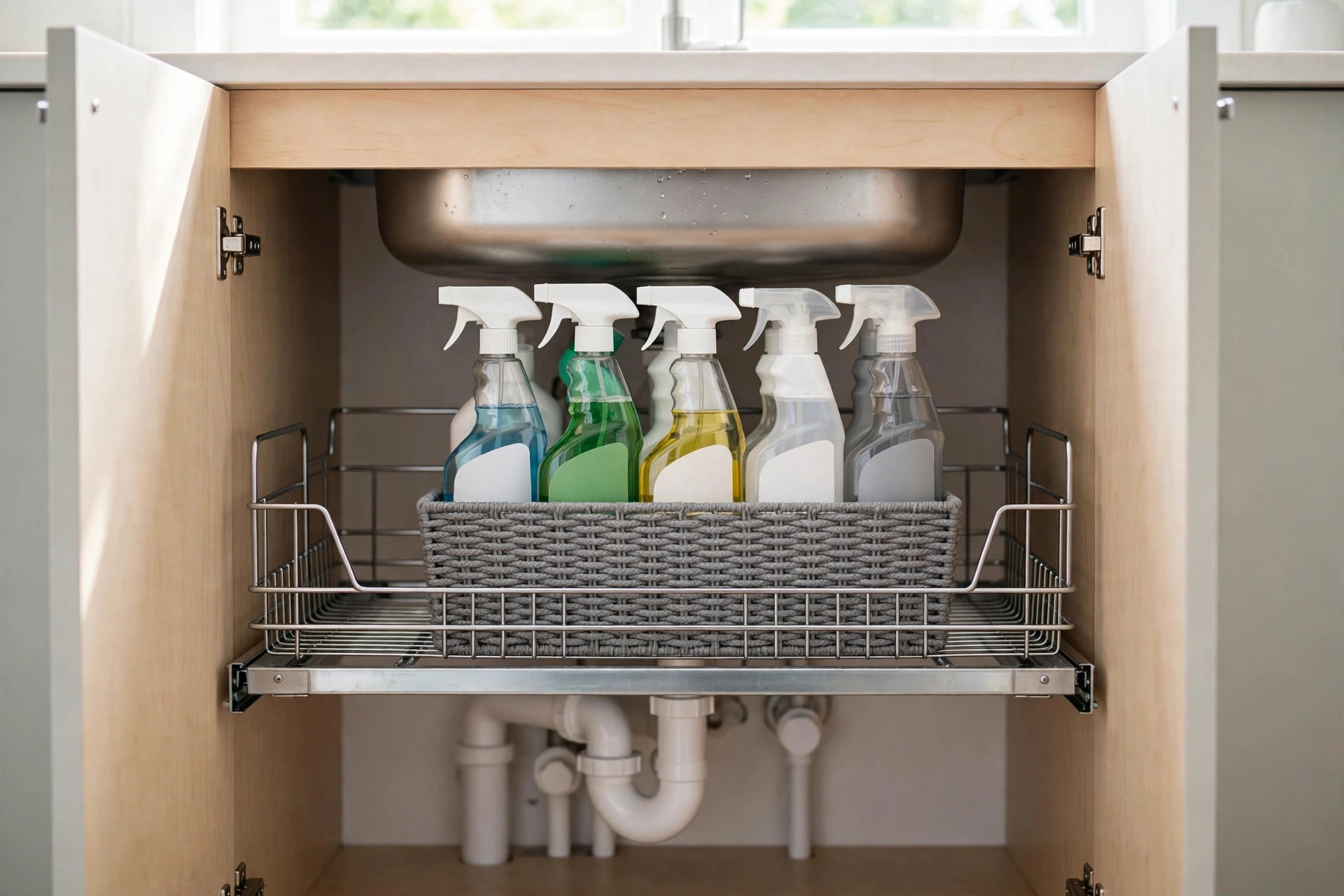
The pipe stack is the whole reason this cabinet feels impossible. Standard shelving never fits because the pipes are always in the way. Buy storage made for the obstacle:
- Stackable under-sink shelves with adjustable heights are built for this. Many expand to straddle the center pipe, or you can place two units on either side. Measure the cabinet's height, width, and the distance from floor to pipe bottom before buying, five minutes with a tape measure beats a return trip to the store.
- Tension rods are the under-sink hack that actually earns the hype. A cheap spring-loaded rod across the front near the top lets you hang spray bottles by their triggers, using dead vertical space where no shelf will fit and keeping bottles from tipping and leaking.
- Small stackable bins on either side of the pipes hold loose items, sponges, trash bags, dishwasher pods. Clear or open-top bins are best since you can see inside in the dark.
Mount Storage on the Cabinet Door
The inside of the cabinet door is free real estate most people ignore. Adhesive organizers or over-the-door caddies give you vertical storage that never touches the damp floor.
Use the door for lightweight, grab-and-go items: a small caddy for the sponge and dish brush, a hook for rubber gloves, a narrow rack for trash bags. Keep it shallow, a deep organizer stops the door from closing or knocks into the bins inside.
One caution: adhesive hooks need a clean, dry, smooth surface. Wipe the door with rubbing alcohol first and let the adhesive cure for the full recommended time before loading it.
Group Supplies by Task
This is the step that turns "organized" into "stays organized." Instead of one jumble, create small task zones:
- Dishes: dish soap, dishwasher pods, scrub brush. Everything you touch when the dishwasher needs attention.
- Surfaces: all-purpose spray, glass cleaner, wipes, microfiber cloth. Everything for counters and appliances.
- Floors and trash: trash bags, recycling bags, floor cleaner.
- Plumbing backup: plunger, drain snake, old towels. Accept that these live here; just give them a defined corner instead of letting them sprawl.
Put each zone in its own bin or on its own shelf level, and label them if you live with people who would otherwise undo your system in a week. A label maker is nice; masking tape and a marker work just as well. All in, two inexpensive stackable shelves, one tension rod, and a few dollar-store bins will transform this space for well under thirty dollars. The test: when you need to clean something, can you grab one bin instead of rummaging through six loose bottles?
Keep It Child-Safe
Under-sink cabinets are prime toddler territory, low, dark, and full of interesting bottles. Cleaning products at floor level need active childproofing:
- Install a cabinet lock or latch. Magnetic locks opened with a small magnetic key are the most reliable. A basic sliding latch costs a few dollars and takes minutes to install.
- Keep the most hazardous products high. Anything marked "keep out of reach of children" goes on the top shelf or in the back, not at the front where little hands land first.
- Never transfer cleaners to unmarked containers. The original label has the ingredients and the poison control number. An unmarked spray bottle looks like water to a kid.
- Store the lock key somewhere adults remember, like taped inside a nearby upper cabinet. Even without kids, a latch is worth it if you have pets, dogs can nose open an unlatched cabinet door surprisingly well.
A 10-Minute Maintenance Routine
Organizing is a one-time project; staying organized is a habit. Two tiny routines keep this cabinet tidy:
Monthly (five minutes): Open the doors, check the mat for standing water or leaks, wipe up drips, and toss anything empty. Glance at the pipes, catching a slow drip early is the difference between a wipe-down and a ruined cabinet.
Seasonally (ten minutes): Pull the bins out, wipe down shelves and the mat, check dates, and re-home anything that migrated in from elsewhere. Restock anything running low while you're looking at it.
Five minutes a month keeps the space from reverting to chaos, because you catch the drift, the stray sponge, the leaking bottle, the thing that doesn't belong, before it accumulates.
Frequently Asked Questions
What's the best way to organize under the kitchen sink when pipes are in the way?
Measure first, then buy storage made for the obstacle: adjustable stackable shelves that straddle or flank the center pipe, a tension rod across the front for hanging spray bottles, and small bins on either side for loose items.
How do I stop the cabinet under my sink from smelling musty?
Musty smells usually mean trapped moisture. Dry the cabinet fully with doors open, use a waterproof mat instead of wall-to-wall liner, leave gaps for airflow, and check monthly for leaks or drips. Fix any plumbing drip before organizing.
Can I store cleaning supplies under the sink if I have kids?
Yes, but only with active childproofing: install a reliable cabinet lock or latch, keep the most hazardous products on the highest shelf or in the back, and never transfer cleaners into unmarked containers.
What goes on the bottom versus the top of an under-sink organizer?
Heavy, sturdy items go low: bulk refills, extra trash bags, the plunger. Everyday sprays and sponges go at grab height. Anything leak-prone sits inside a tray or bin, so one drip doesn't ruin the shelf below it.
How often should I reorganize under the kitchen sink?
Do the full clear-out once or twice a year. In between, a five-minute monthly check, wipe drips, toss empties, scan for leaks, keeps the system working. Reorganize sooner if you catch yourself rummaging instead of grabbing.