Junk Removal Cost: 2026 Price Guide
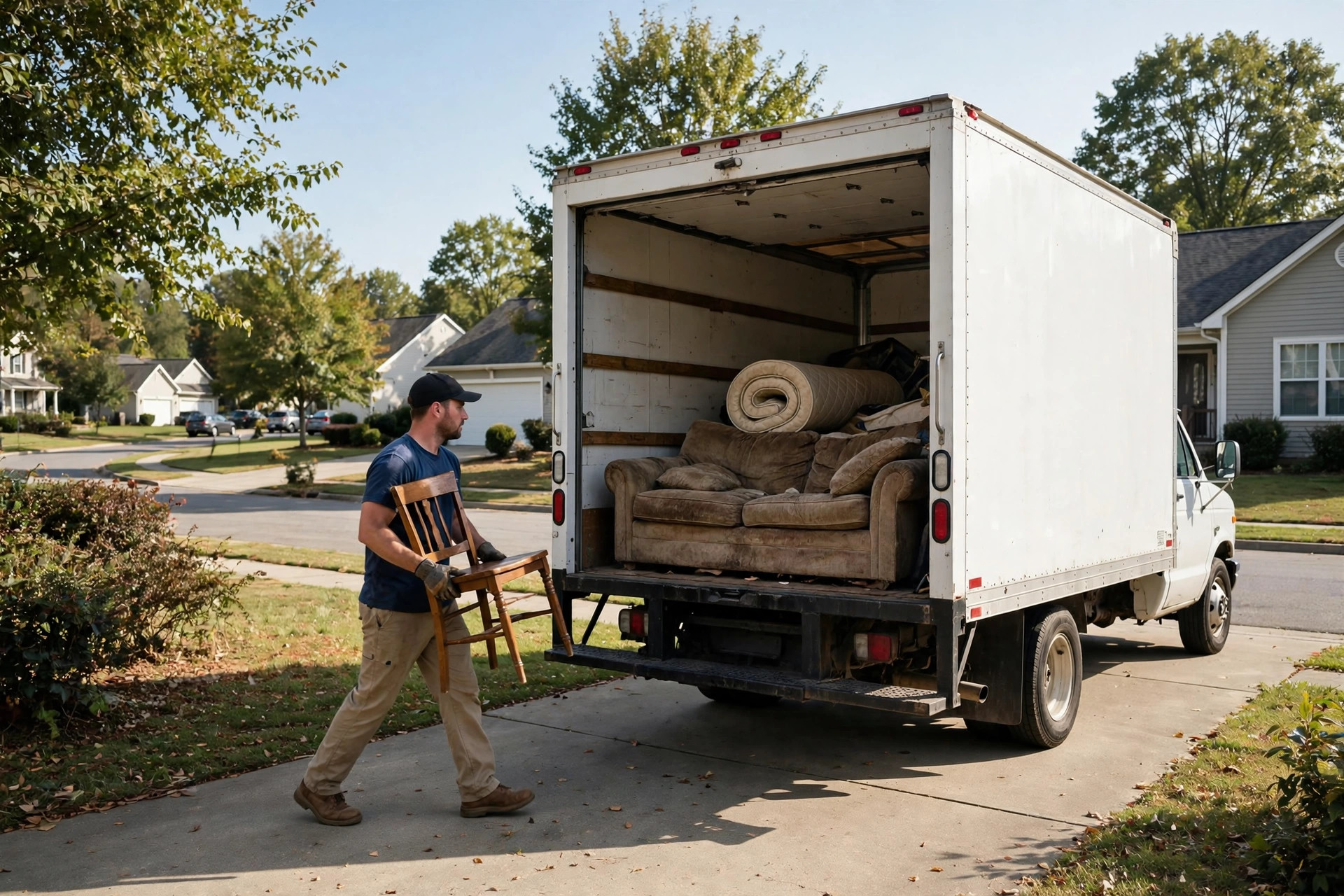
After a big declutter, you're left with the least fun part: getting rid of it all. Junk removal companies will haul away almost anything, but pricing feels mysterious until you've done it once. In this guide, you'll learn what junk removal costs in 2026 by truckload and by item, the factors that push your quote up or down, cheaper alternatives worth considering, and how to get an accurate quote without surprises.
Average Junk Removal Costs in 2026
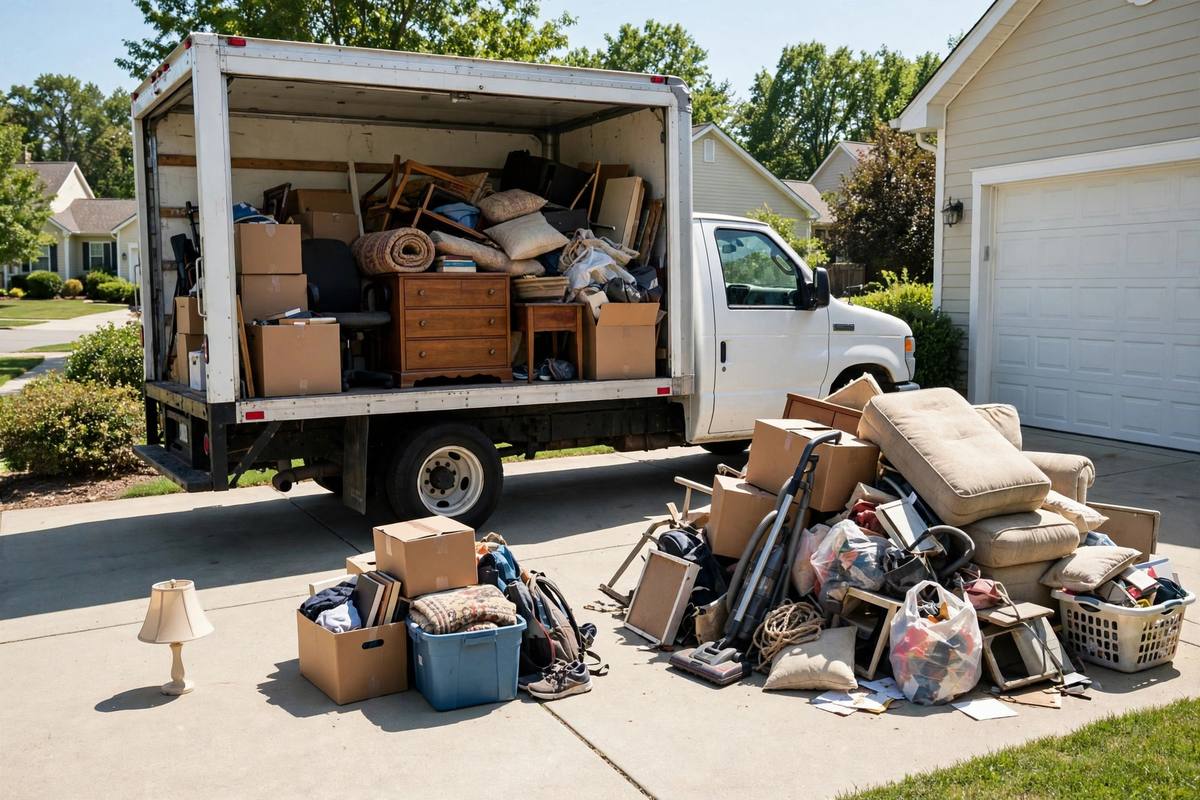
Most junk removal companies price by volume, meaning how much truck space your stuff fills. National averages look like this:
- Minimum pickup (a few items): $75 to $150. Most companies have a minimum charge even for a single item.
- Quarter truckload: $150 to $300.
- Half truckload: $300 to $500.
- Three-quarter truckload: $400 to $650.
- Full truckload: $500 to $900.
A "full truckload" from a major company is roughly the volume of four to six pickup truck beds. For a typical garage cleanout or a room's worth of furniture, most people land in the quarter to half truckload range.
Item-by-Item Prices
If you're getting rid of specific large items, expect roughly:
- Mattress (twin to king): $75 to $150. Mattresses often carry recycling or disposal surcharges because landfills handle them separately.
- Couch or sofa: $75 to $200 depending on size and whether it needs to be carried down stairs.
- Refrigerator or large appliance: $100 to $200. Appliances with refrigerants need special handling, which adds cost.
- Washer or dryer: $75 to $150 each.
- Piano: $200 to $1,000+. Pianos are a specialty job: uprights are cheaper, grands require specialist movers, and stairs multiply the price.
- Hot tub: $300 to $600, usually requiring partial demolition.
- Television: $50 to $100, with e-waste fees in some states.
- Yard debris pile: $100 to $400 depending on volume.
- Construction debris: $200 to $600+ depending on weight and material.
These are typical ranges from national companies and local haulers. Your actual quote depends on the factors below.
What Affects Your Quote
Volume first, weight second. Volume is the primary pricing factor, but extremely heavy loads (concrete, dirt, roofing shingles) can trigger weight surcharges because they cost more to dump.
Labor difficulty. Third-floor walkup with no elevator? Narrow staircase with a sleeper sofa? Expect to pay more. Crews price the carrying work, not just the driving.
Location. Urban areas with high dump fees cost more than rural ones. Some cities also require haulers to carry specific licenses, which gets baked into pricing.
Item type. Anything needing special disposal, mattresses, appliances with refrigerant, electronics, tires, usually carries a surcharge because the hauler pays extra at the dump or recycler.
Same-day service. Need it gone today? Rush scheduling often adds $25 to $75.
Cheaper Alternatives Worth Considering
Before paying for full-service removal, check these options:
Donate it. Goodwill, Salvation Army, Habitat for Humanity ReStores, and local charities often pick up furniture for free. You lose nothing, someone gains a couch, and you may get a tax deduction.
Sell it. Facebook Marketplace and Craigslist move usable furniture fast, especially if you price it to go or list it as free for porch pickup. One person's declutter is another's furnished apartment.
Curbside bulk pickup. Many cities offer free or cheap bulk item pickup a few times per year. Check your city's waste management site: you may just need to schedule it and drag items to the curb.
Rent a dumpster or truck. For whole-house cleanouts, a small dumpster ($300 to $500 for a week) can be cheaper than multiple junk removal loads. If you can do the carrying yourself, renting a pickup truck for a day ($50 to $100) plus dump fees is the budget champion.
Bagster or junk bags. Those big collapsible bags you buy at hardware stores ($30 to $50 for the bag, plus $150 to $250 for pickup) work well for medium cleanouts where a full dumpster is overkill.
How to Get an Accurate Quote
Describe everything. When you call or book online, list the big items and estimate the pile size honestly. Surprises on arrival lead to revised (higher) quotes.
Ask about the pricing model. Volume-based is standard, but confirm whether the quote is firm or an estimate, and what triggers extra charges (stairs, heavy items, extra stops).
Confirm disposal. Ask where the junk goes. Reputable companies donate or recycle a large share, often 60 percent or more. If a hauler can't tell you, that's a red flag.
Get two quotes for big jobs. For anything over $400, a second quote takes twenty minutes and routinely saves $100 or more.
Prepare the pile. Move everything to one accessible spot, ideally the garage or driveway. Crews charge for their time, and a ready-to-load pile is a faster, sometimes cheaper, job.
Frequently Asked Questions
How much does it cost to remove a single couch?
Expect $75 to $200 for a single couch, depending on size, stairs, and your market. Many companies have a $75 to $150 minimum charge, so a lone couch often lands near the minimum.
Is junk removal cheaper than renting a dumpster?
For small jobs (a quarter truckload or less), junk removal is usually cheaper and far easier. For large cleanouts filling half a truckload or more, a rented dumpster ($300 to $500 per week) often wins on price if you're willing to do the loading yourself.
What items won't junk removal companies take?
Most won't take hazardous materials: paint, chemicals, asbestos, fuel, or propane tanks. Policies vary on tires, and some won't take pianos or hot tubs without a specialty crew. Ask before booking if you have anything unusual.
Do junk removal companies really recycle or donate?
The reputable ones do, typically diverting 60 percent or more from landfills through donation and recycling partnerships. Ask directly where your items go. Companies that can't answer clearly are probably dumping everything.
Can I negotiate the price?
Sometimes. Getting competing quotes is the most reliable lever. Booking during off-peak times, having everything in one accessible pile, and bundling with a neighbor's pickup can also bring the price down. The quoted minimum is rarely flexible, but larger jobs often have room.